

ARGOS Sets Sights on New Global Standard for Identity Verification.
ARGOS Sets Sights on New Global Standard for Identity Verification.
Posted September. 03, 2025 15:28,
Updated September. 03, 2025 15:35
- ARGOS aims to set a new global standard for identity verification with its AI-
based platform, 'ID Check,' which provides swift and accurate identity
verification in non-face-to-face environments.
- The company differentiates itself by offering an end-to-end solution that covers
the entire verification process, making it cost-effective and efficient for clients.
- Recently, ARGOS has shifted its focus to enterprise clients and has partnered
with companies like Hanpass and Sentbe to enhance user convenience and
trust through advanced AI-powered identity verification.
As the global digital economy expands, the importance of cross-border business is rapidly increasing. This trend has created a pressing need for companies to adopt reliable identity verification solutions for users worldwide. The necessity is further amplified as e-commerce, financial services, and digital platforms become integral to daily life, while fraud using sophisticated AI grows exponentially. Stepping up to meet this market demand is ARGOS(ARGOS Identity Korea), a startup garnering significant attention.
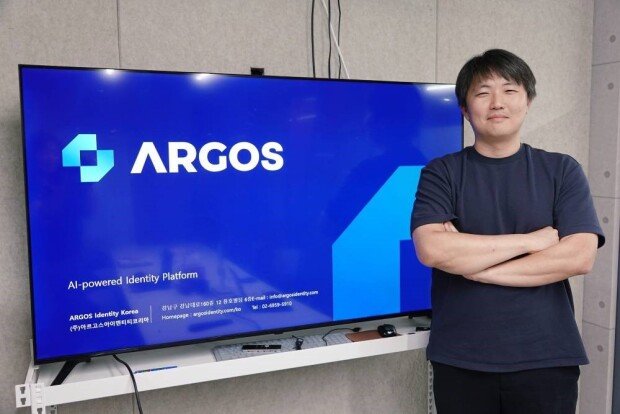
ARGOS was founded in 2018 by CEO Won-kyu Lee, a former IT developer, and Director Sung-ho Son, a former semiconductor data analyst. The company began its global identity verification business in earnest in 2020, establishing a U.S. headquarters to execute a strategy that spans both domestic and international markets.
At the core of ARGOS's business is ‘ID Check,’ an integrated, AI-based global identity verification platform. In a non-face-to-face environment, the solution not only provides swift and accurate identity verification using AI but also features advanced detection capabilities for forged or altered ID cards and facial images. "We saw that as services and finance continued to grow into cross-border businesses, building trust between providers and consumers through a reliable verification process was essential," explained Son. "We started ARGOS with the conviction that global business trends would inevitably require global identity verification."
The company's name is inspired by the giant ‘Argos’ from Greek mythology, who had 100 eyes. This reflects the company's mission to be a perfect guardian, ‘watching over every ID and forgery attempt worldwide without missing a thing.’ True to its name, ARGOS provides services that recognize and detect forgeries across 4,000 different types of identification from 195 countries, solidifying its position as a leading global identity verification platform.
Differentiation Through an End-to-End Integrated Solution
ARGOS's ID Check is built on eKYC (electronic Know Your Customer) technology. As a digital version of traditional in-person identity verification procedures, eKYC securely verifies customer identities online through technologies like OCR (Optical Character Recognition), ID authenticity checks, and facial recognition, offering the convenience of verification via smartphone or computer.
Crucially, ARGOS differentiates itself by providing a complete "end-to-end" solution that covers the entire process from start to finish, rather than just offering a simple technology engine. "Our service is about 30% engine functionality and 70% operational and custom features," said Son. "Most competitors focus on developing unit engines like OCR or facial recognition. But when clients adopt these unit engines, they need additional development for management and operation. We developed our service as an end-to-end solution to resolve this pain point for our customers."
This end-to-end approach has resonated with clients. Companies can meet all their identity verification needs with ARGOS alone, eliminating the need to contract with multiple vendors. This is not only cost-effective but also improves operational efficiency. According to ARGOS, its service can reduce costs by more than 50% and allow a team of just three people to handle tasks that would typically require about 20.
Furthermore, ARGOS handles the complexities of complying with different ID systems and regulations like KYC (Know Your Customer) and AML (Anti-Money Laundering) in various countries, as well as detecting fraud and unauthorized users. As a result, the company has secured 28 clients, primarily in South Korea and the United States, and has received positive feedback. "It's impossible to block all fraudulent or unauthorized users with a single-engine process," Son stated. "With our end-to-end approach, ARGOS uses a web-like network to block forgery attempts. We see this as a key part of our effective strategy."
A ‘Game-Changing Move’ to Target Enterprise Clients
ARGOS faced its share of trial and error while establishing its B2B presence. Initially, the company targeted small and medium-sized businesses (SMBs) with an annual fee of $10,000. However, many SMBs struggled with global expansion, and their ventures were often discontinued. Recognizing this, ARGOS shifted its focus to enterprise clients in the second half of last year, defining them as businesses able to pay an annual fee of $100,000.
"When we were targeting SMBs, we realized we had made a business misjudgment as issues like canceled overseas expansions arose," Son recalled. "But large enterprises aren't immune to seeking capital efficiency; in fact, they scrutinized cost-effectiveness even more. After shifting our target to enterprises, we revamped our internal processes."
Since the pivot, fintech company Hanpass and overseas remittance specialist Sentbe have adopted ARGOS's services. ARGOS supports them by providing fast and accurate AI-powered identity verification in non-face-to-face settings, enhancing both user convenience and trust. As ARGOS solves its clients' challenges, its own technology becomes more sophisticated.
"We are accumulating valuable experience in verifying and preventing fraud for foreigners located abroad," said Son. "Verification and fraud prevention require constant updates and management. Authentication methods are evolving from physical IDs to mobile IDs, and forgery techniques are advancing with technologies like deepfakes. Continuous management in this environment is critical."
ARGOS has also partnered with Melon Ticket, the ticketing platform of entertainment giant Kakao Entertainment. With the K-pop boom leading to fierce competition for concert tickets among international fans and a surge in scalping, ARGOS has emerged as a problem-solver. Its advanced technology not only verifies identities accurately but also strengthens the fairness of the ticketing process.
"At first, it was challenging to accommodate the diverse needs of our clients. But by tackling these challenges one by one, like laying bricks, we've built our own unique competitive edge," Son remarked. "We aim to enhance ARGOS's value by incorporating various functions into a single platform. To do that, understanding our clients' value chain is crucial."
Striving for a More Sophisticated Verification System
Looking ahead, ARGOS is pursuing a differentiated strategy to prepare for the era of Agentic AI—AI agents that set their own goals and act autonomously. "The more a service is globally oriented, the more it needs global identity verification," Son stated. "A sophisticated verification system will become even more critical in an era where AI agents conduct transactions and collaborate directly."
ARGOS's product roadmap for this year includes adding features such as identity verification for AI agents, knowledge-based simple identity verification, and mobile ID verification. The company also aims to build a system based on generative AI that supports a wide range of verification methods.
ARGOS is regarded as a success story, demonstrating how a Korean company can achieve a technological edge in the global identity verification field. Its strength in cost-effectiveness has earned the trust of its clients, and the company places a high priority on lowering the Total Cost of Ownership (TCO) while enhancing service quality.
"What we've built so far is only about 10% of what we envision for our identity platform," Son emphasized. "We are working to incorporate a technology engine that allows for free customization according to client policies and can respond to all types of forgery. For our clients doing global business, this is a goal we are determined to achieve."
Meanwhile, ARGOS is receiving support from a global corporate collaboration project hosted by the Korea Institute of Startup & Entrepreneurship Development (KISED) and Amazon Web Services (AWS), and managed by the Seoul National University of Science and Technology (SeoulTech). "For a startup, collaboration with large corporations can be limited," Son said. "This global collaboration program has been a great help, providing us with opportunities to expand in various ways."
By Kui-im Park (luckyim@itdonga.com)
* This article was written with support from Seoul National University of Science and Technology.
based platform, 'ID Check,' which provides swift and accurate identity
verification in non-face-to-face environments.
- The company differentiates itself by offering an end-to-end solution that covers
the entire verification process, making it cost-effective and efficient for clients.
- Recently, ARGOS has shifted its focus to enterprise clients and has partnered
with companies like Hanpass and Sentbe to enhance user convenience and
trust through advanced AI-powered identity verification.
As the global digital economy expands, the importance of cross-border business is rapidly increasing. This trend has created a pressing need for companies to adopt reliable identity verification solutions for users worldwide. The necessity is further amplified as e-commerce, financial services, and digital platforms become integral to daily life, while fraud using sophisticated AI grows exponentially. Stepping up to meet this market demand is ARGOS(ARGOS Identity Korea), a startup garnering significant attention.
Won-kyu Lee, CEO of ARGOS Identity Korea / source=IT dongA
ARGOS was founded in 2018 by CEO Won-kyu Lee, a former IT developer, and Director Sung-ho Son, a former semiconductor data analyst. The company began its global identity verification business in earnest in 2020, establishing a U.S. headquarters to execute a strategy that spans both domestic and international markets.
At the core of ARGOS's business is ‘ID Check,’ an integrated, AI-based global identity verification platform. In a non-face-to-face environment, the solution not only provides swift and accurate identity verification using AI but also features advanced detection capabilities for forged or altered ID cards and facial images. "We saw that as services and finance continued to grow into cross-border businesses, building trust between providers and consumers through a reliable verification process was essential," explained Son. "We started ARGOS with the conviction that global business trends would inevitably require global identity verification."
The company's name is inspired by the giant ‘Argos’ from Greek mythology, who had 100 eyes. This reflects the company's mission to be a perfect guardian, ‘watching over every ID and forgery attempt worldwide without missing a thing.’ True to its name, ARGOS provides services that recognize and detect forgeries across 4,000 different types of identification from 195 countries, solidifying its position as a leading global identity verification platform.
Differentiation Through an End-to-End Integrated Solution
ARGOS's ID Check is built on eKYC (electronic Know Your Customer) technology. As a digital version of traditional in-person identity verification procedures, eKYC securely verifies customer identities online through technologies like OCR (Optical Character Recognition), ID authenticity checks, and facial recognition, offering the convenience of verification via smartphone or computer.
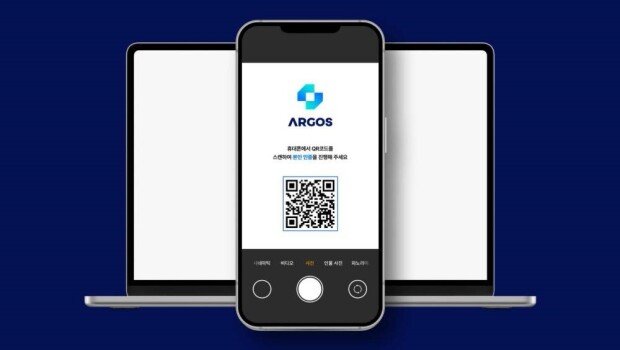
Argos operates on an end-to-end model, providing a comprehensive, integrated solution that covers the entire process / source= ARGOS Identity Korea
Crucially, ARGOS differentiates itself by providing a complete "end-to-end" solution that covers the entire process from start to finish, rather than just offering a simple technology engine. "Our service is about 30% engine functionality and 70% operational and custom features," said Son. "Most competitors focus on developing unit engines like OCR or facial recognition. But when clients adopt these unit engines, they need additional development for management and operation. We developed our service as an end-to-end solution to resolve this pain point for our customers."
This end-to-end approach has resonated with clients. Companies can meet all their identity verification needs with ARGOS alone, eliminating the need to contract with multiple vendors. This is not only cost-effective but also improves operational efficiency. According to ARGOS, its service can reduce costs by more than 50% and allow a team of just three people to handle tasks that would typically require about 20.
Furthermore, ARGOS handles the complexities of complying with different ID systems and regulations like KYC (Know Your Customer) and AML (Anti-Money Laundering) in various countries, as well as detecting fraud and unauthorized users. As a result, the company has secured 28 clients, primarily in South Korea and the United States, and has received positive feedback. "It's impossible to block all fraudulent or unauthorized users with a single-engine process," Son stated. "With our end-to-end approach, ARGOS uses a web-like network to block forgery attempts. We see this as a key part of our effective strategy."
A ‘Game-Changing Move’ to Target Enterprise Clients
ARGOS faced its share of trial and error while establishing its B2B presence. Initially, the company targeted small and medium-sized businesses (SMBs) with an annual fee of $10,000. However, many SMBs struggled with global expansion, and their ventures were often discontinued. Recognizing this, ARGOS shifted its focus to enterprise clients in the second half of last year, defining them as businesses able to pay an annual fee of $100,000.
"When we were targeting SMBs, we realized we had made a business misjudgment as issues like canceled overseas expansions arose," Son recalled. "But large enterprises aren't immune to seeking capital efficiency; in fact, they scrutinized cost-effectiveness even more. After shifting our target to enterprises, we revamped our internal processes."
Since the pivot, fintech company Hanpass and overseas remittance specialist Sentbe have adopted ARGOS's services. ARGOS supports them by providing fast and accurate AI-powered identity verification in non-face-to-face settings, enhancing both user convenience and trust. As ARGOS solves its clients' challenges, its own technology becomes more sophisticated.
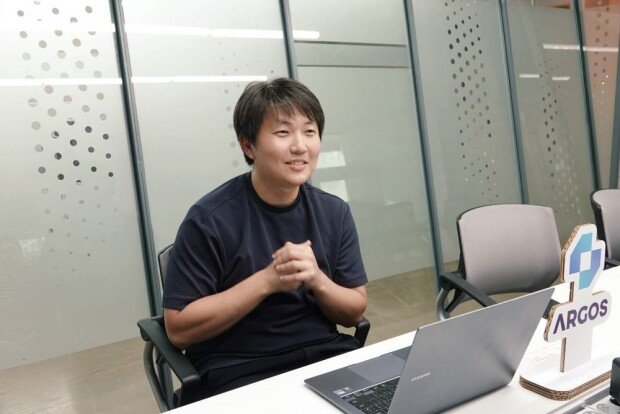
ARGOS focuses on addressing the needs of its clients while simultaneously advancing its own technological capabilities / source=IT dongA
"We are accumulating valuable experience in verifying and preventing fraud for foreigners located abroad," said Son. "Verification and fraud prevention require constant updates and management. Authentication methods are evolving from physical IDs to mobile IDs, and forgery techniques are advancing with technologies like deepfakes. Continuous management in this environment is critical."
ARGOS has also partnered with Melon Ticket, the ticketing platform of entertainment giant Kakao Entertainment. With the K-pop boom leading to fierce competition for concert tickets among international fans and a surge in scalping, ARGOS has emerged as a problem-solver. Its advanced technology not only verifies identities accurately but also strengthens the fairness of the ticketing process.
"At first, it was challenging to accommodate the diverse needs of our clients. But by tackling these challenges one by one, like laying bricks, we've built our own unique competitive edge," Son remarked. "We aim to enhance ARGOS's value by incorporating various functions into a single platform. To do that, understanding our clients' value chain is crucial."
Striving for a More Sophisticated Verification System
Looking ahead, ARGOS is pursuing a differentiated strategy to prepare for the era of Agentic AI—AI agents that set their own goals and act autonomously. "The more a service is globally oriented, the more it needs global identity verification," Son stated. "A sophisticated verification system will become even more critical in an era where AI agents conduct transactions and collaborate directly."
ARGOS's product roadmap for this year includes adding features such as identity verification for AI agents, knowledge-based simple identity verification, and mobile ID verification. The company also aims to build a system based on generative AI that supports a wide range of verification methods.
ARGOS is regarded as a success story, demonstrating how a Korean company can achieve a technological edge in the global identity verification field. Its strength in cost-effectiveness has earned the trust of its clients, and the company places a high priority on lowering the Total Cost of Ownership (TCO) while enhancing service quality.
"What we've built so far is only about 10% of what we envision for our identity platform," Son emphasized. "We are working to incorporate a technology engine that allows for free customization according to client policies and can respond to all types of forgery. For our clients doing global business, this is a goal we are determined to achieve."
Meanwhile, ARGOS is receiving support from a global corporate collaboration project hosted by the Korea Institute of Startup & Entrepreneurship Development (KISED) and Amazon Web Services (AWS), and managed by the Seoul National University of Science and Technology (SeoulTech). "For a startup, collaboration with large corporations can be limited," Son said. "This global collaboration program has been a great help, providing us with opportunities to expand in various ways."
By Kui-im Park (luckyim@itdonga.com)
* This article was written with support from Seoul National University of Science and Technology.




![“장동혁 서문시장 동선 따라 걸은 한동훈…‘압도한다’ 보여주려”[정치를 부탁해]](https://dimg.donga.com/c/138/175/90/1/wps/NEWS/IMAGE/2026/03/02/133447038.1.jpg)



 About Dong-A Ilbo