

SigmaK's AI Vision: Tackling Urban Disasters and Industrial Accidents in Real-Time
SigmaK's AI Vision: Tackling Urban Disasters and Industrial Accidents in Real-Time
Posted September. 02, 2025 14:00,
Updated September. 02, 2025 14:06
- SigmaK LTD., a Korean startup, is leveraging AI-based computer vision to
address urban and industrial safety issues by monitoring CCTV footage for
worker safety compliance, detecting abnormal behavior, and identifying flood
risks.
- The technology not only monitors but also provides actionable guidance on how
to respond to detected risks, integrating Large Language Models (LLM) and
Vision-Language Models (VLM) for comprehensive analysis.
- SigmaK aims to expand globally, focusing on areas with poor security
infrastructure and generating revenue through a subscription-based service.
With recurring tragedies like major industrial accidents and urban flooding becoming critical social issues, the demand is surging for technology that can detect risks in real-time and enable early intervention. SigmaK LTD., a Korean startup armed with AI-based computer vision, is stepping up to address these challenges through its advanced video analysis technology. The system monitors CCTV footage to verify worker safety gear compliance, detect abnormal behavior, identify flood risks in rivers, and oversee security in city alleyways. Crucially, it moves beyond mere monitoring to provide actionable guidance on how to respond. We sat down with SigmaK CEO Goo-man Park to get a closer look at the solution.
From Construction Site Safety to River Flood Alerts, RAG-Powered AI Helps Drive Early Response
Park is a professor in the Department of Smart ICT Convergence Engineering at Seoul National University of Science and Technology (SeoulTech). In 2023, he founded SigmaK, an AI computer vision company, as a faculty-led startup.
“As a professor leading various projects with cutting-edge technology, I felt a strong motivation to contribute to society,” Park explained. “I realized that my primary research field, computer vision, could offer real help in tackling persistent social problems like major accidents and flooding. That inspired me to launch this venture with the students who have been my long-time research partners, aiming to bring our shared vision to life.”
SigmaK’s computer vision technology enables the detection and analysis of a wide range of events within a video frame. For example, it can check if a worker in CCTV footage is wearing all required safety equipment or detect and analyze unusual behaviors, such as a person collapsing on a factory floor.
When applied to riverside CCTVs, the technology can use an augmented reality overlay to detect the danger of a river overflowing and issue immediate alerts. In back alleys, it can spot suspicious activity, like an individual climbing over a wall, and notify a control center to help ensure public safety.
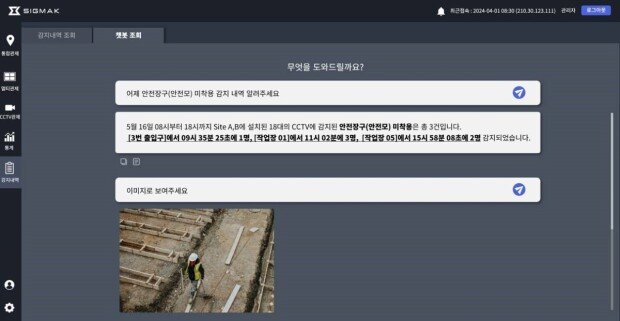
“Our solution stands out because it integrates Large Language Models (LLM) and Vision-Language Models (VLM) into its intelligent comprehensive control system, allowing it to not just monitor but also analyze detected risk situations,” said Park. “For instance, it can present event statistics filtered by time, channel, or on a daily, weekly, and monthly basis, and even compare weekly or monthly data against other periods. This analysis can be performed through a conversational AI chatbot using natural language.”
He continued, “We’ve also set ourselves apart by applying Retrieval-Augmented Generation (RAG) technology. RAG is a technique that helps an LLM generate answers or text by first retrieving relevant information from a vast set of documents. For example, in the event of a river flood, it can present pre-learned information on where and how to evacuate. By combining language models, vision-language models, and RAG, SigmaK is advancing its technology beyond simply sending a flood risk alarm to providing clear guidance on what people should do next.”
“Our ‘Integrated Control’ feature allows us to cover large areas by managing all installed cameras in groups and monitoring them based on their location on a map. We also facilitate intuitive management by color-coding these groups,” Park added. “Our technology is highly versatile and opens the door for various collaborations. For instance, we have experience developing a system that combines vehicle license plate recognition with charger integration for automated payments at charging stations.”
So, what are the most urgent technical hurdles for SigmaK to overcome?
“Because the technology operates based on CCTV footage, there are cases where analysis or detection becomes difficult on days with inclement weather or heavy fog,” Park noted. “We are working to advance the technology through methods like image enhancement based on the context before and after the bad weather, and by extracting and removing fog components. We are also accelerating the development of our VLM and LLM server modules to enable the AI chatbot to answer a wider variety of questions with greater detail.”
Expanding into AI-Powered Video Generation and Securing Government Support
SigmaK is also applying its computer vision expertise to the video generation sector.
“Our company also assists with content creation using generative AI models,” Park said. “We produce a variety of content, including films, animations, documentaries, and advertisements, using both commercial tools and our own fine-tuned models. This is particularly useful as the AI can learn an existing style to automatically generate new videos or content. For example, we are currently in the Proof of Concept (PoC) stage with a major terrestrial broadcasting company that requested we automatically generate CG for its news programs in the network’s unique style.”
“We’ve also had great success in animation,” he continued. “A SeoulTech student won an award for an animation produced with the SigmaK solution, and this month, we were selected for the Korea Creative Content Agency's (KOCCA) AI Content Support Program. We also plan to submit a work created with our solution to the Busan International Film Festival this September.”
A strong partner has been instrumental in supporting SigmaK's rapid growth: the SeoulTech Startup Support Center.
“We received seed investment from SeoulTech’s technology holding company and are regularly provided with infrastructure support and technology promotion opportunities for startups. They’ve also created opportunities for business collaboration among tenant companies,” said Park. “The technology holding company and the Startup Support Center truly understand the challenges startups face and know what kind of support is needed at each stage, so they provide timely and appropriate assistance.”
Looking ahead, SigmaK plans to enter the global market.
“The members of SigmaK prioritize the public value of contributing to humanity through technology. Therefore, we aim to serve mankind by deploying our technology in places with poor security infrastructure, like developing nations, or in countries where CCTV-based monitoring is essential,” Park stated. “In the process, we have set a goal to become a global company by generating stable revenue through a subscription-based service and establishing overseas branches. We will devote ourselves to technological development to achieve both technological advancement and global market entry.”
By Dong-jin Kim (kdj@itdonga.com)
* This article was written with support from Seoul National University of Science and Technology.
address urban and industrial safety issues by monitoring CCTV footage for
worker safety compliance, detecting abnormal behavior, and identifying flood
risks.
- The technology not only monitors but also provides actionable guidance on how
to respond to detected risks, integrating Large Language Models (LLM) and
Vision-Language Models (VLM) for comprehensive analysis.
- SigmaK aims to expand globally, focusing on areas with poor security
infrastructure and generating revenue through a subscription-based service.
With recurring tragedies like major industrial accidents and urban flooding becoming critical social issues, the demand is surging for technology that can detect risks in real-time and enable early intervention. SigmaK LTD., a Korean startup armed with AI-based computer vision, is stepping up to address these challenges through its advanced video analysis technology. The system monitors CCTV footage to verify worker safety gear compliance, detect abnormal behavior, identify flood risks in rivers, and oversee security in city alleyways. Crucially, it moves beyond mere monitoring to provide actionable guidance on how to respond. We sat down with SigmaK CEO Goo-man Park to get a closer look at the solution.
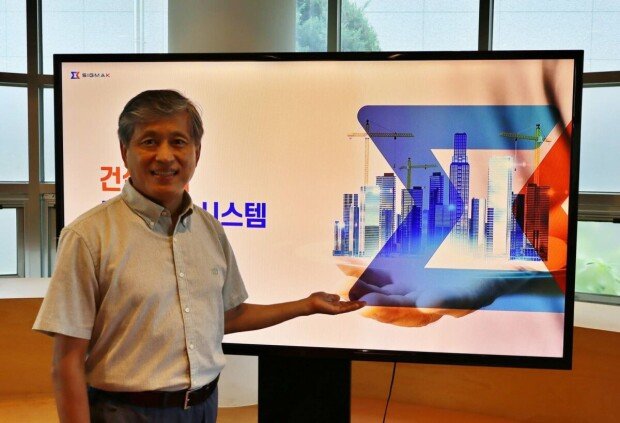
Goo-man Park, CEO of SigmaK LTD. / source=IT dongA
From Construction Site Safety to River Flood Alerts, RAG-Powered AI Helps Drive Early Response
Park is a professor in the Department of Smart ICT Convergence Engineering at Seoul National University of Science and Technology (SeoulTech). In 2023, he founded SigmaK, an AI computer vision company, as a faculty-led startup.
“As a professor leading various projects with cutting-edge technology, I felt a strong motivation to contribute to society,” Park explained. “I realized that my primary research field, computer vision, could offer real help in tackling persistent social problems like major accidents and flooding. That inspired me to launch this venture with the students who have been my long-time research partners, aiming to bring our shared vision to life.”
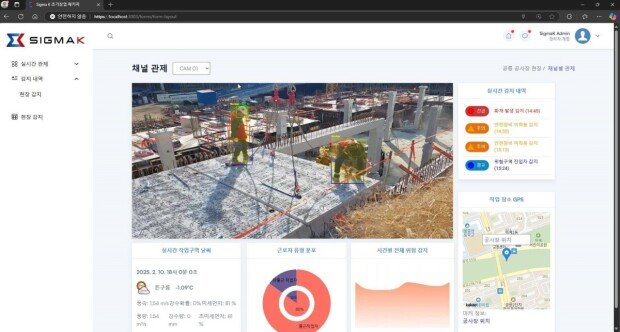
SigmaK’s computer vision technology enables the detection and analysis of a wide range of events within a video frame. For example, it can check if a worker in CCTV footage is wearing all required safety equipment or detect and analyze unusual behaviors, such as a person collapsing on a factory floor.
The SigmaK solution monitoring a construction site / source=SigmaK
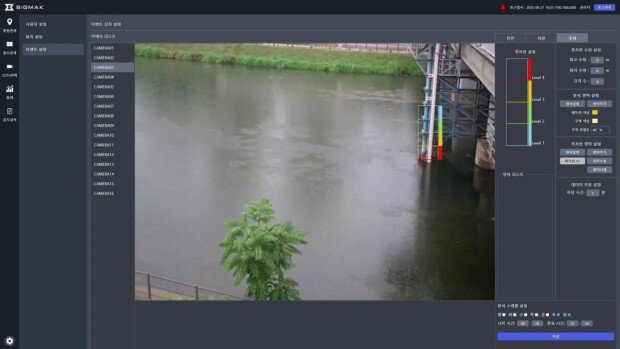
When applied to riverside CCTVs, the technology can use an augmented reality overlay to detect the danger of a river overflowing and issue immediate alerts. In back alleys, it can spot suspicious activity, like an individual climbing over a wall, and notify a control center to help ensure public safety.
The SigmaK solution detecting river flood risk / source=SigmaK
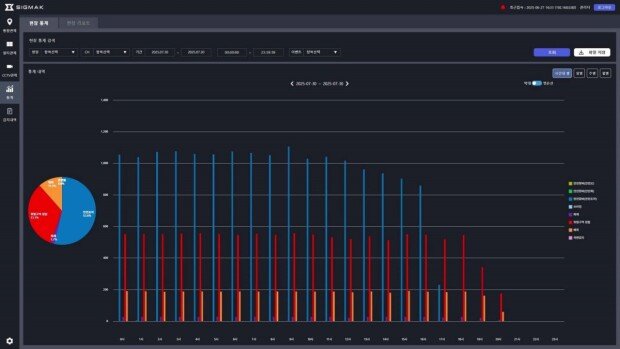
“Our solution stands out because it integrates Large Language Models (LLM) and Vision-Language Models (VLM) into its intelligent comprehensive control system, allowing it to not just monitor but also analyze detected risk situations,” said Park. “For instance, it can present event statistics filtered by time, channel, or on a daily, weekly, and monthly basis, and even compare weekly or monthly data against other periods. This analysis can be performed through a conversational AI chatbot using natural language.”
He continued, “We’ve also set ourselves apart by applying Retrieval-Augmented Generation (RAG) technology. RAG is a technique that helps an LLM generate answers or text by first retrieving relevant information from a vast set of documents. For example, in the event of a river flood, it can present pre-learned information on where and how to evacuate. By combining language models, vision-language models, and RAG, SigmaK is advancing its technology beyond simply sending a flood risk alarm to providing clear guidance on what people should do next.”
The SigmaK solution presenting event statistics / source=SigmaK
The SigmaK solution providing natural language Q&A with its AI chatbot / source= SigmaK
“Our ‘Integrated Control’ feature allows us to cover large areas by managing all installed cameras in groups and monitoring them based on their location on a map. We also facilitate intuitive management by color-coding these groups,” Park added. “Our technology is highly versatile and opens the door for various collaborations. For instance, we have experience developing a system that combines vehicle license plate recognition with charger integration for automated payments at charging stations.”
So, what are the most urgent technical hurdles for SigmaK to overcome?
“Because the technology operates based on CCTV footage, there are cases where analysis or detection becomes difficult on days with inclement weather or heavy fog,” Park noted. “We are working to advance the technology through methods like image enhancement based on the context before and after the bad weather, and by extracting and removing fog components. We are also accelerating the development of our VLM and LLM server modules to enable the AI chatbot to answer a wider variety of questions with greater detail.”
Expanding into AI-Powered Video Generation and Securing Government Support
SigmaK is also applying its computer vision expertise to the video generation sector.
“Our company also assists with content creation using generative AI models,” Park said. “We produce a variety of content, including films, animations, documentaries, and advertisements, using both commercial tools and our own fine-tuned models. This is particularly useful as the AI can learn an existing style to automatically generate new videos or content. For example, we are currently in the Proof of Concept (PoC) stage with a major terrestrial broadcasting company that requested we automatically generate CG for its news programs in the network’s unique style.”
“We’ve also had great success in animation,” he continued. “A SeoulTech student won an award for an animation produced with the SigmaK solution, and this month, we were selected for the Korea Creative Content Agency's (KOCCA) AI Content Support Program. We also plan to submit a work created with our solution to the Busan International Film Festival this September.”
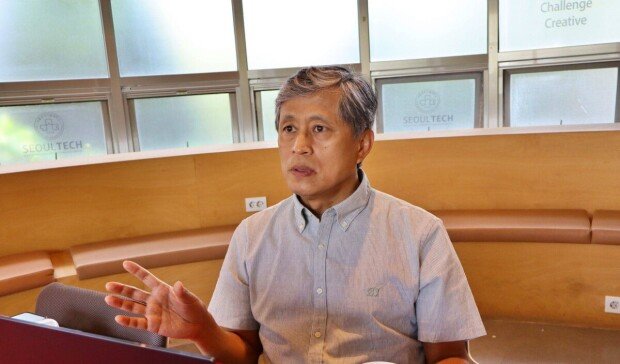
Goo-man Park, CEO of SigmaK / Credit=IT dongA
A strong partner has been instrumental in supporting SigmaK's rapid growth: the SeoulTech Startup Support Center.
“We received seed investment from SeoulTech’s technology holding company and are regularly provided with infrastructure support and technology promotion opportunities for startups. They’ve also created opportunities for business collaboration among tenant companies,” said Park. “The technology holding company and the Startup Support Center truly understand the challenges startups face and know what kind of support is needed at each stage, so they provide timely and appropriate assistance.”
Looking ahead, SigmaK plans to enter the global market.
“The members of SigmaK prioritize the public value of contributing to humanity through technology. Therefore, we aim to serve mankind by deploying our technology in places with poor security infrastructure, like developing nations, or in countries where CCTV-based monitoring is essential,” Park stated. “In the process, we have set a goal to become a global company by generating stable revenue through a subscription-based service and establishing overseas branches. We will devote ourselves to technological development to achieve both technological advancement and global market entry.”
By Dong-jin Kim (kdj@itdonga.com)
* This article was written with support from Seoul National University of Science and Technology.








 About Dong-A Ilbo