

South Korea, U.S. agree on defense spending hike
South Korea, U.S. agree on defense spending hike
Posted September. 02, 2025 07:50,
Updated September. 02, 2025 07:50
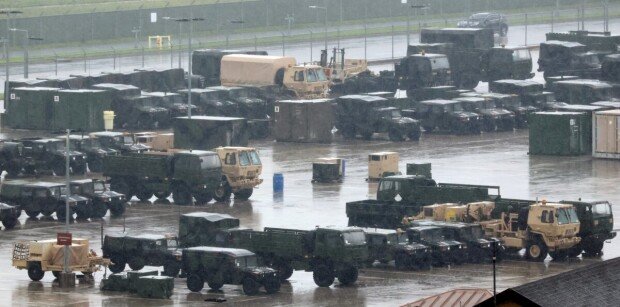
South Korea and the United States are reported to have agreed to gradually raise South Korea’s defense budget to roughly 3.5 percent of gross domestic product. The two sides are also reportedly discussing a plan for South Korea to purchase about $25 billion in U.S.-made weapons by 2030.
On Sept. 1, a U.S. government official said South Korea has agreed to raise its defense spending to 3.5 percent of gross domestic product. A South Korean government official said negotiations are ongoing at the working level over specific figures. This indicates that the two sides reached a consensus on raising defense spending to 3.5 percent of GDP during working-level talks ahead of the South Korea-U.S. summit.
Earlier, on Aug. 25 local time, President Lee Jae-myung said in a lecture at the Center for Strategic and International Studies in Washington, shortly after the summit, that defense spending will be increased. The agreement to raise defense spending to 3.5 percent of GDP is lower than the 5 percent level that the Trump administration reached with NATO allies. NATO has decided to increase direct defense spending to 3.5 percent of GDP and indirect security costs, including cyber defense, to 1.5 percent of GDP by 2035.
South Korea’s defense budget for next year is set at 66.29 trillion won, an 8.2 percent increase from this year, raising defense spending to 2.42 percent of GDP. Based on next year’s budget, increasing defense spending to 3.5 percent of GDP would require an additional 30 trillion won. A government source said gradually increasing defense spending to 3.5 percent of GDP is not a difficult task.
South Korea and the United States are reportedly discussing a plan for South Korea to purchase $25 billion in U.S. weapons by 2030. At the summit, U.S. President Donald Trump mentioned the B-2 stealth bomber and said he expects South Korea to purchase a large amount of U.S. military equipment.
As a result, follow-up negotiations between the two sides are expected over the scale of U.S. arms purchases. South Korea is currently proceeding with planned acquisitions, including the F-35A. However, as discussions continue on South Korea taking a greater role in the defense of the Korean Peninsula as part of “alliance modernization,” some observers believe talks could expand to cutting-edge weapons that the United States has not previously sold.
Na-Ri Shin journari@donga.com

![[속보]트럼프 “이란과 14일 합의 서명”…혁명수비대 “절대 없을 것”](https://dimg.donga.com/c/138/175/90/1/wps/NEWS/IMAGE/2026/06/14/134105551.1.jpg)






 About Dong-A Ilbo