

Legal rulings question legality of Trump tariffs
Legal rulings question legality of Trump tariffs
Posted September. 01, 2025 07:43,
Updated September. 01, 2025 07:43
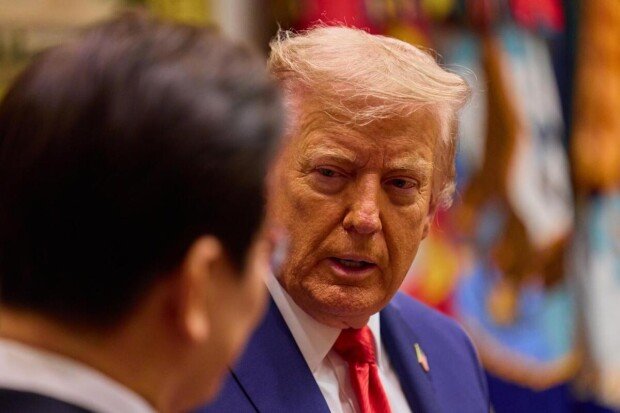
Controversy is rising over the legality of tariffs U.S. President Donald Trump has imposed on South Korea and other nations. In May, the Court of International Trade ruled the tariffs invalid, saying they overstepped Congress’s authority. On Aug. 29, the U.S. Court of Appeals for the Federal Circuit in Washington, D.C. upheld that view, confirming that only Congress, not the president, has the authority to impose tariffs.
To avoid disruption from an abrupt halt in tariffs and to allow the second Trump administration time to appeal to the U.S. Supreme Court, the current tariffs will remain in place until Oct. 14. President Trump and Attorney General Pam Bondi have indicated they plan to pursue an appeal.
On Aug. 29, the U.S. Court of Appeals for the Federal Circuit ruled on the International Emergency Economic Powers Act, or IEEPA, which President Trump cited as the authority for the tariffs. The court said that while the IEEPA allows the president to take various measures in response to a national emergency, it does not grant the power to impose tariffs or taxes.
Of the 11 judges involved in the ruling, seven deemed the tariffs illegal. This applies to reciprocal tariffs imposed by the second Trump administration, justified by the U.S.’s large trade deficits, as well as the so-called “fentanyl tariffs” on countries including China and Canada for failing to curb the drug’s flow into the United States.
However, tariffs on specific items such as automobiles, steel, and aluminum, imposed under Section 232 of the Trade Expansion Act, are unrelated to the IEEPA and will remain in effect. That law allows the president to restrict imports if foreign goods are considered a threat to national security.
Immediately after the ruling, President Trump reacted on Truth Social, saying, “An extremely biased appellate court has issued a wrong decision that tariffs must be withdrawn. If the tariffs disappear, it will bring a total disaster to our country.” He emphasized his intention to appeal, adding, “With the help of the Supreme Court, we will use them [the tariffs] to benefit our country.”
If the Supreme Court issues a similar ruling to the trial and appellate courts, the tariff policy, a central principle and key “negotiating tool” of the second Trump administration, could face major setbacks. There is also speculation that trade agreements with countries such as South Korea, which have already been reached, could be reopened for negotiation.
Of the nine lifetime-appointed U.S. Supreme Court justices, six are considered conservative. Still, it is difficult to predict whether the court will overturn the lower court rulings and issue a decision favorable to President Trump. The government reportedly believes it is too early to assess the potential impact and plans to monitor developments closely until the Supreme Court delivers its final decision.
Jin-Woo Shin niceshin@donga.com

![[단독]“서강대교 넘지말라” 조성현 대령, 내란 피의자 수사](https://dimg.donga.com/c/138/175/90/1/wps/NEWS/IMAGE/2026/06/27/134192351.1.jpg)






 About Dong-A Ilbo