

AI boosts demand for low-power DRAM chips
AI boosts demand for low-power DRAM chips
Posted March. 11, 2026 08:47,
Updated March. 11, 2026 08:47
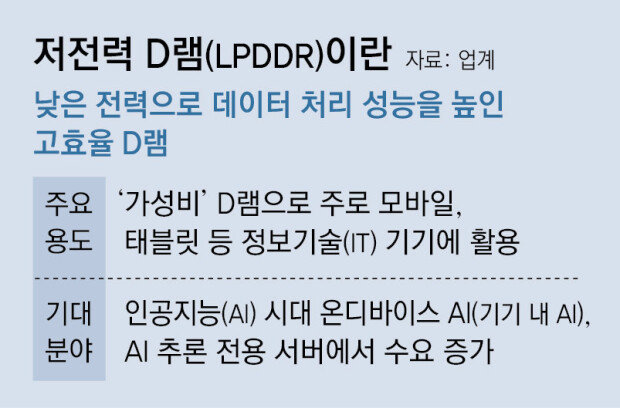
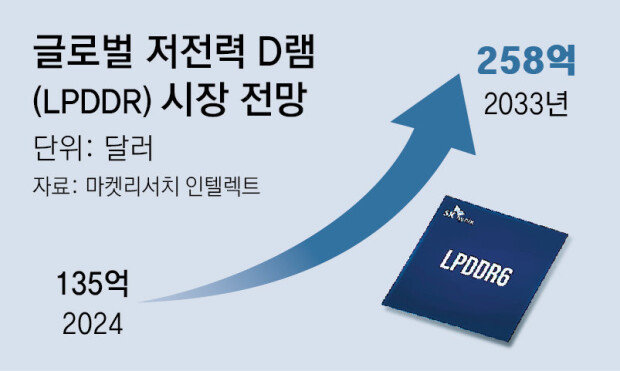
The rise of artificial intelligence is boosting demand for low-power, high-efficiency memory chips. The market is moving away from costly, high-performance high-bandwidth memory (HBM) toward cost-effective memory designed for AI applications. Samsung Electronics, SK Hynix, and Micron are intensifying competition with new products.
On March 10, SK hynix announced it developed the world’s first 16-gigabit low-power DDR6 DRAM using a sixth-generation 1c process. LPDDR is a type of DRAM used in mobile devices, including smartphones and tablets. The 1c process is currently the most advanced DRAM manufacturing technology in commercial use. SK hynix said LPDDR6 improves data processing speeds by 33% compared with the previous LPDDR5X generation while reducing power consumption by more than 20%.
SK hynix plans to complete production preparations in the first half of the year and begin supplying products in the second half. The company said the chips will be primarily used for on-device AI in smartphones and tablets, and it aims to build a lineup of memory optimized for AI applications.
LPDDR is also expected to play an increasing role in AI servers. It is a key component of small capacity modules called SOCAMM, which combine four LPDDR chips into a single DRAM module. SOCAMM modules offer better performance and lower power consumption than conventional server DRAM, driving demand. The current commercial version, SOCAMM2, is based on LPDDR5X. Samsung Electronics has started mass production, SK hynix is optimizing supplies for customers, and Micron has developed a version with roughly 33% higher capacity than Samsung and SK hynix’s SOCAMM2 and has recently provided samples to clients.
The growing attention on SOCAMM reflects AI’s shift from training to inference. During training, HBM is essential for processing large datasets quickly. In inference, the focus is on generating results from a trained model efficiently. HBM is not required at full performance and can be inefficient due to high power use and heat generation. SOCAMM provides a balance, offering higher performance than standard DRAM with better power efficiency and heat control than HBM. A semiconductor industry official said, “As SOCAMM competition intensifies, demand for LPDDR will expand.”
The semiconductor industry is investing heavily in research and development to advance memory products, including HBM and SOCAMM, to meet the rapidly evolving AI market. According to recent financial statements, Samsung Electronics spent a record 37.74 trillion won on R&D last year, a 7.8% increase from the previous year. SK hynix also recorded its highest-ever R&D spending, investing 6.73 trillion won.
박현익 beepark@donga.com








 About Dong-A Ilbo