

SK hynix unveils high-capacity 321-layer NAND product
SK hynix unveils high-capacity 321-layer NAND product
Posted August. 26, 2025 07:46,
Updated August. 26, 2025 07:46
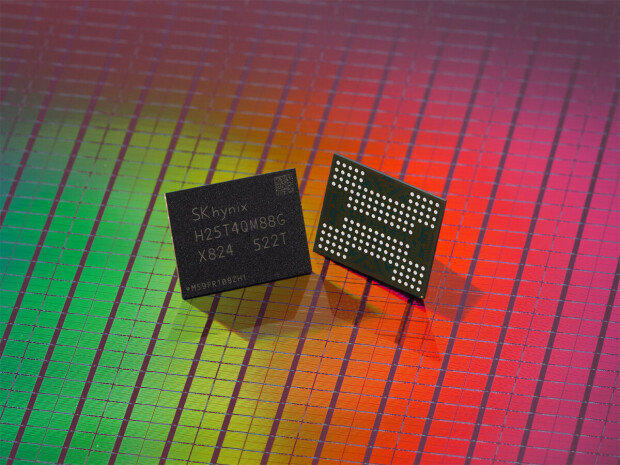
SK hynix announced on Aug. 25 that it has completed development of its 321-layer NAND flash memory and has begun mass production, making it the first company in the world to launch a NAND product with more than 300 layers.
China’s Yangtze Memory Technologies (YMTC) began mass-producing 294-layer NAND in February, while Samsung Electronics has been producing 286-layer NAND since April last year. In NAND memory, adding more layers increases storage capacity and improves space efficiency.
“We have once again pushed the technological limits by achieving more than 300 layers, making this the highest-density NAND currently available,” an SK hynix official said. “We plan to target the AI data center market in earnest starting in the first half of next year.”
To strengthen cost competitiveness, the company developed the new product with a 2-terabyte capacity, double that of its previous NAND. It also increased the number of “planes,” units that operate independently within the NAND, from four to six, marking a technological innovation.
Generally, increasing NAND capacity can slow data processing, as more information is stored in the same space. SK hynix said that by increasing the number of planes, it has doubled data transfer speeds compared with its previous products. Write performance increased by 56 percent and read performance by 18 percent. Power efficiency was also improved, and the company expects strong demand in AI data centers, where low power consumption is essential.
SK hynix will initially produce and sell the 321-layer NAND for PCs and plans to expand sales to data centers and smartphones in the future. “With the mass production of this product, we have secured a high-capacity product portfolio,” said Jeong Woo-pyo, SK hynix vice president in charge of NAND development. “We will make a major leap to meet the rapidly growing AI demand and the high-performance requirements of the data center market.”
박현익 기자 beepark@donga.com








 About Dong-A Ilbo