

Petrochemical sector struggles amid global supply crisis
Petrochemical sector struggles amid global supply crisis
Posted August. 15, 2025 08:19,
Updated August. 15, 2025 08:19
South Korea’s petrochemical industry is in a precarious position, struggling amid a global supply crisis and an economic slowdown. Once a major export driver, the sector is now facing weak earnings and tightening liquidity.
A key factor in the industry’s decline is China, its largest export market, which has sharply increased production and launched a low-price offensive. While the industry could have prepared for potential challenges during its peak, overconfidence in the belief that “China’s technology could not surpass Korea’s in a short time” contributed to its current troubles.
Rather than addressing the crisis with accurate analysis and effective measures, Hanwha Group and DL Group have engaged in a blame game, ending a 26-year partnership almost overnight. The dispute centers on financial support for Yeochun NCC, which has generated more than 2 trillion won in dividends for each company but has faced three years of poor performance since 2022. Disagreement over a 300 billion won funding request escalated into mutual accusations, with unofficial remarks by executives and terms such as “moral hazard” used in public criticism. Previously confidential delivery contracts and tax penalty details were revealed, intensifying the conflict.
The dispute has now spilled onto Yeochun NCC’s internal bulletin board. Joint CEOs appointed by each company exchanged sharp statements and rebuttals. A DL-appointed co-CEO demanded that Hanwha return 38 billion won gained through low-cost raw material contracts from January to July. In response, a Hanwha-appointed co-CEO warned that escalating mutual attacks could lead to the company’s collapse. With employees already unsettled by declining performance, the acrimony between the co-CEOs has further worsened the company’s situation.
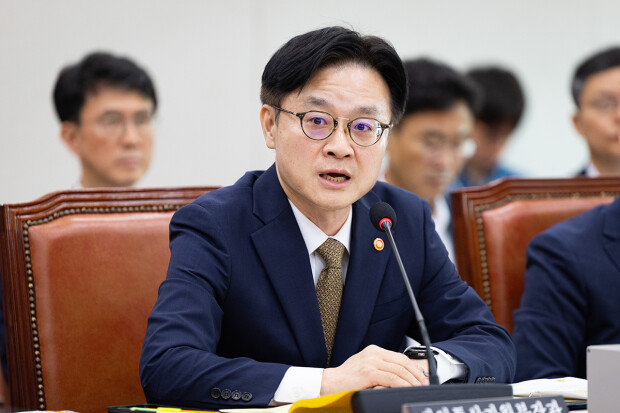
The government is issuing warnings before presenting any concrete measures. On Aug. 14, Industrial Minister Kim Jeong-kwan visited Hanwha Ocean’s Geoje shipyard and urged the petrochemical industry to voluntarily participate in business restructuring, saying, “Companies that ride for free will face decisive action from all relevant ministries.” Lawmakers are also reportedly preparing to summon executives from Hanwha Group and DL Group, who clashed over Yeochun NCC, to the National Assembly for reprimands. Rather than developing solutions, officials appear focused on self-promotion.
Industry insiders say the “golden time” for restructuring has passed amid hesitation. China and the Middle East are increasing production by leveraging cheap raw materials. Simply enduring the situation will not solve the problem. Boston Consulting Group warned that if the current downturn continues, half of South Korea’s petrochemical companies could disappear within three years. Without effective action, the country’s petrochemical complexes risk becoming a Korean version of the Rust Belt. Experts say companies, the government, and lawmakers must form a “one team” and quickly develop effective responses, or they could miss even the so-called “silver time” and “bronze time” for intervention.
이동훈기자 dhlee@donga.com






 About Dong-A Ilbo