

Lee administration finalizes comprehensive new North Korea strategy
Lee administration finalizes comprehensive new North Korea strategy
Posted December. 05, 2025 07:25,
Updated December. 05, 2025 07:25
President Lee Jae-myung has not commented on the reported rift between the so-called self-reliance faction and the pro-alliance faction since taking office. Although his personal views are believed to lean toward the self-reliance camp, aides said he has chosen to observe the situation rather than support one side as differing opinions emerged.
His remarks during a Cabinet meeting on the Yellow Envelope Act may offer a clue. He said the matter should be intensely debated by the ministers of industry and labor, implying that internal discussion and coordination could help minimize controversy.
The Lee administration’s North Korea policy is reportedly taking final shape. Officials said the plan could be released as early as next week or by the end of the month at the latest. Based on national policy tasks, the administration has finalized three core objectives unfolding in three phases, along with three guiding principles and six key initiatives. The objectives focus on institutionalizing peaceful coexistence, building a foundation for mutual growth, and establishing a nuclear-free Korean Peninsula.
Much attention has focused on the omission of the term denuclearization and the downgraded handling of North Korea’s nuclear program. Considering President Lee’s characterization of denuclearization as a difficult task that cannot be solved in the short term and Pyongyang’s outright rejection of the concept, the shift was largely expected. Observers say the greater point of interest is how the administration will clarify its long-term approach to inter-Korean relations once the policy is finalized. This approach centers on a peaceful two-state framework, positioned in contrast to North Korea’s hostile two-state doctrine.
Of the three primary objectives developed under the leadership of the Ministry of Unification, institutionalizing peaceful coexistence inherently involves defining inter-Korean relations as a peaceful two-state framework aimed at eventual unification. This approach reflects the long-standing advocacy of Unification Minister Chung Dong-young, who has proposed codifying a peaceful two-state framework through an inter-Korean basic agreement. The National Planning Committee has said that the model for such an agreement is the 1972 Basic Treaty between East and West Germany, in which both sides recognized each other as equal sovereign states.
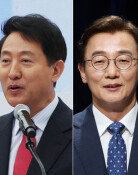
A government source said it is unlikely that the administration will explicitly state that institutionalizing peaceful coexistence is based on the peaceful two-state framework. This reluctance stems from the fact that disagreement over the idea has already surfaced publicly between Minister Chung, who has argued that the two Koreas are in effect two states, and National Security Office Chief Wi Sung-rak, who has insisted that the two Koreas are in a temporary special relationship until unification.
Responding to criticism that the peaceful two-state framework treats North Korea as a normal state rather than an anti-state group or primary adversary, Minister Chung countered that differentiating between recognizing North Korea de facto and de jure is empty rhetoric. He has argued that the framework mirrors the example of West Germany's Ostpolitik under Chancellor Willy Brandt, where acknowledging East Germany's statehood helped pave the way toward unification. Still, the dispute remains unresolved and the debate continues.
Government sources said the National Security Council engaged in intense debate over the sequencing of the North Korean nuclear issue while finalizing the three core objectives. Observers also note that the administration must clarify whether the peaceful two-state framework will become the official government stance or if an opposing view will prevail. The finalized policy is expected to send a signal to North Korean leader Kim Jong Un, who is considering whether to return to the negotiating table next year amid diplomatic outreach from Seoul and Washington.
Conflicting interpretations have already surfaced within the government regarding the END initiative for North Korea, which includes exchange, normalization of relations, and denuclearization. Officials stress that the foreign and security establishment should avoid exposing further discord. Debate has focused on whether the END initiative should proceed sequentially or operate through mutual reinforcement.







 About Dong-A Ilbo