

Trump chip tariff exemption boosts Korean firms
Trump chip tariff exemption boosts Korean firms
Posted August. 09, 2025 07:19,
Updated August. 09, 2025 07:19
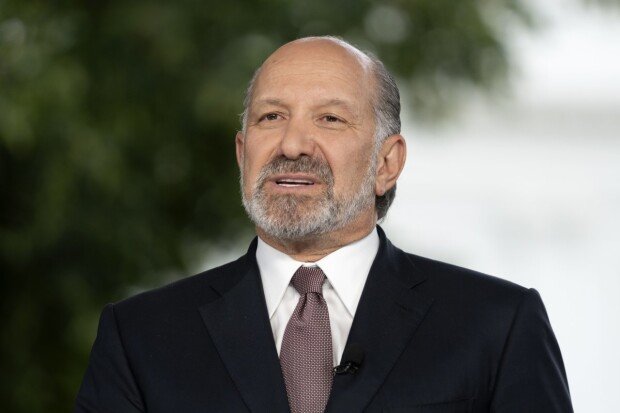
U.S. Commerce Secretary Howard Lutnick said Wednesday that semiconductor companies that are building, or have pledged to build, manufacturing facilities in the United States during Donald Trump’s presidential term will likely be exempt from the proposed 100 percent tariffs on chip imports. The remarks have eased concerns for Samsung Electronics, which is constructing a major production site in Texas, and SK Hynix, which is also planning to establish a facility.
In an interview with Fox Business, Lutnick explained that companies pledging to build a plant in the United States during Trump’s term, and reporting the plan to the Commerce Department for full oversight, may qualify for tariff exemptions under the president’s proposal.
The clarification offered relief to South Korea’s semiconductor industry, which had been on edge following Trump’s call for sweeping tariffs on imported chips. “If Secretary Lutnick’s remarks are taken at face value, Samsung and SK Hynix would not be subject to the 100 percent tariff,” said an industry official. “The move seems to be a political signal urging other chipmakers to invest in the United States, so there is no reason for excessive concern.” The strategy is widely viewed as a way to reward companies with U.S. operations while pressuring others to follow.
Samsung already operates a foundry in Austin, Texas, and is constructing a $37 billion semiconductor plant in Taylor, Texas, scheduled to begin operations in 2026. SK Hynix is building a $3.87 billion high-bandwidth memory packaging facility in West Lafayette, Indiana, with a target launch in 2028.
Still, caution remains until a final executive order clarifies the scope of the tariff exemptions. “For instance, the government could exempt foundry products while excluding memory chips,” said one industry insider. “Uncertainty continues to hang over the market.”
Questions also remain about how much investment is needed to qualify for tariff exemptions. If the key standard is “investment during Trump’s term,” Samsung and SK Hynix may face pressure to make additional commitments, as their current U.S. projects were approved under the Biden administration.
Despite concerns, experts believe the tariff policy could present an opportunity for South Korean chipmakers. Lee Jong-hwan, a semiconductor engineering professor at Sangmyung University, said it is unlikely that the United States will impose full tariffs on companies that have already invested or on friendly nations. He added that the real objective is to attract advanced chip manufacturing to the United States and establish leadership in the sector. Samsung and SK Hynix, he said, could use the situation to win contracts with major American tech companies and expand their presence.
이민아기자 omg@donga.com

![[단독]美 “B-2 폭격기로 장거리대함미사일 발사 성공”](https://dimg.donga.com/c/138/175/90/1/wps/NEWS/IMAGE/2026/06/30/134207576.1.jpg)




 About Dong-A Ilbo