

Avignon festival selects Korean as next guest language
Avignon festival selects Korean as next guest language
Posted August. 06, 2025 08:14,
Updated August. 06, 2025 08:14
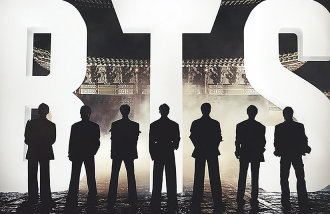
The world’s largest performing arts event, the Avignon Festival, has chosen Korean as its official guest language for next year, prompting widespread excitement. Many observers called it symbolic, noting that an Asian language—outpacing both Chinese and Japanese—was selected for the first time. They said the decision provides a rare opportunity for Korean culture to shine on a stage that can feel elitist. Anticipation grew for a repeat of past K-pop successes with BTS, Parasite, and Squid Game, along with hopes for a happy conclusion. For many in France, the announcement represented a genuine moment of cultural pride.
The festival’s rationale differed markedly. Organizers said the selection was not intended to showcase or boast about Korean culture’s excellence.
In 2022 the Avignon Festival launched its guest-language program to restore cultural diversity and overcome extremism through language. Organizers believe showcasing linguistic differences can serve as the first step toward resolving global conflicts and divisions.
In 2022 English, the world’s most widely spoken language, served as the inaugural guest language. The aim was not to spotlight mainstream Anglophone culture. Instead, organizers shared the diverse cultural differences among English-speaking countries such as the United States, the United Kingdom, Canada, and the Philippines to create a platform for overcoming extremist views and regional bias.
This year Arabic served as the guest language, applying the same principle. While many view the Arabic-speaking world as a single culture, significant differences exist among its countries. By highlighting the region’s internal heterogeneity, Avignon aimed to challenge monolithic stereotypes and reduce extreme viewpoints.
So why did Avignon spotlight Korean, spoken by fewer than 100 million people across North and South Korea? Why choose it over Chinese or Japanese, both of which have far larger speaker populations?
Tiago Rodrigues, artistic director of the Avignon Festival, highlighted Korean culture’s diversity and universality. He said it is not a single hue but a spectrum of light refracted through a prism, making it broadly accessible to audiences worldwide.
Hangul was deliberately designed under King Sejong to be easy to learn, which likely boosts its cultural accessibility. In Paris, demand for classes at the local Korean language school is so high that students must join a waiting list. Many learners say that once they begin, they find it easy to master.
Avignon also noted how Korean culture adapts and expands when it meets global audiences. For example, Nobel laureate Han Kang’s novel “The Vegetarian” was adapted into a play by Italian director Daria Deflorian and performed across Europe. Next year’s festival will showcase numerous works by European artists using Korean as their medium. Organizers are also eager to discover productions that span both South and North Korea.
The notion that “the most Korean is the most universal” may be half true and half false over time. Preserving Korea’s cultural essence requires careful attention, but emphasizing nationality too strongly can come across as provincial. The more Korean identity is stressed, the greater the risk of appearing exclusionary or alienating international audiences.
Some critics warn that an obsession with K-Hallyu and a focus on commercial success may benefit only a few works and undermine cultural diversity. Similar concerns have been raised about Culture Minister Choi Hwi-young, formerly of Naver, who has been criticized for prioritizing the industry’s commercial interests.
Global audiences celebrate BTS not because it represents “Korean culture” but for the group’s unique style and high-quality music. Perhaps it is time to temper national pride and appreciate the diverse currents in Korean culture that Avignon has highlighted. Korean culture can move the world without the K-prefix or flashy packaging.







 About Dong-A Ilbo