

Second round of Korea-U.S. trade talks ahead
Second round of Korea-U.S. trade talks ahead
Posted August. 04, 2025 08:09,
Updated August. 04, 2025 08:09
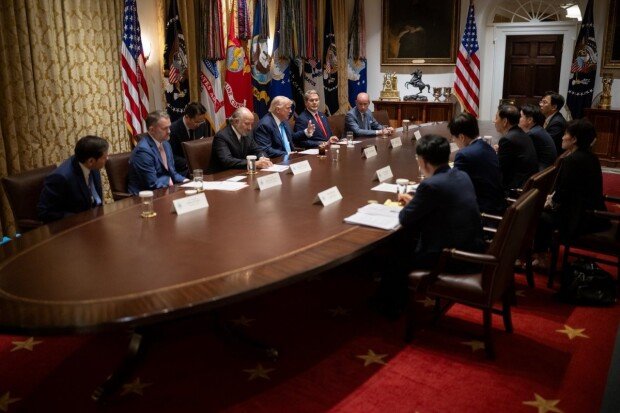
Although South Korea and the United States reached a high-profile agreement last month to reduce mutual tariffs on automobiles and other goods to 15 percent, analysts say a second round of talks remains, with non-tariff barriers expected to take center stage. The initial discussions were only a framework, and no formal documents were signed, underscoring the need to further bridge differences between the two governments.
According to government officials on August 3, South Korea has begun preparing for more detailed talks with Washington based on the agreement. The first round excluded contentious topics such as expanded market access for U.S. agricultural products, the export of Google’s high-precision map data, and regulations on online platforms. Observers believe these non-tariff issues are likely to become major sticking points in future negotiations.
Deputy Prime Minister and Finance Minister Koo Yun-cheol, speaking to reporters on August 1 upon returning from the United States, said the real challenge lies ahead. He noted that the government will develop a detailed strategy and respond actively during upcoming negotiations with Washington. Industry Minister Kim Jung-kwan added that the deal should not be seen as a success but rather as an effort to avoid the worst-case scenario.
The United States has consistently pressured South Korea to further open its markets for rice and beef and to allow the export of Google’s high-precision map data. Washington has also called for revisions to digital regulations, including legislation on online platforms. After the agreement, President Donald Trump said South Korea had agreed to accept American cars, trucks, and agricultural products.
Uncertainty remains over South Korea’s $350 billion investment pledge in the United States. A state-run financial institution official said it is still unclear which agencies should invest and in what sectors. Presidential policy chief Kim Yong-bum said on KBS's “Sunday Diagnosis” on August 3 that private companies are expected to contribute equity and that private financial firms not only can but also should participate, emphasizing the need for private-sector involvement.
Experts have warned that South Korea must be fully prepared for additional demands from the United States after the Korea-U.S. summit scheduled for mid-August. Kim Tae-hwang, a professor of international trade at Myongji University, said it is time for a detailed and strategic response, particularly regarding shipbuilding investments and Washington’s expected push to remove non-tariff barriers.
Ae-Jin Ju jaj@donga.com


![[단독]초봉 5000만원 환경미화원 ‘밀실 면접’ 논란… 81등 역전 합격도](https://dimg.donga.com/c/138/175/90/1/wps/NEWS/IMAGE/2026/06/30/134205664.1.png)
![[단독]기아, 전용기 첫 도입…보잉 최신기종 ‘B737-8 BBJ’](https://dimg.donga.com/c/138/175/90/1/wps/NEWS/IMAGE/2026/06/29/134199922.1.png)


 About Dong-A Ilbo