

U.S. cancels Korea talks as tariff deadline nears
U.S. cancels Korea talks as tariff deadline nears
Posted July. 25, 2025 07:23,
Updated July. 25, 2025 07:23
Just one week before the U.S. tariff deferral deadline, all high-level meetings between South Korean economic and security officials and their American counterparts have been abruptly canceled. While the U.S. has reached a deal with Japan and is finalizing negotiations with the European Union, discussions with South Korea have stalled before even starting.
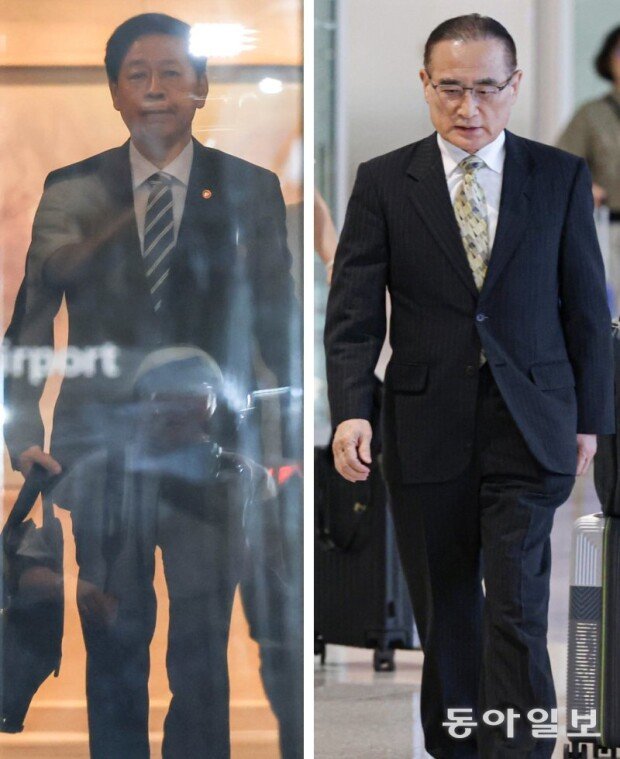
South Korean Deputy Prime Minister and Finance Minister Koo Yun-cheol was scheduled to depart from Incheon International Airport at around 9 a.m. on Washington informed Seoul that the meeting was canceled. Originally set for July 25 in Washington, the talks would have included Koo and Trade Minister Yeo Han-koo, alongside U.S. Treasury Secretary Scott Bessent and U.S. Trade Representative Jamison Greer.
This would have marked the first high-level engagement between Korea’s new economic leadership and Bessent, considered a key figure in the tariff negotiations. The U.S. cited an “urgent scheduling conflict” involving Secretary Bessent but offered no additional explanation.
According to the Ministry of Finance, “The U.S. side sent an email apologizing multiple times and said they hoped to reschedule the meeting as soon as possible.” Officials added there appeared to be no ulterior motive. Still, reporters at the airport saw Minister Koo turn back after receiving the notice, fueling a sense of unease within the Korean government.
Meanwhile, National Security Office Director Wi Sung-rak, who returned Thursday from a four-day visit to the U.S., also failed to meet his counterpart, Secretary of State and National Security Advisor Marco Rubio. Rubio was reportedly summoned by President Donald Trump on short notice. Wi had left for Washington in secrecy on July 20 and was only able to meet with U.S. Secretary of Commerce Howard Rutnik before returning.
The Presidential Office said Korea and the U.S. are “maintaining close coordination through various channels” in an effort to contain the diplomatic fallout. However, analysts see the canceled meetings as U.S. pressure tactics targeting Korea’s current negotiation posture. The message, they say, is clear: Washington wants more in terms of “investment expansion” and “agricultural market openness,” the two main levers in the talks.
The Korean government has reportedly steered clear of politically sensitive issues such as opening its rice and beef markets, instead proposing a package of purchases and investments across the shipbuilding, automotive, semiconductor, and energy sectors. Seoul also attempted to link the trade talks with security discussions, including a proposed hike in defense spending. Still, Korea’s investment package is said to fall well short of Japan’s $550 billion commitment.
“It’s the same playbook,” said Kim Tae-hwang, professor of international trade at Myongji University. “Just as the U.S. pressured Japan before sealing the deal, Washington appears to be ramping up pressure on Korea now.”
Ae-Jin Ju jaj@donga.com







 About Dong-A Ilbo