

Apartment deals plunge after new loan cap
Apartment deals plunge after new loan cap
Posted July. 07, 2025 07:42,
Updated July. 07, 2025 07:42
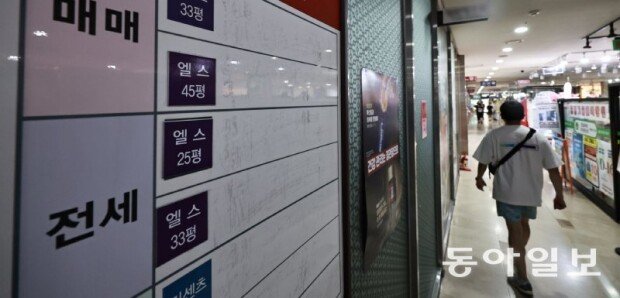
Apartment transactions in Seoul dropped more than 60 percent just one week after a new regulation capped home mortgage loans at 600 million won, regardless of income. Mortgage applications at major banks also halved. Experts say the price surge in Seoul’s Gangnam, Seocho, and Songpa districts appears to be easing.
According to the Ministry of Land, Infrastructure and Transport’s transaction disclosure system, only 663 apartment deals were made in Seoul from June 27 to July 3, a 62 percent drop compared to the 1,742 deals recorded from June 20 to 26. Some buyers even canceled signed contracts due to concerns that housing prices had reached their peak. Among the 225 canceled deals during that period, 39 cited the announcement of the new regulation as the reason. In 14 complexes, including Trizium and Galleria Palace in Jamsil-dong, Mokdong New Town in Sinjeong-dong, and Tens Hill in Hawangsimni-dong, contracts made on the day of the regulation were later withdrawn.
Mortgage lending activity also fell sharply. From June 30 to July 3, the average daily amount of home mortgage loan applications at Seoul branches of major consumer banks was about 350 billion won, down 52.7 percent from the 740 billion won average the week before the June 27 announcement.
Private sector data suggests a dip in apartment prices. Real estate analytics firm R114 reported a 0.02 percent drop in Seoul apartment prices after the new rule, reversing the previous week’s 0.54 percent rise. The Korea Real Estate Board, the official government source, also reported a slowdown in price growth, with a 0.40 percent increase compared to 0.43 percent the previous week.
As President Lee Jae-myung called the latest lending curb a “first step,” the cooled real estate sentiment in Seoul is expected to continue in the near term. Still, some experts emphasize that solving the fundamental housing issue requires robust supply-side measures. Lee Chang-moo, a professor of urban engineering at Hanyang University, warned that without resolving supply constraints, rebound effects could emerge. He urged the government to accompany lending regulations with high-density development initiatives in the capital region.
이축복 기자 bless@donga.com



![[오늘의 운세/5월 14일]](https://dimg.donga.com/c/138/175/90/1/wps/NEWS/IMAGE/2026/05/14/133919138.1.jpg)
![[단독]“이익 좀 났다고 나눠 갖자고 하면 미래 없어… 한때 반도체 강국 獨, 순식간에 주도권 뺏겨”](https://dimg.donga.com/c/138/175/90/1/wps/NEWS/IMAGE/2026/05/14/133919193.1.jpg)



 About Dong-A Ilbo