

Tariff talks face hurdles as U.S. pressure mounts
Tariff talks face hurdles as U.S. pressure mounts
Posted July. 04, 2025 07:09,
Updated July. 04, 2025 07:09
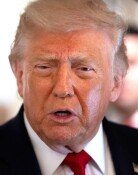
U.S. President Donald Trump said Monday that “Japan will get 30 percent, 35 percent, or whatever figure we decide,” signaling his willingness to unilaterally impose a tariff rate higher than the 24 percent slapped on Japanese imports in early April. A day later, he announced that the United States had reached a deal with Vietnam to lower tariffs on its imports from 46 percent to 20 percent. At the same time, a planned visit to South Korea by Secretary of State Marco Rubio was abruptly canceled. This sequence of events suggests friction behind the scenes in trade negotiations.
Trump’s rhetoric is becoming increasingly aggressive ahead of the expiration of the mutual tariff waiver on the 8th. Allies are not exempt. He went so far as to accuse Japan of having “gotten spoiled” after “stealing our wealth for 30 to 40 years.” His discontent appears to be tied to Tokyo’s reluctance to increase imports of U.S. rice, despite surging local prices, and its push to lower the 25 percent tariff on Japanese automobiles. In contrast, Trump praised Vietnam for agreeing to eliminate tariffs on U.S. imports and set a 20 percent rate on its exports to the U.S.
The cancellation of Rubio’s visit next week appears to reflect the difficulty in finalizing a draft agreement for the upcoming South Korea–U.S. summit, which is also expected to be delayed until next month. President Lee Jae-myung said Tuesday, “It’s still unclear what exactly both sides want. I cannot say for sure whether negotiations will be concluded by the 8th.”
With Japan, a key competitor in exports to the U.S., also lagging in talks, South Korea does not need to rush to meet the deadline. However, the government must also weigh the risks of appearing to use stalling tactics, especially as Washington grows increasingly impatient. Beyond areas of easy agreement, such as shipbuilding cooperation, Seoul must identify which U.S. demands, including LNG development in Alaska or access to detailed geographic data for big tech, are negotiable and which might require unavoidable concessions.
In a tariff war unilaterally launched by the world’s strongest power, it is unrealistic to expect gains without cost. To protect core interests, such as auto and semiconductor exports, it is time for South Korea to begin playing its remaining negotiation cards.




 About Dong-A Ilbo