

Trump causes tariff confusion due to conflicting rates
Trump causes tariff confusion due to conflicting rates
Posted April. 04, 2025 07:18,
Updated April. 04, 2025 07:18
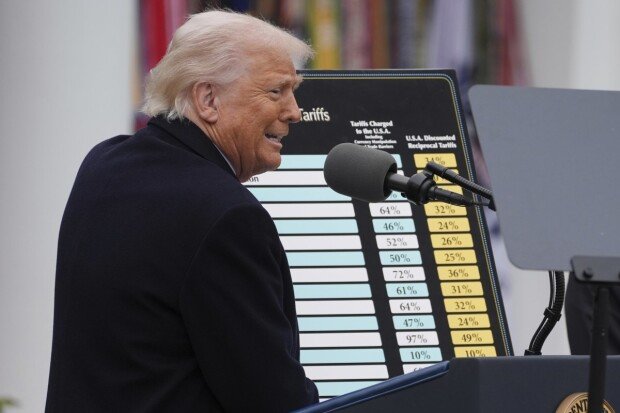
Confusion is growing over the difference between the reciprocal tariff rate for South Korea announced by U.S. President Donald Trump (25 percent) on Wednesday (local time) and the figure specified in the White House executive order (26 percent). Some criticize the U.S. tariff calculation method as unclear and arbitrary.
President Trump displayed a chart detailing tariff rates for major trading partners during his announcement at the White House. On the panel was a table on each country’s tariff rate on U.S. goods along with the reciprocal tariff rates to be imposed by Washington. The rate for South Korea was listed as “25 percent,” and the same figure was shown on a chart shared by the White House on its X account.
However, the annex of the U.S. reciprocal tariff executive order on the official website of the White House says that the figure for South Korea is “26 percent.” Likewise, regarding India, Thailand, Switzerland, South Africa, and the Philippines, it specifies tariff rates one percentage point higher than the one disclosed by President Trump during his announcement. In response, the U.S. administration stated that the annex shows adjusted numbers for the tariff rates, which thus should be observed.
The South Korean government made an inquiry to Washington about the discrepancy. “We are investigating where this gap has come from and which figure is the right one,” said a government source.
Major overseas media, including The New York Times, report the tariff rates for key countries based on the figures specified in the annex to the executive order. Emily Kilcrease, a former deputy assistant U.S. trade representative (USTR), commented that it is an innately challenging task to conclude tariff rates accurately, adding that it seems that the Trump administration, which aimed to make a swift announcement, has presented the estimates that go along with its policy goals.
김윤진 기자 kyj@donga.com





 About Dong-A Ilbo