

USC K-pop course features G-Dragon
USC K-pop course features G-Dragon
Posted January. 05, 2026 09:27,
Updated January. 05, 2026 09:27

This spring, a distinctive class will be offered at the USC Annenberg School for Communication and Journalism in Los Angeles. The course is titled “Reading K-pop Against the Grain: The Case of G-Dragon.”
The four-credit, 15-week course focuses exclusively on G-Dragon, using him as both subject and central lens. While courses on pop stars are not uncommon in the United States, including classes on Beyonce at Yale University and Taylor Swift at Harvard University, this is the first professor-led, for-credit course devoted entirely to a single K-pop artist.
Lee Hye-jin, a professor in USC’s Department of Communication and Journalism who teaches the course, told The Dong-A Ilbo on Dec. 30 that the class is not intended to praise G-Dragon uncritically. Instead, it explores how one artist has attempted to reshape the conventions of K-pop.
● 'G-Dragon shows K-pop’s potential for longevity'
Lee, who joined USC as a professor in 2017, has taught courses on K-pop since 2019. While she has broadly examined the industry and fandom, developing a course centered on a single artist presented a significant challenge. To be approved as a regular, for-credit class, the G-Dragon course had to pass review by committees responsible for evaluating academic curricula. Why did she choose G-Dragon as the focus?
“I see G-Dragon as one of the clearest examples of a musician who shows that K-pop singers are not just fleeting figures who shine briefly in their 20s, but artists who can continue working into their 30s and 40s,” she said.
Lee noted that what stood out most was G-Dragon’s ability to generate attention comparable to his peak years even after returning last year following an eight-year hiatus. She described him as a figure who directly challenges the entrenched perception, both inside and outside K-pop, that idols have short careers and that the genre itself is a passing trend.
For that reason, the course does not simply catalog G-Dragon’s hit songs or achievements. Lee said it will focus on key examples, including Big Bang’s documentary, which was among the first to publicly reveal the idol debut process, G-Dragon’s promotion of his “producer idol” identity, and his selection in 2016 as a global ambassador for Chanel, making him the first Korean idol to receive the role.
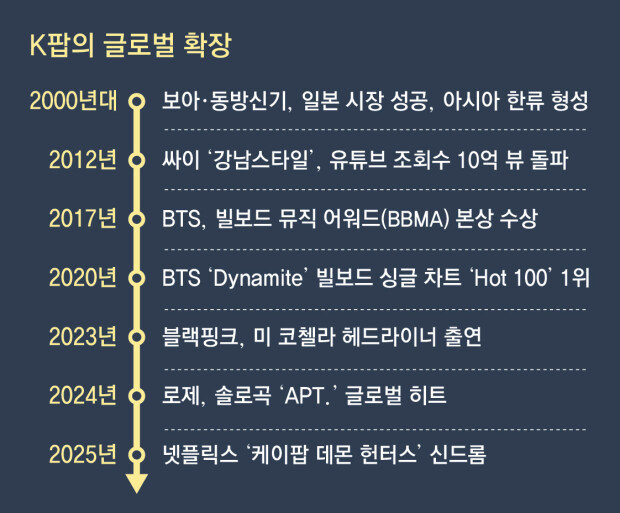
Lee also highlighted how K-pop, which emerged as part of the Korean Wave centered on Asia in the 2000s, has grown into a global musical phenomenon. Beginning with Psy’s “Gangnam Style” in 2012, a string of international successes has followed, including BTS and Blackpink. The presence of Korean artists on the Billboard charts is no longer considered unusual.
She said the characteristics of Korean music have played a key role in this rise. K-pop draws heavily from 1990s African American music, making it relatively familiar to overseas audiences. At the same time, Lee noted, "Korean society is particularly adept at quickly absorbing and reinterpreting musical trends."
“Of course, many challenges remain,” she said. “Billboard rankings can be achieved when fans mobilize their support. But cultural acceptance is a separate issue. American society still maintains high racial and language barriers, and perceptions of K-pop are not uniformly positive.”
Lee emphasized that South Korea’s definition of “global” often differs from the global community’s understanding. She said the country tends to focus on visible indicators such as chart rankings and album sales, while achieving a deeper understanding of Western societies and cultures, including that of the United States, is essential.
● 'What it takes to create a Korean Taylor Swift'
Lee cited last year’s animated film “KPop Demon Hunters,” which drew worldwide attention, as an example that demonstrates K-pop’s potential for expansion.
“The film incorporated many Korean elements while giving the visuals a Western feel, creating a careful cultural balance,” she said. “That was possible because director Maggie Kang has a deep understanding of both Korean and Western cultures. For K-pop to have longevity, we need more figures who can serve as cultural bridges.”
How much of K-pop’s distinct Korean identity should be preserved remains an open question. Lee said finding common ground is not easy, but producing music solely in English is not the answer. She warned that efforts to appeal to new audiences often come at the expense of existing fans.
“Today’s K-pop is extremely polished,” she said. “But the raw quality that BTS showed when they were challenging the U.S. market from a small agency has largely disappeared. A bakery should offer both soboro bread and cakes, but it feels as if everyone is making only Dubai-style chewy cookies. If K-pop artists are to be loved for decades such as Taylor Swift or Paul McCartney, we need to reconsider what made people fall in love with K-pop in the first place.”





사지원 기자 4g1@donga.com








 About Dong-A Ilbo