

Europe discusses Ukraine peacekeeping force, conscription revival
Europe discusses Ukraine peacekeeping force, conscription revival
Posted March. 12, 2025 08:15,
Updated March. 12, 2025 08:15
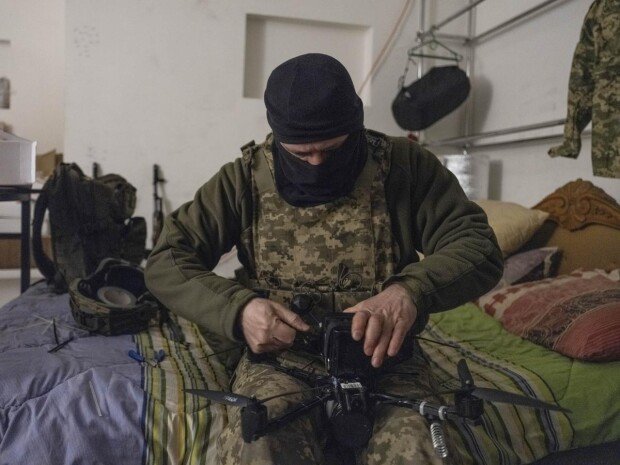
More than 30 countries are discussing forming a peacekeeping force for Ukraine, a French military official told The Associated Press on March 11. The meeting, held in Paris, included European Union member states as well as non-European allies such as South Korea, Japan, and Australia. The discussions, led by France and the United Kingdom, focused on creating an international peacekeeping force to stabilize Ukraine. As concerns over Russian aggression grow, major European nations—including France, Germany, and the U.K.—are also accelerating discussions on reinstating conscription and ramping up rearmament efforts.
● Stockpiling weapons in preparation for a renewed Russian assault
According to The Associated Press, military representatives from over 30 countries gathered in Paris to discuss plans for a peacekeeping force after the war in Ukraine. The meeting was part of the three-day Paris Defense and Strategy Forum, hosted by France’s Military Academy. Most NATO allies, excluding the United States, and EU member states Ireland, Cyprus, and Austria attended. Ukraine, as the focal point of the discussions, was also joined remotely by Asia-Pacific nations, including South Korea, Japan, Australia, and New Zealand.
A key proposal at the meeting was the U.K. and France’s "Coalition of Willing Nations," which aims to guarantee Ukraine’s postwar security. The primary objective of the proposed peacekeeping force would be to safeguard European stability in the event of a ceasefire while deterring any large-scale Russian offensives. Discussions also covered stockpiling heavy weaponry and ammunition that could be rapidly deployed to Ukraine in case of renewed hostilities. Danish Foreign Minister Lars Løkke Rasmussen stated that Denmark is "principally prepared" to join the peacekeeping force, according to Agence France-Presse (AFP). Previously, Australia, Ireland, and Turkey had also expressed openness to participating in such a mission.
● France launches nationwide campaign on rearmament
Meanwhile, European nations are accelerating discussions on reinstating conscription as part of their broader rearmament efforts. In France, where nuclear deterrence has taken center stage, Foreign Minister Jean-Noël Barrot launched a nationwide campaign on March 10 to garner public support for military expansion, as reported by France Info. In Nantes, Barrot met with local officials and high school students to emphasize the urgency of national security and rearmament. Support for reinstating conscription is growing, with a survey by the French think tank Destin Commun indicating that 61% of French citizens favor resuming mandatory military service. While President Emmanuel Macron has not called for an immediate return to conscription, he has instructed government agencies to develop a voluntary military training program by May.
Germany, which has been reassessing its security independence from the United States since its parliamentary elections on February 23, is also formally debating the reintroduction of conscription. Florian Hahn, a Christian Social Union (CSU) lawmaker, wrote in a March 11 op-ed for the German daily Bild that the suspension of mandatory military service in 2011 "is no longer suitable." Former German Foreign Minister Joschka Fischer echoed similar sentiments, telling Stern magazine that "the first conscripts should enter barracks by 2025." The debate over conscription is also gaining traction in Belgium and the U.K.
● EU weighs trade retaliation against U.S. tariffs
European nations are also strategizing potential countermeasures against U.S. trade policies. The U.K.’s Telegraph reported on March 10 that the EU is considering restricting exports of critical pharmaceuticals, such as antibiotics, in response to high U.S. tariffs. The United States has long relied on EU nations for imports of antibiotics, radiopharmaceuticals, and pacemakers, making medical supply restrictions a potential economic leverage point for Europe.
Eun-A Cho achim@donga.com

![금태섭 “李정부 지탱한 ‘내란 프레임’ 이제 깨졌다”[황형준의 법정모독]](https://dimg.donga.com/c/138/175/90/1/wps/NEWS/IMAGE/2026/06/23/134167619.1.jpg)
![[단독]사전 투표용지는 실제 선거인수 2배, 2390만명분 준비했다](https://dimg.donga.com/c/138/175/90/1/wps/NEWS/IMAGE/2026/06/23/134165514.1.jpg)
![한적한 시골 단위농협… 알고보니 ‘대포통장 발급 전국 2위’[히어로콘텐츠/히든②-下]](https://dimg.donga.com/c/138/175/90/1/wps/NEWS/IMAGE/2026/06/23/134161455.1.jpg)



 About Dong-A Ilbo