

The National Human Rights Commission… living only for today, forgetting history
The National Human Rights Commission… living only for today, forgetting history
Posted February. 27, 2025 07:52,
Updated February. 27, 2025 07:52
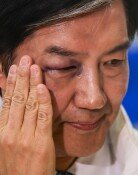
I first took notice of Ahn Chang-ho when he was nominated as the chairperson of the National Human Rights Commission of Korea (NHRCK). After serving as a Constitutional Court justice, he worked as a lawyer, during which he represented the heir of a conglomerate who was involved in illicit activities, including engaging in sexual transactions with a minor and filming a woman without her consent. While everyone has the right to legal counsel, lawyers also have the discretion to choose whom they represent. Given that Ahn had once held the power to rule on the impeachment of a president, his decision to defend a wealthy individual in such a case was, at the very least, controversial. Additionally, he had sold his apartment in Gangnam, Seoul, to his son, a transaction that raised suspicions regarding tax benefits and the source of his son’s funds. Ahn dismissed these concerns, stating simply that it was a home filled with family memories.
Concerns over his suitability for the role of human rights chairperson became more tangible following the December 3 emergency martial law. On December 10, the NHRCK passed a recommendation urging the Constitutional Court to swiftly dismiss President Yoon Suk Yeol’s impeachment case and ensure his release. The official agenda item was “Recommendations for measures to overcome the national crisis caused by the declaration of martial law.” Still, at its core, the decision framed the president’s legal situation as a national crisis. The motion passed with six out of ten commissioners, including Ahn, voting in favor. On December 18, the commission further recommended the prompt release on bail of former Army Chief of Staff Park Ahn-soo and former Defense Counterintelligence Command Chief Yeo In-yung, both of whom had been indicted in connection with the martial law operations.
Next year, the Global Alliance of National Human Rights Institutions (GANHRI) will review the accreditation status of NHRCK. This evaluation, conducted every five years, assesses factors such as the independence of the institution, diversity of its members, and autonomy in its operations. Since its establishment in 2001, NHRCK has consistently maintained its “A” rating, even under the Park Geun Hye administration, when a decision on the rating was delayed but ultimately confirmed.
However, there are concerns that the upcoming review may yield different results. The global media has reported on martial law troops storming South Korea’s National Assembly and the subsequent arrest of the president accused of orchestrating the operation. Against this backdrop, the human rights chairperson, appointed by the very president at the center of the crisis, appears to define human rights in a way that aligns with securing the president’s release.
Kim Jun-yeop (1920–2011), a former president of Korea University who dedicated his life to the independence movement and to protecting students, once said, “Do not live only in the present; live in history. Justice, truth, and goodness will always win.” Recently, someone shared this quote on the NHRCK’s internal message board. Yet, Ahn Chang-ho’s NHRCK seems to be moving in a different direction—one that prioritizes the present while overlooking the weight of history.






 About Dong-A Ilbo