

Flexible labor rules boost technology competitiveness
Flexible labor rules boost technology competitiveness
Posted July. 03, 2026 08:39,
Updated July. 03, 2026 08:39
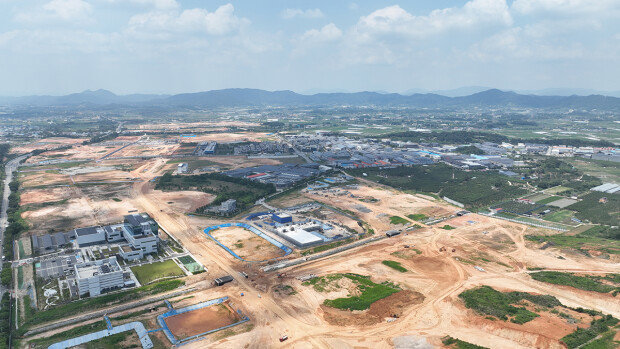
The government is weighing a plan to relax the 52-hour workweek for research and development personnel at the semiconductor cluster planned for the Gwangju-Jeonnam region. The proposal is part of a broader initiative to create "mega special zones" that would ease overlapping regulations in the southwestern semiconductor hub and other strategic industrial districts. Under a proposed special law, highly skilled employees at companies located within those zones would be exempt from restrictions on working hours, holidays, overtime and night shifts. The move would open the door to the kind of regulatory flexibility the high-tech sector has sought for years.
A work-hour exemption for R&D personnel has long ranked among the semiconductor industry's top priorities. Developing breakthrough technologies often requires researchers to concentrate their efforts during critical periods. The United States exempts many highly compensated professionals and researchers from statutory work-hour limits under its white-collar exemption. Japan has introduced a similar Highly Professional System, while Taiwan allows extended working hours through agreements between employers and workers. South Korea considered including a comparable exemption for semiconductor researchers in the Special Semiconductor Act earlier this year, but dropped the provision after opposition from labor groups and concerns over equal treatment across industries.
There is little justification, however, for limiting greater work-hour flexibility to companies inside a mega special zone. Semiconductor operations elsewhere, including those in the Seoul metropolitan area, should be eligible for the same regulatory treatment. The industry operates as a tightly integrated network, with research, design, manufacturing and packaging closely interconnected. Applying different rules to different facilities would weaken the policy's overall effectiveness. There is also little reason to wait until the Gwangju-Jeonnam cluster is fully established and staffed with researchers. If flexible work rules are essential to strengthening the semiconductor industry's competitiveness, they should be implemented wherever they are needed and without unnecessary delay.
The global race in semiconductors and artificial intelligence has become a contest in which speed often determines the winner. Developers in Silicon Valley frequently say they are reluctant to take time off because innovation moves at such a rapid pace. Research labs at Taiwan's TSMC operate 24 hours a day. In that environment, a rigid system that requires researchers to stop working the moment their scheduled hours end, even when they are in the middle of critical projects, is ill-suited to global competition. Policymakers should give serious consideration to extending greater work-hour flexibility beyond the semiconductor industry to advanced technology sectors more broadly, including AI.








 About Dong-A Ilbo