

South Korean ships resume passage through Hormuz
South Korean ships resume passage through Hormuz
Posted June. 23, 2026 08:08,
Updated June. 23, 2026 08:08
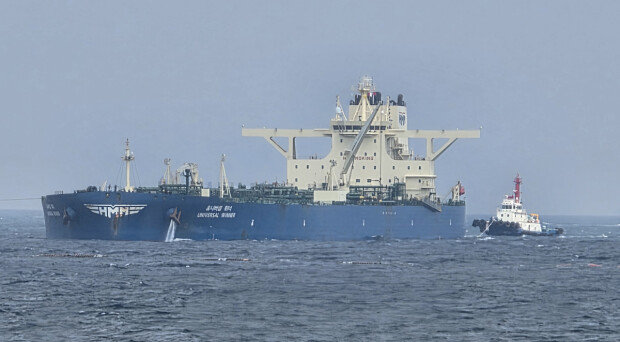
Two more South Korean-operated vessels have exited the Strait of Hormuz after being stranded there, government officials said Monday, marking the first departures since the United States and Iran signed a memorandum of understanding on ending hostilities on June 17. The number of South Korean-linked ships still inside the strategic waterway has now fallen to 22.
The Ministry of Oceans and Fisheries said the two vessels, which had been waiting inside the strait, successfully completed their transit and resumed normal operations. The ships are owned by South Korean shipping companies, though no South Korean crew members were aboard, and their destinations were third countries rather than South Korea, according to the ministry. Officials declined to disclose additional details, including the names of the vessels and operators, saying the ships have not yet fully cleared the designated risk zone. The ministry said it is providing relevant information and conducting real-time monitoring to help ensure the safe passage of South Korean-linked vessels.
The latest transit was not the result of separate negotiations between Seoul and Tehran but was carried out at the vessels’ own discretion, officials said. On May 20, the HMM tanker Universal Winner passed through the Strait of Hormuz following prior coordination between the South Korean and Iranian governments. On June 11, an LNG carrier operated by a South Korean shipping company also exited the strait at the initiative of a foreign charterer.
Foreign Minister Cho Hyun told reporters Monday that the Foreign Ministry, together with the Ministry of Oceans and Fisheries and South Korea's overseas diplomatic missions, is continuing to monitor navigation conditions in the Strait of Hormuz and assess the safety of South Korean vessels and seafarers.
"We are working with relevant countries to help restore free and safe navigation for all vessels, including ours, as quickly as possible," Cho said. He also said arrangements are underway for a phone call with Iranian Foreign Minister Abbas Araghchi.
The South Korean government also reaffirmed its opposition to Iran's reported plan to impose transit fees on vessels passing through the Strait of Hormuz. A senior Foreign Ministry official told reporters that ships have never been required to pay passage fees in the waterway and that Seoul's position is that such charges should not be imposed as a matter of principle.
The government is expected to focus primarily on securing safe passage for the remaining 22 vessels rather than responding to the case of the South Korean ship Namu, which was struck by an Iranian missile while operating in the Strait of Hormuz.
이윤태 기자 oldsport@donga.com

![한적한 시골 단위농협… 알고보니 ‘대포통장 발급 전국 2위’[히어로콘텐츠/히든②-下]](https://dimg.donga.com/c/138/175/90/1/wps/NEWS/IMAGE/2026/06/23/134161455.1.jpg)


![금고 전무 “통장 풀었다 ㅎㅎ” 피싱 신고자 신상 508번 조직에 넘겨[히어로콘텐츠/히든②-上]](https://dimg.donga.com/c/138/175/90/1/wps/NEWS/IMAGE/2026/06/22/134161350.1.jpg)



 About Dong-A Ilbo