

NIS helps dismantle Thai drug operation
NIS helps dismantle Thai drug operation
Posted June. 11, 2026 08:45,
Updated June. 11, 2026 08:45
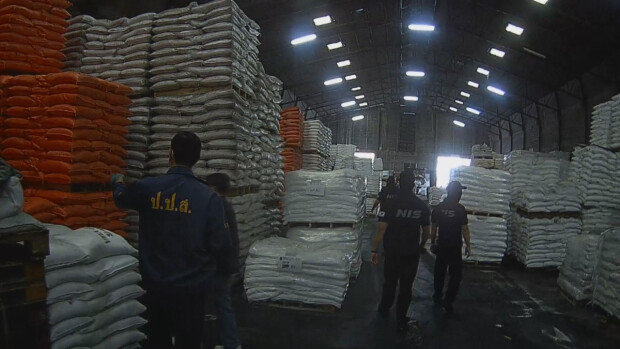
South Korea's National Intelligence Service (NIS) said Tuesday it had worked with Thai authorities to raid a major drug production network and seize nearly 50 tons of narcotics precursor chemicals. It was the first time a South Korean government agency had directly targeted an overseas drug supply base.
In a joint operation Monday with Thailand's Office of the Narcotics Control Board (ONCB), the NIS raided 10 warehouses across Thailand that were storing chemicals intended for drug manufacturing. Authorities seized 49.98 tons of precursor materials, including acetone, hydrochloric acid and sulfuric acid.
The NIS said the confiscated chemicals were enough to produce 21 tons of methamphetamine or 1.1 billion yaba pills. Had they been manufactured and distributed, the drugs would have carried an estimated street value of 8.4 trillion won ($6.1 billion), enough for roughly 700 million doses.
The agency said it had stepped up cooperation with the ONCB as drug trafficking between the two countries grew increasingly serious. Thai-origin narcotics accounted for 39% of all drugs smuggled into South Korea in 2024, totaling 294 kilograms.
The operation followed the April arrest and extradition of a Thai drug kingpin known as Taphanan. Acting on an urgent request from Thai authorities, the NIS tracked him down in South Korea after he entered the country under a false identity to undergo cosmetic procedures. Intelligence sharing between South Korean and Thai authorities led to his capture.
According to the ONCB, Taphanan was one of Thailand's most influential drug traffickers, responsible for distributing more than half of the country's illegal narcotics. Thai authorities had issued about 50 arrest warrants for him over the past decade.
Through a joint investigation, the NIS and ONCB determined that Taphanan had purchased precursor chemicals overseas, manufactured drugs in the Golden Triangle region and distributed them to countries including Australia and South Korea. Investigators later identified large-scale storage facilities in Thailand, leading to the latest operation.
Drone footage released by the NIS showed warehouses packed with white sacks and blue industrial drums containing chemical materials. The footage also captured an NIS investigator examining bags of potassium hydroxide labeled as products of global chemical company UNID. Potassium hydroxide is commonly used in the production of soap and detergents but can also be used in the manufacture of illegal drugs.
Thai Prime Minister Anutin Charnvirakul praised the operation during a media briefing after the raids. He said the investigation was made possible through close cooperation with the South Korean government, particularly the NIS, and expressed appreciation for the agency's intelligence analysis, operational support, and assistance in arresting and extraditing Taphanan.
President Lee Jae-myung, who is visiting three European countries, also publicly commended the operation. Sharing a news report about the warehouse raids on X, formerly Twitter, Lee described it as "a new face of the NIS." "A sharp sword can either harm people or save them, depending on how it is used," he wrote.
Na-Ri Shin journari@donga.com





 About Dong-A Ilbo