

U.S.-Iran strains deepen during negotiations
U.S.-Iran strains deepen during negotiations
Posted May. 29, 2026 08:25,
Updated May. 29, 2026 08:25
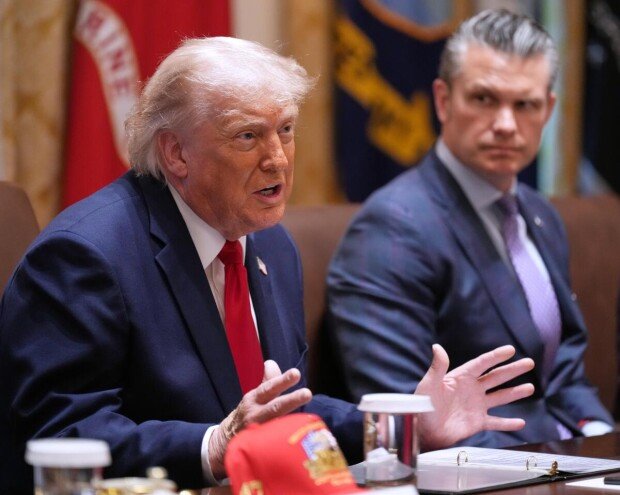
Tensions between the United States and Iran escalated as negotiations over a memorandum of understanding aimed at ending hostilities remained stalled, with Washington stepping up military pressure and U.S. President Donald Trump sharpening his stance on Tehran’s nuclear program and regional role.
Reuters and Fox News reported that U.S. forces on May 27 intercepted Iranian drones and struck military-related facilities. Iran’s Islamic Revolutionary Guard Corps said the following day that it had responded to what it called U.S. “aggression.”
The Guard Corps did not specify its targets. However, The New York Times reported that missiles and drones believed to have been launched by Iran struck Kuwait on May 28, prompting speculation that a U.S. military base had been targeted.
Trump also made clear that Washington would not allow Iran to transfer its stockpile of highly enriched uranium to countries such as China or Russia. The remarks marked a notable shift from comments he made days earlier suggesting Tehran could either dispose of the material domestically or send it to countries friendly to Iran. He further rejected any arrangement that would recognize Iranian control over the Strait of Hormuz.
The sharp divide between Washington and Tehran over key issues, including limits on Iran’s nuclear capabilities, oversight of the Strait of Hormuz and the possible release of frozen Iranian assets, has raised doubts about whether the two sides can finalize an agreement anytime soon.
According to Reuters, U.S. forces on May 27 shot down four Iranian attack drones, saying they threatened freedom of navigation in the Strait of Hormuz.
The U.S. military also targeted a ground control facility in the southern Iranian port city of Bandar Abbas, where Iran had allegedly been preparing to launch a fifth drone.
Early on May 28, Iranian state broadcaster IRIB and other local media outlets reported three explosions east of Bandar Abbas, followed by the activation of Iran’s air defense systems. The incidents were widely seen as the aftermath of another U.S. strike.
A U.S. official told CBS News that Washington’s military response had remained restrained and was intended to preserve the ceasefire with Iran despite the renewed confrontation.
The U.S. military had also carried out limited strikes near the Strait of Hormuz on May 25. At the time, U.S. Central Command said it had targeted Iranian vessels allegedly attempting to lay naval mines, along with missile launchers, describing the operation as self-defense.
Iran’s Revolutionary Guard warned on May 28 that more decisive responses would follow if such attacks continued, adding that responsibility for the consequences would fall on the “aggressor.”
Reuters also reported that Kuwait’s Ali Al Salem Air Base, used by U.S. forces, was believed to have come under Iranian missile attack that same day. Kuwait’s military said in a post on X that its air defense systems were responding to “hostile missile and drone attacks.”
Even so, the Revolutionary Guard stopped short of declaring the negotiations collapsed, suggesting diplomatic channels between Washington and Tehran remain open for now.
Speaking to reporters during a Cabinet meeting at the White House on May 27, Trump expressed frustration with the pace and direction of negotiations, suggesting the talks could drag on.
Asked whether Iran could transfer its 440 kilograms of uranium enriched to 60 percent purity to China or Russia, Trump replied, “I would be uncomfortable with that,” signaling firm opposition to the proposal.
Trump also emphasized that the United States had not offered sanctions relief in exchange for a settlement. “There’s no sanctions relief, no money, no anything in this negotiation,” he said. “We will continue controlling Iran’s money until they behave properly and do the right thing.” He also warned that military action could resume if diplomacy failed. “We may have to go back and finish the job,” Trump said.
While Trump said a “decent deal” with Iran remained possible, he added that anything short of what he called a “great deal” would not be acceptable. “If it’s not a great deal, we’re not going to do it,” he said. Trump also rejected the idea of recognizing joint Iranian-Omani oversight of the Strait of Hormuz. “The Strait of Hormuz is international waters. Nobody controls it,” he said. “We will monitor it, but nobody will control it.”
The White House later dismissed as a “complete fabrication” a draft MOU reported by Iranian state media. Iranian outlets had claimed the draft included provisions calling for the withdrawal of U.S. troops stationed near Iran and the lifting of what Tehran described as a counter-blockade on Iranian ports. The reports also claimed Iran would gain authority to manage shipping routes for civilian vessels passing through the Strait of Hormuz, with Oman cooperating in the arrangement.
Keun-Hyung Yoo noel@donga.com



![“코 스프레이 2번 뿌렸더니 기억력 쑥”…치매 치료 가능성 [노화설계]](https://dimg.donga.com/c/138/175/90/1/wps/NEWS/IMAGE/2026/05/29/134018314.3.jpg)



 About Dong-A Ilbo