

Kang Dong-won embraces B-movie humor in ‘Wild Thing’
Kang Dong-won embraces B-movie humor in ‘Wild Thing’
Posted May. 20, 2026 08:22,
Updated May. 20, 2026 08:22
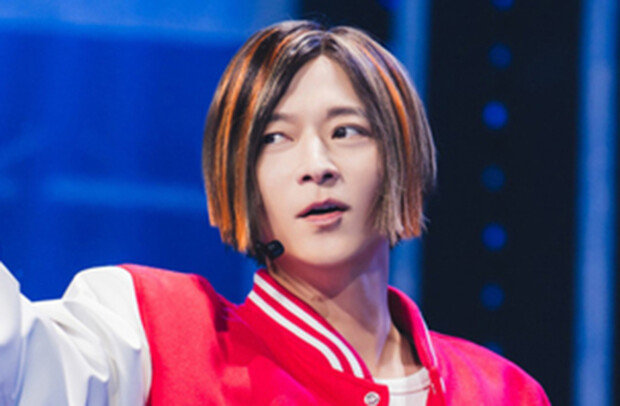
In 2002, a rookie group bursts onto the music scene and quickly becomes the industry's biggest sensation. The group is Triangle, a co-ed act signed to Yonggu Records and made up of Kang Dong-won, Park Ji-hyun and Uhm Tae-goo. Trailing behind them is Choi Seong-gon (Oh Jung-se), a ballad star known as the "Prince of Ballads" who can never quite escape second place. Then an unforeseen incident forces them all out of the spotlight.
That premise drives "Wild Thing," a comedy set for release June 3. The film follows Triangle and Choi Seong-gon as they chase an unexpected shot at redemption more than 20 years after their careers came to a halt. The story itself is straightforward, but the film's appeal lies in the cast's willingness to commit wholeheartedly to the absurdity. The laughs come frequently, and often unexpectedly.
Much of the comedy stems from the casting itself. Actors better known for restrained and serious performances plunge headfirst into broad, unabashed humor, while veteran scene-stealer Oh Jung-se anchors the chaos with perfect conviction.
Among the cast, Kang Dong-won has attracted particular attention. Playing Triangle's leader and main dancer Hwang Hyun-woo, he spent four hours a day practicing dance routines for the role.
Speaking at a cafe in Seoul's Jongno District on May 19, Kang said he approached the part with a simple goal. "I just didn't want to embarrass the dancers from that era," he said with a laugh. "I'm very happy with how it turned out."
Dance was far outside his comfort zone. Kang said he rarely listened to hip-hop and had virtually no dance experience before joining the project. While in the United States for production meetings two years ago, he received the script and immediately began preparing. To build credibility as Hyun-woo, he sought training from the U.S. breakdance crew JUiCE.
"This is a film where the effort is visible on screen," he said. "Because hip-hop was unfamiliar to me, I started with the basics, even learning how to walk with rhythm. One of my close friends saw me practicing and joked, 'What's going on? Are you short on money these days?'" Kang laughed as he recalled the story, saying, "I took it as a compliment."
The film adds another unconventional choice to a career built on them. From Haunters to A Violent Prosecutor, Kang has repeatedly gravitated toward projects that defy expectations. He said he has often heard people ask why he accepted a particular role, and not every recent project has found commercial success. His selection criteria, however, remain simple.
"If I enjoy the script and the character feels clear, I go for it," he said, adding that he was particularly drawn to the film's unapologetic B-movie sensibility.
That sensibility defines "Wild Thing" from beginning to end. Rather than disguising its rough edges, the film embraces exaggerated performances, deliberately old-fashioned flourishes and broad comic set pieces. It knows exactly what it wants to be and never apologizes for it.
Uhm Tae-goo throws himself into the role of Sang-gu, a rapper consumed by a second-place complex, while Park Ji-hyun is equally game as Domi, the former center of Triangle who has reinvented herself as the wife of a wealthy businessman. Neither actor appears concerned with maintaining a polished image if the joke demands otherwise.
Still, the film's biggest comic payoff belongs to Oh Jung-se. His character, Choi Seong-gon, was once a beloved ballad singer celebrated for his soft vocals and heartthrob image. After a scandal drives him out of the music business, he retreats to the mountains and lives as a hunter. One of the film's funniest moments arrives when the rugged recluse suddenly begins singing his signature hit, "I Like You," in the same silky voice that made him famous.
Fans may want to revisit Triangle's "Love Is" and Choi Seong-gon's "I Like You" before heading to the theater. Both songs function as recurring comic motifs throughout the film. By the end, audiences may find themselves humming the melodies long after the credits have rolled.
김태언 beborn@donga.com








 About Dong-A Ilbo