

Netanyahu ties war’s end to uranium removal
Netanyahu ties war’s end to uranium removal
Posted May. 12, 2026 07:55,
Updated May. 12, 2026 07:55
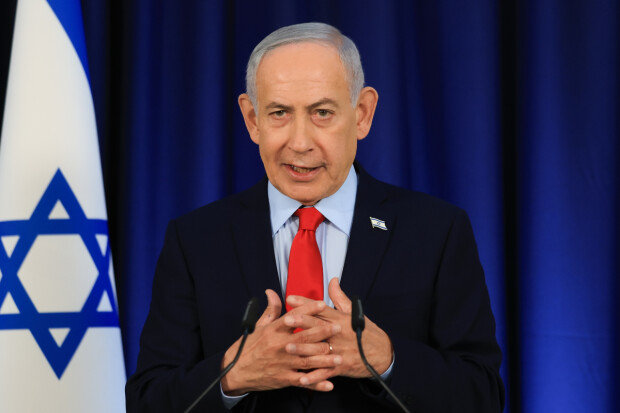
Israeli Prime Minister Benjamin Netanyahu said Sunday the war with Iran will not be over until Tehran’s stockpile of enriched uranium is removed from the country, underscoring Israel’s determination to press ahead until Iran’s nuclear program is brought under control.
His remarks suggested Israel has no intention of ending the conflict, which began with joint U.S.-Israeli airstrikes on Feb. 28 targeting Iran’s nuclear capabilities, before the nuclear issue is fully resolved.
Speaking in an interview with CBS News’ “60 Minutes,” Netanyahu said Israel had destroyed numerous Iranian nuclear facilities but maintained that key elements of the program remained intact.
“We have destroyed many nuclear sites, but much still remains,” he said. “Our mission is not over.”
Netanyahu singled out Iran’s estimated 440 kilograms of uranium enriched to 60 percent purity, saying the material “must be removed from Iran.” He called the removal effort “a critically important mission” and declined to specify any timeline for completing it.
Asked how such an operation could be carried out, Netanyahu said the uranium could simply be extracted and transported out of the country.
“You go in and take it out. It is physically possible,” he said, adding that U.S. President Donald Trump had also told him, “I want to go in there.”
Still, Netanyahu said both Israel and the United States would prefer to secure the uranium through diplomacy rather than military action.
“If we can achieve it through an agreement, that would be the best outcome,” he said.
Netanyahu also argued the war should continue to weaken Iran-backed armed groups across the Middle East, including the Lebanese militant group Hezbollah.
“Iran’s proxies are still trying to produce ballistic missiles,” he said. “There is still much more to be done.”
At the same time, he claimed the conflict had significantly degraded both Iran’s nuclear capabilities and the military strength of its regional proxy network.
Netanyahu is currently standing trial on charges including bribery and breach of trust, becoming the first sitting Israeli prime minister to face criminal prosecution while in office. Some observers have speculated he could face prison if he loses power.
That political pressure has fueled criticism that Netanyahu is sustaining a hard-line wartime posture in part to navigate his own domestic troubles. Analysts say his political survival may depend on staying in office through the general election expected later this year.
According to Israel’s Channel 12, Netanyahu repeatedly urged Trump during the conflict not to agree to a ceasefire with Iran.
Keun-Hyung Yoo noel@donga.com








 About Dong-A Ilbo