

Iran imposes transit controls in Strait of Hormuz
Iran imposes transit controls in Strait of Hormuz
Posted May. 07, 2026 07:46,
Updated May. 07, 2026 07:46
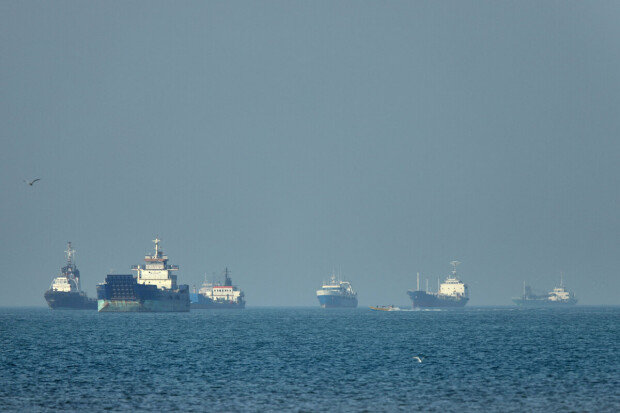
Iran has introduced a “pre-clearance” system for vessels transiting the Strait of Hormuz, a move that has prompted the United States and key Gulf states to revive efforts at the United Nations Security Council to pursue sanctions if Tehran does not keep the waterway open.
Iran’s state-run Press TV reported May 5 that authorities had begun enforcing maritime traffic rules to regulate ships passing through the strait. Under the new system, all vessels must obtain prior authorization by communicating with Iranian authorities, including via email, before entering the passage. Iran’s parliament is also moving to formalize additional measures to strengthen its control over the strait.
The Islamic Revolutionary Guard Corps reiterated that vessels must use only routes designated in advance by Iran, warning that violations could trigger a military response. Its naval command criticized the United States’ “Project Freedom” operation and said the only safe corridor is the one outlined by Iran. Ships that deviate from those routes would face a firm response from its naval forces, it added.
In response, the United States, Saudi Arabia, the United Arab Emirates, Qatar, Kuwait and Bahrain agreed to again pursue a U.N. Security Council resolution that would allow sanctions if Iran does not ensure access to the strait. The move reflects Washington’s effort to build diplomatic backing through the council after carrying out strikes on Iran without its approval.
According to Reuters, the United States has revised language related to the use of force in a draft resolution that was blocked last month by vetoes from China and Russia, while adding provisions such as support for humanitarian corridors. The draft is expected to be circulated through May 8, with a vote planned for next week.
Tensions between Iran and the United Arab Emirates have also intensified, raising concerns about possible spillover into ceasefire talks. The UAE said it activated air defenses on May 4, the first day of the “Project Freedom” operation, in response to missile and drone attacks launched from Iran. Tehran rejected the claim the following day, calling it false and warning it would retaliate against any attack carried out under that pretext.
Keun-Hyung Yoo noel@donga.com








 About Dong-A Ilbo