

Seoul High Court judge found dead at courthouse
Seoul High Court judge found dead at courthouse
Posted May. 07, 2026 07:46,
Updated May. 07, 2026 07:46
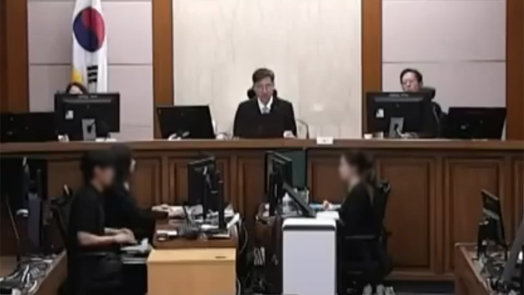
Judge Shin Jong-oh of the Seoul High Court, who presided over the appellate trial involving Kim Keon Hee, the wife of former President Yoon Suk Yeol, was found dead May 6 at a court complex in Seoul’s Seocho District. He was 55.
According to the Seocho Police Station, Shin was found at about 1 a.m. on an outdoor terrace on the fifth floor of the Seoul High Court building. Police said they were dispatched after receiving a report from his family at around 12:20 a.m. and located him during a joint search with firefighters and court staff. Based on surveillance footage and other evidence, authorities believe he died from a fall. The time of death is estimated to be between the afternoon of May 5 and the early hours of May 6.
A brief note was found in Shin’s clothing, expressing an apology and indicating he had chosen to end his life, police said. The note did not refer to any cases he had recently handled. Authorities said no signs of foul play have been identified and that they will continue to investigate the circumstances surrounding his death.
Shin had served as the presiding judge in Kim’s appeals case since Feb. 6. On April 28, the court sentenced her to four years in prison, overturning a lower court’s acquittal on charges including stock price manipulation related to Deutsch Motors and allegations that she accepted a Chanel handbag worth 8.02 million won from the Unification Church before Yoon took office. In the initial ruling on Jan. 28, a lower court had sentenced her to one year and eight months in prison. Under a special counsel law requiring a verdict within three months of the first ruling, the appellate decision was delivered 81 days after the case was filed.
Born in Seoul in 1971, Shin graduated from Sangmun High School and Seoul National University’s law department before completing the Judicial Research and Training Institute’s 27th class. He began his judicial career in 2001 at the Uijeongbu branch of the Seoul District Court and later served at the Seoul Western District Court, as a research judge at the Supreme Court, and at the Seoul High Court and Daegu High Court. He returned to the Seoul High Court in February this year, where he served in a criminal division handling corruption cases.
Shin was widely regarded as a principled judge with extensive experience in criminal trials. In October 2022, he ruled that the National Human Rights Commission of Korea had acted improperly in dismissing a petition related to the forced repatriation of North Korean defectors. He was also named an outstanding judge for 2023 by the Seoul Bar Association.
A fellow presiding judge who attended the same university described Shin as diligent and committed, noting that he handled a heavy caseload without complaint and was widely respected among colleagues. Another judge at the Seoul High Court said Shin rarely showed signs of strain but acknowledged that his division faced a significant workload, particularly amid an influx of special counsel cases and the creation of a new panel dedicated to insurrection-related trials.
송혜미 기자 1am@donga.com

![한적한 시골 단위농협… 알고보니 ‘대포통장 발급 전국 2위’[히어로콘텐츠/히든②-下]](https://dimg.donga.com/c/138/175/90/1/wps/NEWS/IMAGE/2026/06/23/134161455.1.jpg)


![금고 전무 “통장 풀었다 ㅎㅎ” 피싱 신고자 신상 508번 조직에 넘겨[히어로콘텐츠/히든②-上]](https://dimg.donga.com/c/138/175/90/1/wps/NEWS/IMAGE/2026/06/22/134161350.1.jpg)


 About Dong-A Ilbo