

South Korea refining helps ease oil shocks
South Korea refining helps ease oil shocks
Posted April. 16, 2026 08:57,
Updated April. 16, 2026 08:57
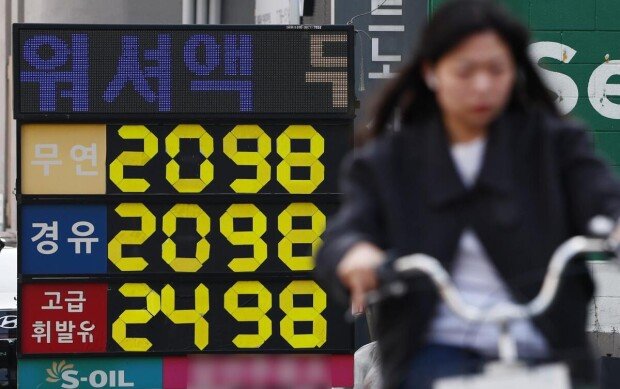
Amid growing uncertainty in global oil markets driven by energy risks linked to Iran, South Korea’s refining industry is drawing renewed attention for its competitiveness. As fuel rationing and aviation fuel restrictions appear in several countries, South Korea has managed to maintain relatively stable supplies of petroleum products. Analysts point to its refining system, which processes 100 percent imported crude oil into higher-value products such as gasoline, diesel, jet fuel and naphtha, as the foundation of that stability. Although it produces no crude oil, South Korea ranks among the world’s top five exporters of refined petroleum products.
According to industry data on April 9, South Korea ranked fifth globally in crude oil refining capacity in 2024, behind China, the United States, Russia and India. The country’s four major refiners have invested heavily since 2007, spending about 34 trillion won over nearly two decades to expand and upgrade facilities. That has lifted total refining capacity to about 3.363 million barrels per day.
The resilience of that system has become more apparent during global energy disruptions. Even in the United Kingdom, a North Sea oil producer, fuel shortages have at times led to temporary gas station closures. The Automobile Association (AA) urged motorists to avoid panic buying.
Non-producing countries have faced similar pressures. Vietnam’s Civil Aviation Authority warned on March 9 that airlines could face aviation fuel shortages beginning in early April. It later raised jet fuel prices by two to three times on April 25 and April 26 compared with previous levels. Concerns over fuel supply also led to the suspension of operations at 17 gas stations in Hanoi, a situation rarely seen in South Korea.
While many countries have struggled with both shortages and price spikes, South Korea’s domestic fuel market has remained comparatively stable. Some analysts say this is partly due to the country’s refining capacity, even as the government maintains a fuel price cap aimed at preventing sharp increases without triggering supply disruptions.
According to Korea National Oil Corporation’s Opinet data, in the fourth week of March, about a month after the Middle East crisis began, the pre-tax supply price of regular gasoline in South Korea stood at 960.1 won per liter. That compares with 1,247.5 won in Japan, 1,503.7 won in Canada and 1,878 won in New Zealand.
Although South Korea is not an oil-producing country, its relatively stable supply and pricing reflect decades of accumulated refining expertise and supply chain management. The situation contrasts with some oil-producing countries that still face fuel shortages due to limited refining capacity. In that context, manufacturing once again stands out as a critical pillar of South Korea’s economic resilience in times of crisis.
이민아 omg@donga.com








 About Dong-A Ilbo