

South Korea secures oil, naphtha supplies
South Korea secures oil, naphtha supplies
Posted April. 16, 2026 08:56,
Updated April. 16, 2026 08:56
Amid growing disruptions to global energy supply chains driven by tensions in the Middle East and risks surrounding the Strait of Hormuz, the government said it has secured 273 million barrels of crude oil and up to 2.1 million tons of naphtha through the end of the year. Officials said the supplies, sourced through alternative routes bypassing the strait, including shipments via the Red Sea, would cover more than three months of crude demand and over a month of key petrochemical feedstock needs.
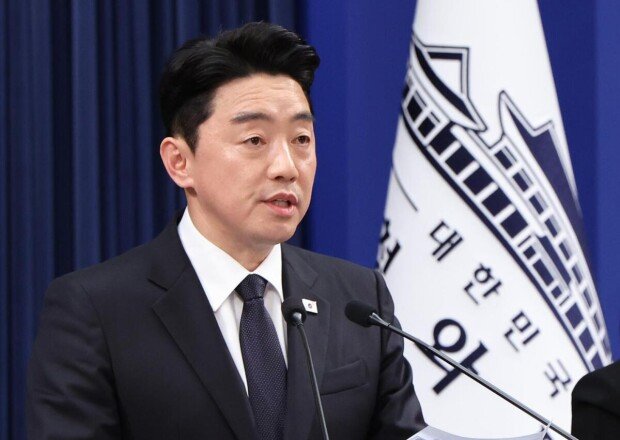
Kang Hoon-sik, presidential chief of staff and special envoy for strategic economic cooperation, said in a briefing at the presidential office that South Korea had finalized agreements to import 273 million barrels of crude oil from four Middle Eastern countries by year’s end. He said the shipments will be routed through alternative supply lines not dependent on the Strait of Hormuz. “This is expected to make a direct and tangible contribution to stabilizing domestic supply and demand,” Kang said. He visited Saudi Arabia, Oman, Kazakhstan and Qatar after departing on April 7 under instructions from President Lee Jae-myung and returned the previous day.
By country, the crude secured includes 250 million barrels from Saudi Arabia, 18 million barrels from Kazakhstan and 5 million barrels from Oman. Kang also said Saudi Arabia agreed to ensure the shipment of 50 million barrels previously allocated to Korean companies but whose loading had been uncertain, with delivery set for April and May through alternative ports near the Red Sea. He added that Riyadh committed to prioritizing a total of 200 million barrels for Korean companies from June through the end of the year. South Korea typically imports more than 300 million barrels of crude oil annually from Saudi Arabia, but concerns over disruptions linked to the Strait of Hormuz have prompted a shift toward alternative shipping routes that avoid the chokepoint. For naphtha, South Korea secured 500,000 tons from Saudi Arabia and 1.6 million tons from Oman.
Business groups said the government’s emergency procurement of key Middle Eastern energy supplies is likely to ease market anxiety. Industry watchers noted that companies may soon face limits in their own contingency measures after mid-next month, making the government’s effort to lock in medium- and long-term volumes particularly important. The measures are also expected to help the petrochemical sector avoid worst-case scenarios, including potential plant shutdowns. An official in the refining industry said the agreement was meaningful because it secures supply beyond the immediate short term.
However, some observers cautioned that without clearer details on shipment schedules, volumes and pricing, it remains uncertain whether the deals will translate into actual price stability.
Hoon-Sang Park tigermask@donga.com


![“코 스프레이 2번 뿌렸더니 기억력 쑥”…치매 치료 가능성 [노화설계]](https://dimg.donga.com/c/138/175/90/1/wps/NEWS/IMAGE/2026/05/29/134018314.3.jpg)



 About Dong-A Ilbo