

Non-drinking trend empties bars in Seoul campuses
Non-drinking trend empties bars in Seoul campuses
Posted March. 28, 2026 08:38,
Updated March. 28, 2026 08:38
“Last year, beer at least still sold. These days, eight out of 10 customers just order cola.”
Cho, a 52-year-old fried chicken restaurant owner in Seoul’s Daehangno district, spoke with a sigh at 7 p.m. on March 25. Even during peak hours, only two of the shop’s nine tables were occupied. At one, a group of college students shared a single bottle of cola. Cho said many customers now skip alcohol altogether or linger for hours over a single glass of zero-sugar cola. Two of her three refrigerators are filled with soft drinks.
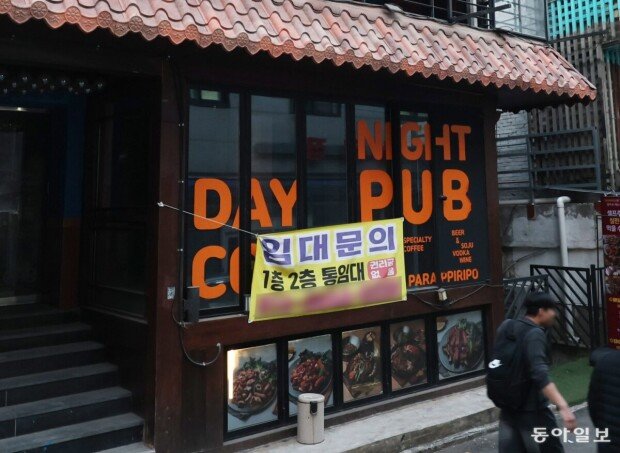
The surrounding streets tell a similar story. Several bars in Daehangno have closed, leaving the area noticeably quieter. Near the main gate of Sungkyunkwan University, storefronts display “For Lease” signs, while some barbecue restaurants have shut without notice. Kim Yeon-jin, 48, who runs a Korean-style pub nearby, said her sales have fallen by more than 20 percent from a year earlier. Rents remain high, she added, and empty spaces are rarely taken by new tenants.
A growing shift away from drinking among younger consumers, particularly college students, is weighing on university districts and the broader alcohol industry. Students, once a central pillar of drinking culture alongside office workers, are cutting back sharply, dragging down demand. Large restaurants that once filled each night now sit half empty, while late-night cafés, 24-hour laundromats and unmanned food shops are among the few businesses that continue to draw customers.
The trend is also reflected in the data. According to the Seoul Metropolitan Government, the number of registered pubs and casual bars in Daehangno fell from 106 at the end of 2019 to 70 at the end of last year. In Sinchon, Seodaemun District, the figure dropped from 240 to 172 over the same period, a decline of about 28 percent. Near Konkuk University Station in Gwangjin District, the number decreased from 169 to 145.
On March 24, many shuttered bars in Sinchon stood empty, some displaying signs reading “no key money,” indicating that even lease premiums could not be secured. Choi Dong-won, 62, who has run a pub in the area for nearly a decade, said the once-familiar “Sinchon formula” of a barbecue restaurant on the first floor, a pub on the second and a karaoke room on the third has long faded. In many cases, he added, businesses close without even removing their signs. In many cases, he said, businesses close without even removing their signs.
As alcohol consumption declines, some establishments have adapted by offering smaller, lower-cost options, including 2,000-won servings of soju over ice. A franchise bar owner in Sinchon said the item was introduced about a year ago by headquarters. While initially uncertain, the owner said it has gained traction among students who prefer lighter drinking.
When students do drink, they are increasingly choosing cocktails or whiskey over soju or beer. Noh Tae-won, 25, a Hansung University student who has worked part-time at bars in Daehangno, said he has seen a clear shift away from heavy drinking such as soju-beer mixes toward pairing drinks with food.
Alcohol companies are also adjusting their strategies to reconnect with younger consumers. HiteJinro recently launched a promotion offering gifts to freshmen who verify participation in drinking gatherings. OB Beer has stepped up outreach through campus marketing programs and competitions.
There is also a growing push into non-alcoholic options. HiteJinro and OB Beer are expanding distribution of alcohol-free beer to bars that previously focused on alcoholic beverages. Retailers, including convenience stores, are introducing private-label non-alcoholic drinks as they seek to appeal to younger customers.
이다겸 gyeom@donga.com







 About Dong-A Ilbo