

USFK reviews possible redeployment of assets to Middle East
USFK reviews possible redeployment of assets to Middle East
Posted March. 06, 2026 08:08,
Updated March. 06, 2026 08:08
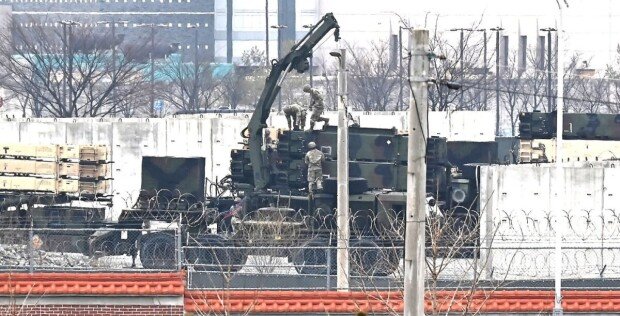
Amid growing concern that the war between the United States and Iran could escalate, the United States Forces Korea appears to be making internal preparations that suggest some of its assets could be deployed overseas. South Korean officials are closely monitoring the situation, amid expectations that Washington may soon formally request the redeployment of USFK assets to the Middle East.
According to multiple government sources on Wednesday, USFK has recently undertaken activities that appear to be preliminary steps for the overseas deployment of certain assets. One source said the moves are believed to involve preparations to redeploy weapons and equipment considered critical to operations related to the Middle East crisis.
As tensions in the Middle East intensify, demand for munitions such as strike and interceptor missiles has increased. That trend has raised the possibility that key USFK capabilities could be redirected. Although Trump recently said the United States possesses “a tremendous amount of ammunition,” concerns about dwindling stockpiles have reportedly been growing within his administration.
Reuters reported Tuesday that the Trump administration plans to convene executives from major defense contractors, including Lockheed Martin, at the White House. The report said the meeting is intended to press defense firms to accelerate production and replenish rapidly declining inventories of weapons, particularly air defense missiles.
The Financial Times also reported Wednesday that Gulf countries targeted by Iranian strikes are scrambling to secure additional air defense missiles. According to the report, the United States recently pledged to provide more interceptor missiles, including Patriot systems, to countries in the Gulf region, but actual deliveries have yet to take place.
Military officials and defense analysts say the assets most likely to be considered for redeployment are air defense and missile systems rather than heavy ground equipment such as tanks. These could include Patriot interceptor missiles, the ATACMS tactical surface-to-surface missile system, and multiple launch rocket systems capable of firing rockets.
In June last year, during a U.S. strike operation against Iran known as “Midnight Hammer,” two Patriot batteries from USFK were temporarily rotated to the Middle East following consultations between South Korea and the United States. There has also been speculation that assets such as the Terminal High Altitude Area Defense battery deployed in Seongju, North Gyeongsang Province, or some interceptor missiles from existing stockpiles could be considered for redeployment.
Because these systems form a central part of the air defense network designed to counter North Korea’s nuclear and missile threats, analysts warn that their redeployment could create capability gaps. If the deployment extends beyond a temporary rotation and becomes prolonged due to a wider conflict, the combined defense posture against North Korea could also be affected.
South Korean officials are therefore expected to stress that if Washington formally requests the redeployment of USFK assets to the Middle East, alternative or supplementary forces should be deployed quickly to preserve readiness. The Presidential Office of South Korea said the mission of USFK is to maintain a firm combined defense posture with South Korea’s military and to contribute to peace and stability on the Korean Peninsula and in the region. It added that the two countries will continue close communication and coordination to achieve that goal.
Sang-Ho Yun ysh1005@donga.com


![[단독]“신천지 신도 최소 5만6472명, 2021∼2024년 국힘 당원 가입”](https://dimg.donga.com/c/138/175/90/1/wps/NEWS/IMAGE/2026/06/22/134157752.1.jpg)


 About Dong-A Ilbo