

Numereal Leads Global Manufacturing's Artificial Intelligence Transition With 'DashOpti'
Numereal Leads Global Manufacturing's Artificial Intelligence Transition With 'DashOpti'
Posted February. 27, 2026 13:45,
- Numereal, led by CEO and Professor Geon-woo Noh, has developed "DashOpti," an engineering software that uses physics-informed AI to accelerate the complex product analysis and design optimization process for manufacturers.
- The software stands out by requiring significantly less data for AI training than traditional models, enabling automotive and appliance companies to reduce component design cycles from several weeks to just four days.
- Supported by the Korea University Crimson Startup Support Foundation, the startup is leveraging its proprietary performance-prediction algorithms to challenge global engineering software giants and expand into the U.S. and Asian markets in 2026.
In manufacturing, product design focuses on two primary goals: evaluating performance quickly and accurately, and improving the design to achieve better performance if the initial results are unsatisfactory. The manufacturing industry refers to this performance evaluation process as ‘analysis.’ As a vital step in production, analysis typically demands significant time and capital. Numereal, a startup led by CEO Geon-woo Noh, develops DashOpti, an engineering software designed to accelerate this very process.
The name DashOpti combines ‘Dash,’ representing speed, and ‘Optimization.’ It embodies a philosophy of pursuing rapid analysis and design. A key feature of the software is its versatility; it is not limited to a specific sector but can be widely applied to the design and analysis of components in various manufacturing fields, including automotive, shipbuilding, and home appliances.
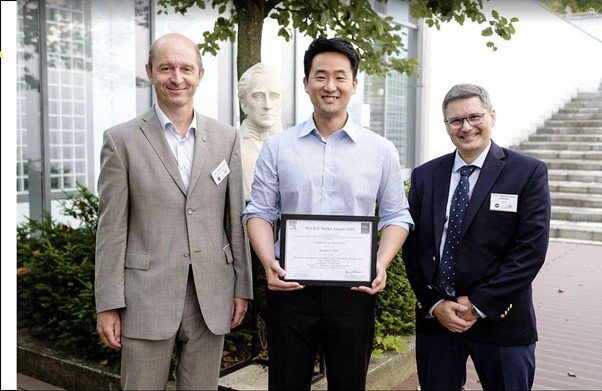
Geon-woo Noh, CEO of Numereal(center), receiving the 2023 KJ Bathe Award / Source = Numereal
Noh is a professor specializing in computational mechanics and optimal design theory. While conducting joint research with various manufacturing companies, he encountered diverse on-site demands. He discovered that although the specific needs of manufacturing sites vary, the core technology required to satisfy them remains the same: ‘analyzing product performance quickly and accurately.’
Previously, overseas companies that identified this demand earlier developed and supplied engineering software. However, they struggled to respond nimbly to the diverse needs of various manufacturing sites or to deliver satisfactory utility. Believing that developing the precise technology needed to satisfy the common denominators of the manufacturing industry would allow him to compete with foreign engineering software, Geon-woo Noh founded Numereal in January 2025.
DashOpti’s competitiveness lies in three main areas. First is its ability to train AI models with small amounts of data. While it is common knowledge that AI training requires vast data, analysis data used in manufacturing often must be secured directly rather than sourced externally. This data is essential for creating AI that understands product performance, but generating it is time-consuming and expensive. Numereal overcomes this barrier with technology that trains AI effectively even with a limited number of analysis data points. Rather than demanding a massive volume of data, the principle involves distributing and introducing precise data evenly according to its characteristics.
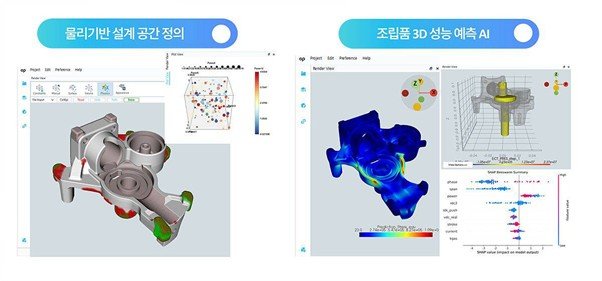
Example of DashOpti’s user interface / Source = Numereal
Second is the superior accuracy of its proprietary AI model, specialized for predicting product performance. This was achieved by focusing specifically on the performance metrics required to satisfy the manufacturing industry’s demands. Third is the AI’s ability to define the design space based on physics-informed data. This improves the overall efficiency of design improvement. Previously, this process relied on the experience of experts. DashOpti adds physics-informed data and AI to this process to suggest the necessary directions for design improvement.
Some companies have already achieved results using Numereal’s DashOpti. One automotive parts company used DashOpti to perform the optimal design of a component in just four days—a process that previously took several weeks. The same applies to home appliance companies. Seeing the achievements of these firms, companies from different manufacturing sectors have requested the implementation of DashOpti. Based on this momentum, Numereal plans to supply DashOpti to a wide range of manufacturing sectors in 2026.
Noh introduces four technologies as the source of DashOpti’s competitiveness and the driving force behind its immediate results in manufacturing: physics-informed design space definition, optimal training data generation, a proprietary AI model for performance prediction, and design optimization technology. In particular, it was effective to provide functions that foreign engineering software could not offer while ensuring that existing technical assets and know-how from the field were well-integrated into the new solution.
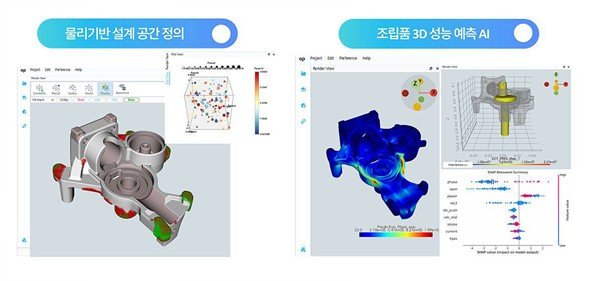
Example of DashOpti’s user interface / Source = Numereal
Second is the superior accuracy of its proprietary AI model, specialized for preicting product performance. This was achieved by focusing specifically on the performance metrics required to satisfy the manufacturing industry’s demands. Third is the AI’s ability to define the design space based on physics-informed data. This improves the overall efficiency of design improvement. Previously, this process relied on the experience of experts. DashOpti adds physics-informed data and AI to this process to suggest the necessary directions for design improvement.
Some companies have already achieved results using Numereal’s DashOpti. One automotive parts company used DashOpti to perform the optimal design of a component in just four days—a process that previously took several weeks. The same applies to home appliance companies. Seeing the achievements of these firms, companies from different manufacturing sectors have requested the implementation of DashOpti. Based on this momentum, Numereal plans to supply DashOpti to a wide range of manufacturing sectors in 2026.
Noh introduces four technologies as the source of DashOpti’s competitiveness and the driving force behind its immediate results in manufacturing: physics-informed design space definition, optimal training data generation, a proprietary AI model for performance prediction, and design optimization technology. In particular, it was effective to provide functions that foreign engineering software could not offer while ensuring that existing technical assets and know-how from the field were well-integrated into the new solution.
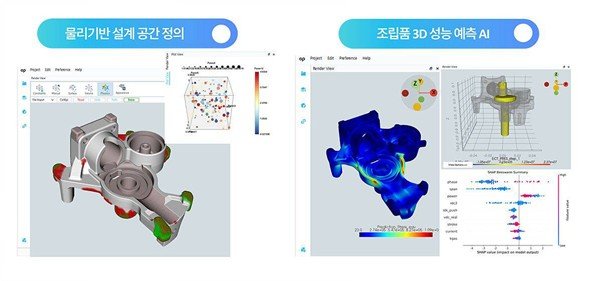
Example of DashOpti’s user interface / Source = Numereal
Second is the superior accuracy of its proprietary AI model, specialized for predicting product performance. This was achieved by focusing specifically on the performance metrics required to satisfy the manufacturing industry’s demands. Third is the AI’s ability to define the design space based on physics-informed data. This improves the overall efficiency of design improvement. Previously, this process relied on the experience of experts. DashOpti adds physics-informed data and AI to this process to suggest the necessary directions for design improvement.
Some companies have already achieved results using Numereal’s DashOpti. One automotive parts company used DashOpti to perform the optimal design of a component in just four days—a process that previously took several weeks. The same applies to home appliance companies. Seeing the achievements of these firms, companies from different manufacturing sectors have requested the implementation of DashOpti. Based on this momentum, Numereal plans to supply DashOpti to a wide range of manufacturing sectors in 2026.
Noh introduces four technologies as the source of DashOpti’s competitiveness and the driving force behind its immediate results in manufacturing: physics-informed design space definition, optimal training data generation, a proprietary AI model for performance prediction, and design optimization technology. In particular, it was effective to provide functions that foreign engineering software could not offer while ensuring that existing technical assets and know-how from the field were well-integrated into the new solution.
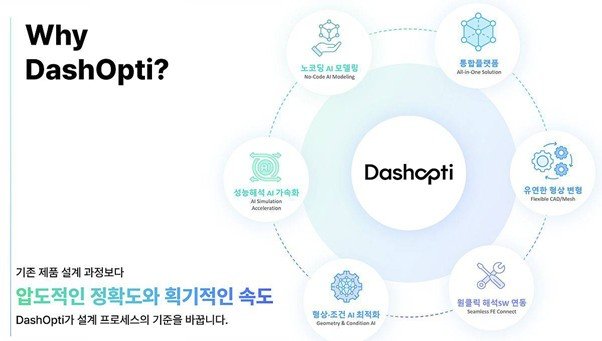
Features of DashOpti / Source = Numereal
The backbone of DashOpti’s development is a research team that proved its capabilities in world-renowned academic journals after developing core technologies. The goal shared by the employees of Numereal, including these researchers, is clear: to provide the highest level of technology for analysis and design practice in the form of a product that is easy and enjoyable for users to use. Contributing to the industry through technological innovation and growing together as a team and a company are the core values shared by Numereal’s members.
Numereal has expanded its growth by adding support from various institutions to these values and technologies. The Korea University Crimson Startup Support Foundation is a prime example. Noh stated that he led Numereal smoothly by receiving startup seminars, education, and legal/administrative practical support from the foundation during the Initial Startup Package following his lab-based startup phase. Furthermore, with the support of the Korea University Crimson Startup Support Foundation, Numereal devised a patent application strategy, including competitive patent analysis. After establishing intellectual property rights, they also secured international investors and market networks. Noh expressed special gratitude for the fact that the foundation does not just provide fixed support programs but constantly identifies the needs of startups to provide tailored support.
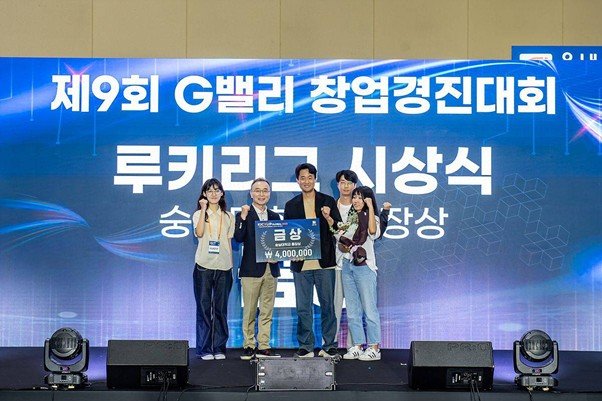
Numereal at the 2025 G-Valley Startup Competition award ceremony / Source = Numereal
Having attracted seed investment last year, Numereal’s challenge is to enter and settle into the domestic and international manufacturing markets. Noh is confident in DashOpti’s accuracy and speed, as manufacturing companies that commissioned him for solution development even before the company's founding are already using DashOpti with satisfaction. However, manufacturing companies, by nature, are often reluctant to change or introduce new software. They tend to trust the existing tools they have used for a long time and stay within those boundaries.
Numereal aims to solve this challenge by further expanding its collaboration with manufacturing companies and actively spreading success stories. By strengthening software development capabilities, including analysis acceleration and design space definition technology, the company will help Korean manufacturing firms grow. In this process, they will survey various needs in the field to preemptively introduce technologies that existing software did not support, thereby creating a "technological moat." After expanding success stories, technological sophistication, and collaboration in Korea, Numereal aims to enter the U.S.market, as well as Asian markets centered on Japan and Singapore. They have already made contact with local investment firms and partner companies.
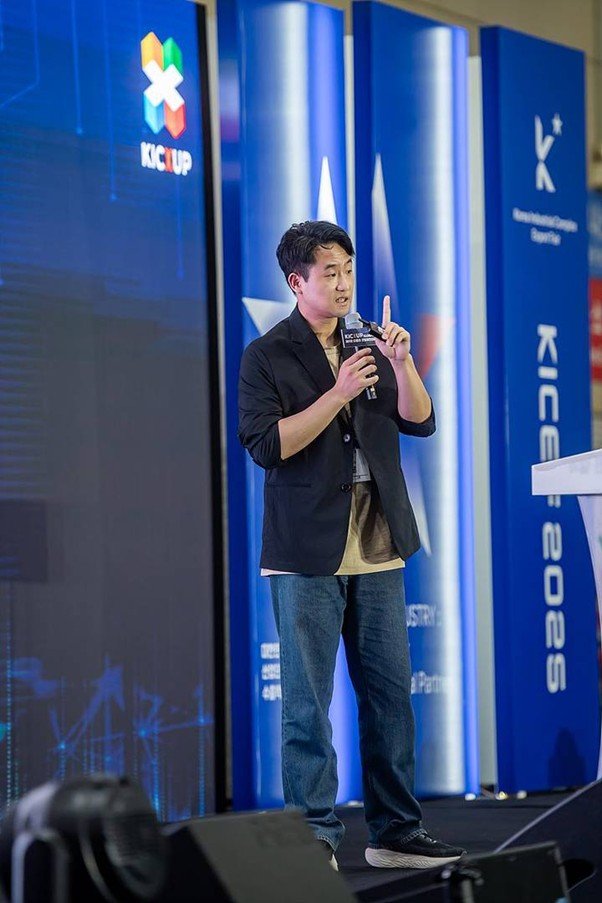
CEO Geon-woo Noh introducing Numereal’s technology and achievements / Source = Numereal
“The key is to possess both manufacturing and AI capabilities in the manufacturing sector,” said Geon-woo Noh. “I will prove that even a small company can develop technology with higher perfection than large corporations and create software that is enjoyable to use. We will not settle for standing shoulder to shoulder with world-famous manufacturing software companies, but will grow into a company that surpasses them.”
By Joo-kyung Cha (racingcar@itdonga.com)

![‘노인 냄새’ 씻으면 없어질까?…“목욕보다 식단이 더 중요”[노화설계]](https://dimg.donga.com/c/138/175/90/1/wps/NEWS/IMAGE/2026/02/27/133434557.3.jpg)






 About Dong-A Ilbo