

db beats Dreams of Becoming a "Pacemaker" for Deep Sleep via Light and Sound
db beats Dreams of Becoming a "Pacemaker" for Deep Sleep via Light and Sound
Posted February. 26, 2026 12:37,
Updated March. 10, 2026 16:21
- db beats, an LG Electronics spin-off led by veteran engineers, has developed a "closed-loop" SleepTech solution that moves beyond mere sleep tracking to actively induce deep sleep using real-time vital signs.
- Their flagship product, "For me buds," uses embedded heart rate sensors to monitor stress and brain arousal, automatically generating customized sound frequencies that act as a "pacemaker" to guide the user into sleep.
- Proven to reduce sleep onset time by over 30% in clinical trials, the company is now expanding its platform into IoT smart bedroom environments and concentration-enhancing solutions for students and professionals.
Deep sleep has long been treated as an individual matter. The conventional response was that if one is tired, they should simply go to bed earlier or cut back on caffeine. However, sleep deprivation can no longer be dismissed merely as a matter of personal condition management. According to statistics compiled by the Centers for Disease Control and Prevention(CDC) based on 2022 Behavioral Risk Factor Surveillance System(BRFSS) data, 36.8% of adults reported not getting enough sleep.
Insomnia is no exception. According to survey data conducted by the American Academy of Sleep Medicine(AASM) in May 2024, 12% of U.S. adults have been diagnosed with chronic insomnia. The AASM added that when temporary insomnia symptoms are included, this figure expands to the 30–35% range.
As the number of people trapped in a swamp of stress and insomnia—longing for a good night's rest—increases, the "SleepTech" market, which integrates information technology (IT) to enhance sleep quality, is showing a growth trend. The market research firm Global Market Insights predicted that the global sleeptech device market, which was valued at $29.3 billion in 2025, will grow to approximately $134.7 billion by 2034.
The problem is that many SleepTech-related products and services stop at measuring sleep quality. They tell you how well you slept, but how to utilize that information is left entirely to the user. However, db beats is leading a change in the SleepTech market by proposing a solution that covers everything from measurement to sleep induction. What kind of technology do they possess to create an optimal sleep environment? We sat down with Seung-pyo Noh, the CEO of db beats, to talk.
Thoughts on Solving Sleep Disorders Lead to Founding
"Existing sleep measurement devices only provide feedback like, 'You tossed and turned last night.' But what users need is not a result report, but immediate deep sleep. We utilize the principle that the brain responds most sensitively to light and sound. db beats's goal is to synchronize brainwaves into a sleep mode, naturally leading the user into a deep sleep," said Noh.
db beats, a healthcare startup, began in 2020 as part of an in-house venture program at LG Electronics. Noh is a former engineer who researched mobile and wearable fields at LG Electronics, and he set out to start his own business to overcome the limitations of the SleepTech market. The startup possesses robust hardware and software development capabilities, to the point where most members are veteran engineers who worked together at LG Electronics for over 15 years.
Since most team members are battle-hardened technical experts, they possess a solid infrastructure to independently perform everything from hardware design and software algorithm development to app service construction without external dependence. This is db beats’s core competency, guaranteeing an execution power that distinguishes it from startups driven only by ideas.
Noh focused on methods to help people sleep comfortably. Most wearable devices record sleep patterns meticulously, but there was nothing after that. It was a structure where data simply kept accumulating without the curiosity about sleep being resolved. This is why he focused on developing a solution that adjusts the sleep environment based on measurement data to improve sleep quality.
Creating a "Pacemaker" for Deep Sleep with Light and Sound
db beats's first result is the "For me buds," which take the form of completely wireless earphones. These products play music like typical wireless earphones but implement technical differentiation by embedding a heart rate measurement sensor. Simply by having them in the ear, they measure heart rate variability (HRV), tension, and stress levels in real-time.
"The For me buds monitor the user's status in real-time and immediately generate and play special sounds that stabilize brainwaves according to that data. It’s not just playing pre-stored white noise. If the user's heart rate is fast, it acts as a 'pacemaker' that adjusts the pace and gradually lowers the frequency. In essence, the user's vital signs and the device communicate in real-time to guide the way to sleep," explained Noh.
The principle of stabilizing brainwaves with light and sound is a concept that has been used for a long time. It is in the same context as brainwave-sound-based products that were highly popular in Korea in the past. However, where db beats differs is that instead of playing a pre-determined sound source, it reads the user's real-time vital signs to generate customized sounds.
db beats sought differentiation by introducing a "closed-loop system." Most sleep measurement devices have a one-way structure leading from measurement to a result report. In contrast, db beats introduced an organic circulation method of measurement, real-time analysis, customized stimulation, and re-measurement. When a user lies down to sleep, if a high level of brain arousal is detected, the device plays a lower frequency sound; once the heart rate stabilizes, it gradually reduces the volume or switches to a sleep induction signal. This dynamic response helps the user naturally enter the stages of sleep without conscious awareness.
Furthermore, high heart rate measurement accuracy based on hardware manufacturing capabilities is a point of pride for db beats. Noh explained, "We have experience designing and mass-producing tens of millions of mobile devices. The know-how to filter out fine vital signs without noise and convert them into meaningful data is a weapon unique to db beats that cannot be caught up with in a short period."
Recently, db beats has been expanding this technology beyond the framework of earphones. For those who find it uncomfortable to sleep with earphones, the company is evolving into a platform that creates sleep routines by syncing with smart watch data to broadcast sound through smartphone speakers or controlling lighting with special wavelengths.
Lighting solutions that do not interfere with melatonin secretion are one of db beats's future growth engines for transforming the entire bedroom space into a sleep-friendly environment. Currently, they are conducting a Proof of Concept (PoC) operation in collaboration with Hoban Construction to configure an IoT(Internet of Things) space specialized for sleep. The structure involves applying a platform that integratedly manages lighting, sound, air conditioning, and temperature to sleep-dedicated rooms in hotels and resorts.
Noh also took note of the concentration enhancement sector. He focused on the fact that applying brainwave stabilization technology in reverse leads to improved concentration. db beats has completed clinical validation for a concentration enhancement mode and is currently developing a product with Jinhaksa.
Building Brand Awareness is a Realistic Concern for Startups
No matter how superior the technology, it is useless if it is not chosen by the market. Noh cited "building trust" as the greatest difficulty after founding. As a new startup, the B2C (Business-to-Consumer) market, where the brand is introduced directly to consumers, was a formidable challenge.
"Consumers trust the brands of large corporations, but they have doubts about the innovative technology of startups. To answer the question of whether it's truly effective, we needed more data. Because there are significant individual differences in sleep, the process of gaining universal trust was very grueling," he recalled.
To overcome this, Noh chose a direct approach. To prove their technological prowess, they focused on building B2B (Business-to-Business) references through collaboration with large corporations. They also accumulated objective data through clinical cooperation with medical institutions, including Seoul National University Bundang Hospital. As a result of clinical evaluations, the time to fall asleep was shortened by more than 30% compared to existing ASMR users when using For me buds, and the number of awakenings during sleep was significantly reduced.
Focusing on Technology that People Can Feel Immediately
db beats is continuing a steady growth trend, recording more than double the revenue compared to 2024. The revenue structure is approximately 6:4 between For me buds product sales and software solution revenue. Software solution revenue was achieved by supplying measurement and sound algorithms to other earphone manufacturers or providing content packages to LG Electronics' home appliance lines.
The Korea University Crimson Startup Support Foundation's Initial Startup Package program served as a reliable support system for db beats's technological leap and market settlement. Through the program, db beats received support for patent applications and opportunities for overseas expansion, including an exhibition in Dubai. Influencer marketing support compensated for insufficient brand exposure, leading to increased product sales performance.
"The process for a startup to complete a prototype and find an actual sales channel is a path of thorns. The Korea University Crimson Startup Support Foundation provided db beats with marketing strategy formulation and investment attraction mentoring. Support for influencer marketing and participation in overseas exhibitions were also valuable opportunities to identify global sleep market trends and confirm the export potential of sleep management technology," said Noh.
Noh added, "Rather than ending with one-time support, they provided a lot of help in developing the survival muscles for a startup to become self-sufficient in the market."
db beats plans to expand its business scope from sleep to overall mental care. Examples include building concentration-enhancing sounds for students and short, deep rest (Power Nap) solutions for office workers. The ambition is to reborn as a life-care company responsible not only for the peace of the night but also for the vitality of the day.
Nevertheless, Noh explained that they will not become a company buried only in technology. He emphasized, "If you cling to one field for a long time, the technology itself can easily become the goal. If you get buried in how precisely you measure or how much data you analyze, you might miss what the user actually wants. What db beats creates is ultimately something that helps people sleep well. That must be felt."
By Hyung-seok Kang (redbk@itdonga.com)
- Their flagship product, "For me buds," uses embedded heart rate sensors to monitor stress and brain arousal, automatically generating customized sound frequencies that act as a "pacemaker" to guide the user into sleep.
- Proven to reduce sleep onset time by over 30% in clinical trials, the company is now expanding its platform into IoT smart bedroom environments and concentration-enhancing solutions for students and professionals.
Deep sleep has long been treated as an individual matter. The conventional response was that if one is tired, they should simply go to bed earlier or cut back on caffeine. However, sleep deprivation can no longer be dismissed merely as a matter of personal condition management. According to statistics compiled by the Centers for Disease Control and Prevention(CDC) based on 2022 Behavioral Risk Factor Surveillance System(BRFSS) data, 36.8% of adults reported not getting enough sleep.
Insomnia is no exception. According to survey data conducted by the American Academy of Sleep Medicine(AASM) in May 2024, 12% of U.S. adults have been diagnosed with chronic insomnia. The AASM added that when temporary insomnia symptoms are included, this figure expands to the 30–35% range.
As the number of people trapped in a swamp of stress and insomnia—longing for a good night's rest—increases, the "SleepTech" market, which integrates information technology (IT) to enhance sleep quality, is showing a growth trend. The market research firm Global Market Insights predicted that the global sleeptech device market, which was valued at $29.3 billion in 2025, will grow to approximately $134.7 billion by 2034.
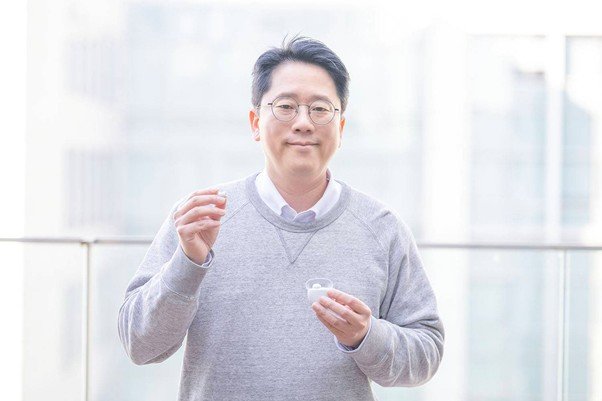
Seung-pyo Noh, CEO of db beats / source=ITdongA
The problem is that many SleepTech-related products and services stop at measuring sleep quality. They tell you how well you slept, but how to utilize that information is left entirely to the user. However, db beats is leading a change in the SleepTech market by proposing a solution that covers everything from measurement to sleep induction. What kind of technology do they possess to create an optimal sleep environment? We sat down with Seung-pyo Noh, the CEO of db beats, to talk.
Thoughts on Solving Sleep Disorders Lead to Founding
"Existing sleep measurement devices only provide feedback like, 'You tossed and turned last night.' But what users need is not a result report, but immediate deep sleep. We utilize the principle that the brain responds most sensitively to light and sound. db beats's goal is to synchronize brainwaves into a sleep mode, naturally leading the user into a deep sleep," said Noh.
db beats, a healthcare startup, began in 2020 as part of an in-house venture program at LG Electronics. Noh is a former engineer who researched mobile and wearable fields at LG Electronics, and he set out to start his own business to overcome the limitations of the SleepTech market. The startup possesses robust hardware and software development capabilities, to the point where most members are veteran engineers who worked together at LG Electronics for over 15 years.
Since most team members are battle-hardened technical experts, they possess a solid infrastructure to independently perform everything from hardware design and software algorithm development to app service construction without external dependence. This is db beats’s core competency, guaranteeing an execution power that distinguishes it from startups driven only by ideas.
Noh focused on methods to help people sleep comfortably. Most wearable devices record sleep patterns meticulously, but there was nothing after that. It was a structure where data simply kept accumulating without the curiosity about sleep being resolved. This is why he focused on developing a solution that adjusts the sleep environment based on measurement data to improve sleep quality.
Creating a "Pacemaker" for Deep Sleep with Light and Sound
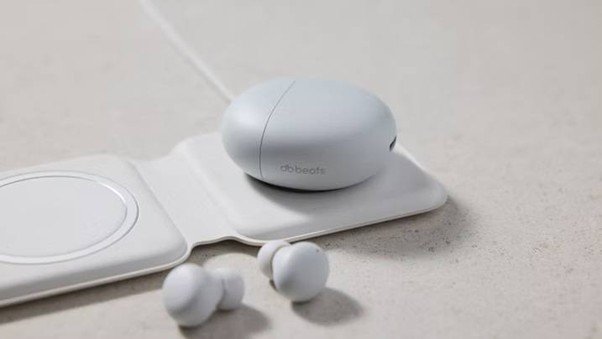
db beats's first result is the "For me buds," which take the form of completely wireless earphones. These products play music like typical wireless earphones but implement technical differentiation by embedding a heart rate measurement sensor. Simply by having them in the ear, they measure heart rate variability (HRV), tension, and stress levels in real-time.
"The For me buds monitor the user's status in real-time and immediately generate and play special sounds that stabilize brainwaves according to that data. It’s not just playing pre-stored white noise. If the user's heart rate is fast, it acts as a 'pacemaker' that adjusts the pace and gradually lowers the frequency. In essence, the user's vital signs and the device communicate in real-time to guide the way to sleep," explained Noh.
The principle of stabilizing brainwaves with light and sound is a concept that has been used for a long time. It is in the same context as brainwave-sound-based products that were highly popular in Korea in the past. However, where db beats differs is that instead of playing a pre-determined sound source, it reads the user's real-time vital signs to generate customized sounds.
db beats sought differentiation by introducing a "closed-loop system." Most sleep measurement devices have a one-way structure leading from measurement to a result report. In contrast, db beats introduced an organic circulation method of measurement, real-time analysis, customized stimulation, and re-measurement. When a user lies down to sleep, if a high level of brain arousal is detected, the device plays a lower frequency sound; once the heart rate stabilizes, it gradually reduces the volume or switches to a sleep induction signal. This dynamic response helps the user naturally enter the stages of sleep without conscious awareness.
db beats's For me buds earphones utilize heart rate sensor technology / source=db beats
Furthermore, high heart rate measurement accuracy based on hardware manufacturing capabilities is a point of pride for db beats. Noh explained, "We have experience designing and mass-producing tens of millions of mobile devices. The know-how to filter out fine vital signs without noise and convert them into meaningful data is a weapon unique to db beats that cannot be caught up with in a short period."
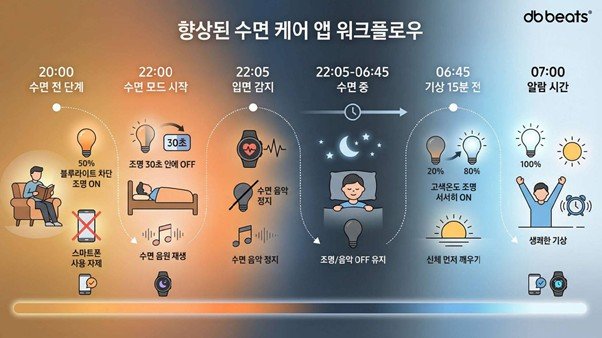
Recently, db beats has been expanding this technology beyond the framework of earphones. For those who find it uncomfortable to sleep with earphones, the company is evolving into a platform that creates sleep routines by syncing with smart watch data to broadcast sound through smartphone speakers or controlling lighting with special wavelengths.
Lighting solutions that do not interfere with melatonin secretion are one of db beats's future growth engines for transforming the entire bedroom space into a sleep-friendly environment. Currently, they are conducting a Proof of Concept (PoC) operation in collaboration with Hoban Construction to configure an IoT(Internet of Things) space specialized for sleep. The structure involves applying a platform that integratedly manages lighting, sound, air conditioning, and temperature to sleep-dedicated rooms in hotels and resorts.
The sleep care workflow established by db beats/ source=db beats
Noh also took note of the concentration enhancement sector. He focused on the fact that applying brainwave stabilization technology in reverse leads to improved concentration. db beats has completed clinical validation for a concentration enhancement mode and is currently developing a product with Jinhaksa.
Building Brand Awareness is a Realistic Concern for Startups
No matter how superior the technology, it is useless if it is not chosen by the market. Noh cited "building trust" as the greatest difficulty after founding. As a new startup, the B2C (Business-to-Consumer) market, where the brand is introduced directly to consumers, was a formidable challenge.
"Consumers trust the brands of large corporations, but they have doubts about the innovative technology of startups. To answer the question of whether it's truly effective, we needed more data. Because there are significant individual differences in sleep, the process of gaining universal trust was very grueling," he recalled.
To overcome this, Noh chose a direct approach. To prove their technological prowess, they focused on building B2B (Business-to-Business) references through collaboration with large corporations. They also accumulated objective data through clinical cooperation with medical institutions, including Seoul National University Bundang Hospital. As a result of clinical evaluations, the time to fall asleep was shortened by more than 30% compared to existing ASMR users when using For me buds, and the number of awakenings during sleep was significantly reduced.
Focusing on Technology that People Can Feel Immediately
db beats is continuing a steady growth trend, recording more than double the revenue compared to 2024. The revenue structure is approximately 6:4 between For me buds product sales and software solution revenue. Software solution revenue was achieved by supplying measurement and sound algorithms to other earphone manufacturers or providing content packages to LG Electronics' home appliance lines.
The Korea University Crimson Startup Support Foundation's Initial Startup Package program served as a reliable support system for db beats's technological leap and market settlement. Through the program, db beats received support for patent applications and opportunities for overseas expansion, including an exhibition in Dubai. Influencer marketing support compensated for insufficient brand exposure, leading to increased product sales performance.
"The process for a startup to complete a prototype and find an actual sales channel is a path of thorns. The Korea University Crimson Startup Support Foundation provided db beats with marketing strategy formulation and investment attraction mentoring. Support for influencer marketing and participation in overseas exhibitions were also valuable opportunities to identify global sleep market trends and confirm the export potential of sleep management technology," said Noh.
Noh added, "Rather than ending with one-time support, they provided a lot of help in developing the survival muscles for a startup to become self-sufficient in the market."
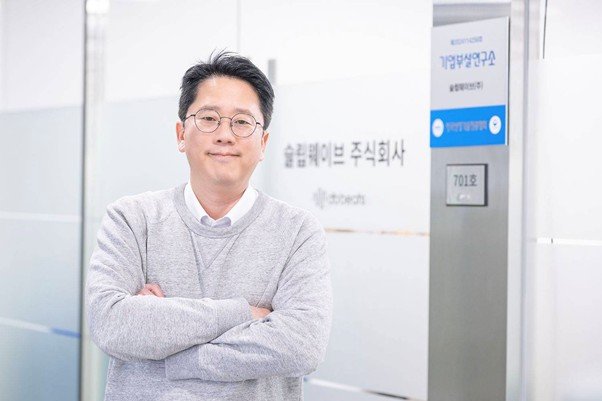
Seung-pyo Noh, CEO of db beats / source=ITdongA
db beats plans to expand its business scope from sleep to overall mental care. Examples include building concentration-enhancing sounds for students and short, deep rest (Power Nap) solutions for office workers. The ambition is to reborn as a life-care company responsible not only for the peace of the night but also for the vitality of the day.
Nevertheless, Noh explained that they will not become a company buried only in technology. He emphasized, "If you cling to one field for a long time, the technology itself can easily become the goal. If you get buried in how precisely you measure or how much data you analyze, you might miss what the user actually wants. What db beats creates is ultimately something that helps people sleep well. That must be felt."
By Hyung-seok Kang (redbk@itdonga.com)







 About Dong-A Ilbo