

"Beyond Data into Action": Vitalyx Reimagines Healthcare Innovation with AI Multi-Agents
"Beyond Data into Action": Vitalyx Reimagines Healthcare Innovation with AI Multi-Agents
Posted February. 26, 2026 12:22,
Updated February. 26, 2026 12:25
- Vitalyx has launched "ANNA," an AI healthcare platform that shifts the focus from simple data recording to driving personalized behavioral changes through multi-agent collaboration technology.
- The platform uses specialized AI agents—including nutrition, exercise, and psychological experts—that work together to provide "health rebalancing," offering flexible, real-time alternatives when a user's original health plan is disrupted.
- Founded by veteran researcher Min-su Kim, the startup utilizes RAG technology to ensure medical accuracy and plans to expand into global markets, including North America, by the second half of 2027.
Smartwatches track heart rates and sleep patterns. Health management apps count calories and steps. Digital healthcare has become so deeply integrated into daily life that such scenarios no longer feel foreign.
According to the Korea Bio, the global digital healthcare market was valued at $240.85 billion in 2023. It is projected to grow by approximately 21% annually, reaching $1.635 trillion by 2033.
While the global digital healthcare market is expanding explosively, cases where this leads to actual improvements in user health indicators remain rare. A prime example is failing a diet even after installing a specialized calorie app. Some experts attribute this to the "disconnect between data and action." There has been no intelligent guide to translate collected data into practice.
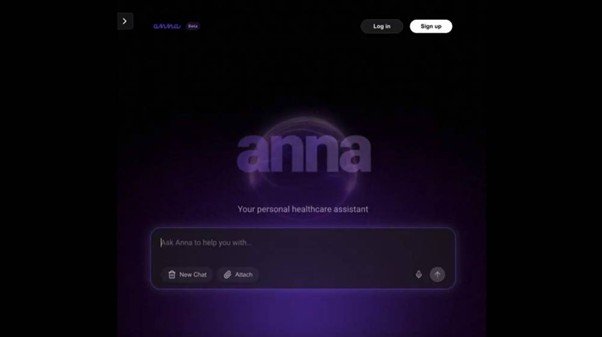
This is where the startup Vitalyx begins. Vitalyx is developing an AI healthcare platform that drives personalized behavioral changes based on multi-agent collaboration technology. We spoke with Min-su Kim, CEO of Vitalyx, who founded the company based on his 10 years of experience designing numerous healthcare services as a software researcher, about the company's technical prowess, growth strategy, and vision.
Action, Not Just Recording: A New Paradigm in Healthcare
Founded in 2024, Vitalyx is a corporate name derived from combining ‘Vital,’ meaning vitality, ‘AI,’ and ‘X,’ representing connection and expansion. It embodies the determination to overcome the limitations of current digital healthcare, which is heavily focused only on recording.
Before founding Vitalyx, Kim spent a decade as a software researcher designing healthcare services. During that time, he discovered a paradox: while technology was advancing rapidly, users' actual health metrics were not significantly improving. Kim recalled, "I believed this problem stemmed from the absence of an intelligent guide to move data into action. I decided to start the business because I felt I could solve this problem using my computer science knowledge and 10 years of experience in the healthcare domain."
Hyper-Personalization and Rebalancing Strategy: 'Realizing Sustainable Health Management
Vitalyx’s flagship service, ANNA, is an action-inducing healthcare platform based on AI multi-agent collaboration. Individual AI agents—including exercise specialists, nutrition experts, psychological experts, research search agents, and content agents—collaborate in real-time for a single user. This differentiates it from existing AIs that only provide singular, static answers.
Kim introduced the specific operational method, stating, "Inside ANNA, specialized agents performing different missions are designed to collaborate in real-time." First, the research and content search agents analyze the latest medical papers and verified healthcare content to generate evidence-based guides. In the case of the national health data agent, it makes judgments based on highly reliable data by linking with public institution health checkup results or national health guidelines. The user context agent identifies the current location, weather, activity level, and mood in real-time to provide the most actionable suggestions.
For example, if a user’s sleep data is poor, ANNA performs organic healthcare: the nutrition agent advises limiting caffeine intake, while the exercise agent suggests light stretching. In other words, while existing healthcare apps forced a fixed plan, ANNA is characterized by immediately restructuring the plan to fit the user’s reality.
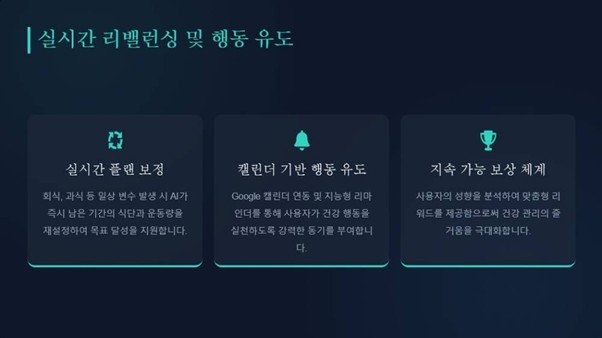
The health rebalancing strategy is a key differentiator for ANNA. If a user fails to stick to a planned diet due to a work dinner, the AI does not reprimand them but instead immediately activates "diet rebalancing." It provides realistic, customized alternatives in real-time, such as automatically adjusting the nutrient composition of the next meal or suggesting activities to aid digestion. This helps users avoid giving up on health management midway.
"Many people do not fail to maintain their health because they lack information. They give up because they don't have an actionable guide suited to their specific situation," explained Kim. He added, "When a diet plan goes awry due to a busy workload or a sudden company dinner, ANNA immediately suggests a flexible alternative. The core strategy is creating sustainability without giving up halfway, rather than following a perfect plan."
Furthermore, ANNA becomes smarter the more a user uses it. This is because it builds a personalized health profile by accumulating all time-series data, such as the user’s diet records, sleep patterns, and exercise responsiveness. Based on this, it can provide hyper-personalized intensive management—for instance, recommending a different menu based on past experiences where the user felt poorly after consuming a specific food—rather than just providing general health information.
Overcoming Obstacles and Securing Trust with RAG Technology and Expert Team
Vitalyx faced various difficulties during the development of ANNA. The biggest hurdle was the limit of personalization and the issue of 'hallucination,' a chronic problem with Large Language Models (LLMs). Kim recalled, "Accuracy is the most important factor in health information. It was difficult to gain trust with a general chatbot approach."
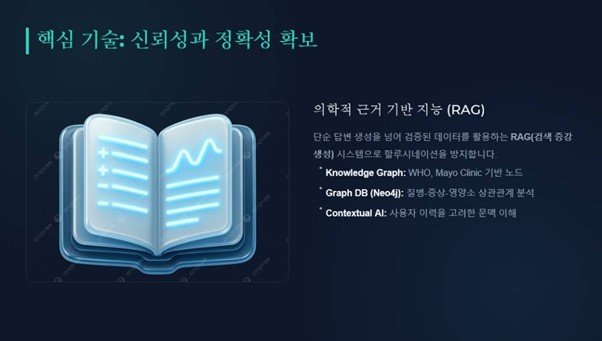
To solve this hurdle, Kim combined RAG (Retrieval-Augmented Generation) technology with specialized medical knowledge data. Additionally, the focus was placed on vectorizing users' real-time biometric data. Vectorization is a core technology for efficient data processing that converts signals such as heart rate, blood pressure, and body temperature into numerical arrays to find patterns quickly. Consequently, the team overcame the obstacles by training the AI to understand the user's current condition within context. Kim explained, "We found a breakthrough by building a guardrail system where the AI provides guides only within verified knowledge, rather than simply generating answers."
The roles of the team members were also crucial. Vitalyx is an engineer-centered team, structured to respond immediately internally to everything from planning and development to PR. In particular, the Lead Developer is an AI expert who majored in Natural Language Processing at KAIST. He designs the architecture that combines LLMs with real-time health data.
According to Vitalyx, the company plans to hire additional behavioral psychology experts and clinical data scientists to increase the scientific precision of its action-inducing methods. Kim stated, "We will ensure that ANNA’s suggestions are not only medically accurate but also possess a powerful psychological force that moves the user."
Vitalyx also places great importance on the security of health data, as it is among the most sensitive personal information. Accordingly, Vitalyx operates on the principle of returning data sovereignty to the user. The system guarantees the "right to be forgotten," allowing users to destroy their data immediately upon request.
"Healthcare data requires a security level higher than that of financial data," emphasized Kim. "We store all data after de-identification and apply strong encryption protocols for server-to-server communication." Moving forward, the company plans to build a cloud environment that complies with the Medical Service Act and the Personal Information Protection Act to fundamentally block any possibility of data leakage.
Diversifying Business Models and Planning Global Expansion
Vitalyx has a concrete business model. While it primarily targets a B2C subscription model, it eventually plans to expand into B2B employee health management and B2B2C models linked with insurance companies and checkup centers. Above all, it aims for integrated solutions that combine hardware and software through collaboration with smart wearable or fitness equipment manufacturers.
Furthermore, Vitalyx is pursuing partnerships with fitness trainers, nutritionists, and pharmacists to link online and offline services. Internal testing is currently underway, and in the second half of 2026, the company plans to conduct a Digital Wellness Challenge PoC (Proof of Concept) targeting employees of specific corporations. Kim expressed confidence, saying, "We will prove meaningful changes in actual health indicators, such as blood pressure and body fat, through data."
In recognition of its business viability, Vitalyx was selected for the 2025 Deep Tech Initial Startup Package program by the Seoul National University of Science and Technology (SeoulTech) Startup Support Foundation. Kim stated, "Being selected for this project was an important opportunity to have Vitalyx’s technological innovation officially recognized." He added, "With the commercialization funding, we were able to focus on building the core architecture of the multi-agent system and refining our RAG technology. Through mentoring specialized in the deep tech field, we solidified Vitalyx’s unique technical moat. The professional networking also greatly helped in validating our service's Product-Market Fit (PMF) and establishing marketing strategies."
In the short term, Vitalyx aims to become the standard for action-inducing AI healthcare in Korea. Its global vision is also clear. The company plans to enable people anywhere in the world to experience a so-called "AI doctor in their hand" through multilingual LLM optimization and API integration with global wearable devices. Kim noted, "Our solution addresses health management, a universal concern of all humanity that transcends language and culture. We are planning to enter global markets, including North America, starting in the second half of 2027."
Vitalyx has thrown down the gauntlet in the healthcare market with a differentiated action-inducing method focused on the practicality of technology. Expectations are high as to whether they will achieve healthcare innovation through AI multi-agents.
By Kui-im Park (luckyim@itdonga.com)
- The platform uses specialized AI agents—including nutrition, exercise, and psychological experts—that work together to provide "health rebalancing," offering flexible, real-time alternatives when a user's original health plan is disrupted.
- Founded by veteran researcher Min-su Kim, the startup utilizes RAG technology to ensure medical accuracy and plans to expand into global markets, including North America, by the second half of 2027.
Smartwatches track heart rates and sleep patterns. Health management apps count calories and steps. Digital healthcare has become so deeply integrated into daily life that such scenarios no longer feel foreign.
According to the Korea Bio, the global digital healthcare market was valued at $240.85 billion in 2023. It is projected to grow by approximately 21% annually, reaching $1.635 trillion by 2033.
While the global digital healthcare market is expanding explosively, cases where this leads to actual improvements in user health indicators remain rare. A prime example is failing a diet even after installing a specialized calorie app. Some experts attribute this to the "disconnect between data and action." There has been no intelligent guide to translate collected data into practice.
ANNA is Vitalyx’s AI-based healthcare platform / source=Vitalyx
This is where the startup Vitalyx begins. Vitalyx is developing an AI healthcare platform that drives personalized behavioral changes based on multi-agent collaboration technology. We spoke with Min-su Kim, CEO of Vitalyx, who founded the company based on his 10 years of experience designing numerous healthcare services as a software researcher, about the company's technical prowess, growth strategy, and vision.
Action, Not Just Recording: A New Paradigm in Healthcare
Founded in 2024, Vitalyx is a corporate name derived from combining ‘Vital,’ meaning vitality, ‘AI,’ and ‘X,’ representing connection and expansion. It embodies the determination to overcome the limitations of current digital healthcare, which is heavily focused only on recording.
Before founding Vitalyx, Kim spent a decade as a software researcher designing healthcare services. During that time, he discovered a paradox: while technology was advancing rapidly, users' actual health metrics were not significantly improving. Kim recalled, "I believed this problem stemmed from the absence of an intelligent guide to move data into action. I decided to start the business because I felt I could solve this problem using my computer science knowledge and 10 years of experience in the healthcare domain."
Hyper-Personalization and Rebalancing Strategy: 'Realizing Sustainable Health Management
Vitalyx’s flagship service, ANNA, is an action-inducing healthcare platform based on AI multi-agent collaboration. Individual AI agents—including exercise specialists, nutrition experts, psychological experts, research search agents, and content agents—collaborate in real-time for a single user. This differentiates it from existing AIs that only provide singular, static answers.
Kim introduced the specific operational method, stating, "Inside ANNA, specialized agents performing different missions are designed to collaborate in real-time." First, the research and content search agents analyze the latest medical papers and verified healthcare content to generate evidence-based guides. In the case of the national health data agent, it makes judgments based on highly reliable data by linking with public institution health checkup results or national health guidelines. The user context agent identifies the current location, weather, activity level, and mood in real-time to provide the most actionable suggestions.
For example, if a user’s sleep data is poor, ANNA performs organic healthcare: the nutrition agent advises limiting caffeine intake, while the exercise agent suggests light stretching. In other words, while existing healthcare apps forced a fixed plan, ANNA is characterized by immediately restructuring the plan to fit the user’s reality.
ANNA seeks differentiation through its health rebalancing strategy / source=Vitalyx
The health rebalancing strategy is a key differentiator for ANNA. If a user fails to stick to a planned diet due to a work dinner, the AI does not reprimand them but instead immediately activates "diet rebalancing." It provides realistic, customized alternatives in real-time, such as automatically adjusting the nutrient composition of the next meal or suggesting activities to aid digestion. This helps users avoid giving up on health management midway.
"Many people do not fail to maintain their health because they lack information. They give up because they don't have an actionable guide suited to their specific situation," explained Kim. He added, "When a diet plan goes awry due to a busy workload or a sudden company dinner, ANNA immediately suggests a flexible alternative. The core strategy is creating sustainability without giving up halfway, rather than following a perfect plan."
Furthermore, ANNA becomes smarter the more a user uses it. This is because it builds a personalized health profile by accumulating all time-series data, such as the user’s diet records, sleep patterns, and exercise responsiveness. Based on this, it can provide hyper-personalized intensive management—for instance, recommending a different menu based on past experiences where the user felt poorly after consuming a specific food—rather than just providing general health information.
Overcoming Obstacles and Securing Trust with RAG Technology and Expert Team
Vitalyx faced various difficulties during the development of ANNA. The biggest hurdle was the limit of personalization and the issue of 'hallucination,' a chronic problem with Large Language Models (LLMs). Kim recalled, "Accuracy is the most important factor in health information. It was difficult to gain trust with a general chatbot approach."
Vitalyx solved the challenges by combining RAG technology with specialized medical knowledge data / source=Vitalyx
To solve this hurdle, Kim combined RAG (Retrieval-Augmented Generation) technology with specialized medical knowledge data. Additionally, the focus was placed on vectorizing users' real-time biometric data. Vectorization is a core technology for efficient data processing that converts signals such as heart rate, blood pressure, and body temperature into numerical arrays to find patterns quickly. Consequently, the team overcame the obstacles by training the AI to understand the user's current condition within context. Kim explained, "We found a breakthrough by building a guardrail system where the AI provides guides only within verified knowledge, rather than simply generating answers."
The roles of the team members were also crucial. Vitalyx is an engineer-centered team, structured to respond immediately internally to everything from planning and development to PR. In particular, the Lead Developer is an AI expert who majored in Natural Language Processing at KAIST. He designs the architecture that combines LLMs with real-time health data.
According to Vitalyx, the company plans to hire additional behavioral psychology experts and clinical data scientists to increase the scientific precision of its action-inducing methods. Kim stated, "We will ensure that ANNA’s suggestions are not only medically accurate but also possess a powerful psychological force that moves the user."
Vitalyx also places great importance on the security of health data, as it is among the most sensitive personal information. Accordingly, Vitalyx operates on the principle of returning data sovereignty to the user. The system guarantees the "right to be forgotten," allowing users to destroy their data immediately upon request.
"Healthcare data requires a security level higher than that of financial data," emphasized Kim. "We store all data after de-identification and apply strong encryption protocols for server-to-server communication." Moving forward, the company plans to build a cloud environment that complies with the Medical Service Act and the Personal Information Protection Act to fundamentally block any possibility of data leakage.
Diversifying Business Models and Planning Global Expansion
Vitalyx has a concrete business model. While it primarily targets a B2C subscription model, it eventually plans to expand into B2B employee health management and B2B2C models linked with insurance companies and checkup centers. Above all, it aims for integrated solutions that combine hardware and software through collaboration with smart wearable or fitness equipment manufacturers.
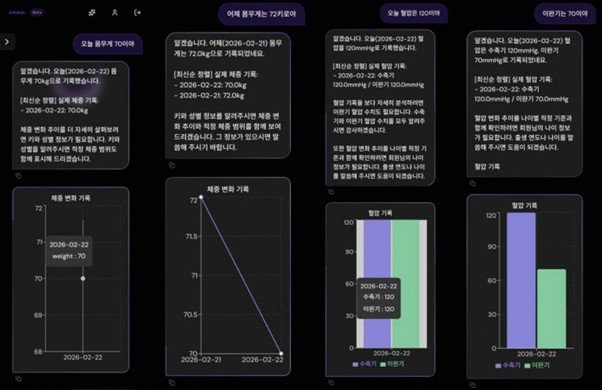
In the short term, Vitalyx aims to become the standard for action-inducing AI healthcare in Korea / source=Vitalyx
Furthermore, Vitalyx is pursuing partnerships with fitness trainers, nutritionists, and pharmacists to link online and offline services. Internal testing is currently underway, and in the second half of 2026, the company plans to conduct a Digital Wellness Challenge PoC (Proof of Concept) targeting employees of specific corporations. Kim expressed confidence, saying, "We will prove meaningful changes in actual health indicators, such as blood pressure and body fat, through data."
In recognition of its business viability, Vitalyx was selected for the 2025 Deep Tech Initial Startup Package program by the Seoul National University of Science and Technology (SeoulTech) Startup Support Foundation. Kim stated, "Being selected for this project was an important opportunity to have Vitalyx’s technological innovation officially recognized." He added, "With the commercialization funding, we were able to focus on building the core architecture of the multi-agent system and refining our RAG technology. Through mentoring specialized in the deep tech field, we solidified Vitalyx’s unique technical moat. The professional networking also greatly helped in validating our service's Product-Market Fit (PMF) and establishing marketing strategies."
In the short term, Vitalyx aims to become the standard for action-inducing AI healthcare in Korea. Its global vision is also clear. The company plans to enable people anywhere in the world to experience a so-called "AI doctor in their hand" through multilingual LLM optimization and API integration with global wearable devices. Kim noted, "Our solution addresses health management, a universal concern of all humanity that transcends language and culture. We are planning to enter global markets, including North America, starting in the second half of 2027."
Vitalyx has thrown down the gauntlet in the healthcare market with a differentiated action-inducing method focused on the practicality of technology. Expectations are high as to whether they will achieve healthcare innovation through AI multi-agents.
By Kui-im Park (luckyim@itdonga.com)








 About Dong-A Ilbo