

Lee raises sugar tax issue, food industry resists
Lee raises sugar tax issue, food industry resists
Posted January. 29, 2026 09:20,
Updated January. 29, 2026 09:20
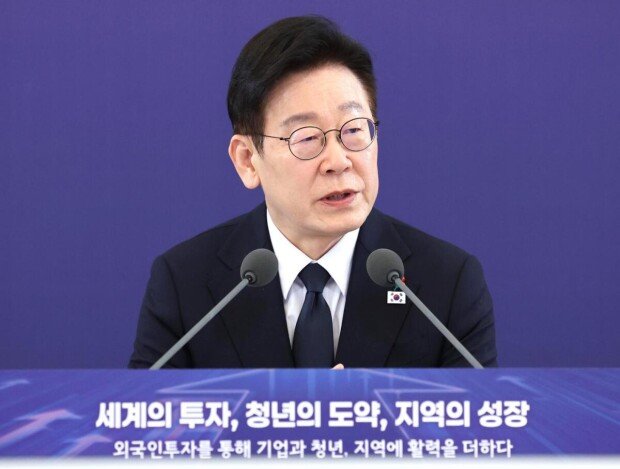
President Lee Jae-myung on Jan. 28 floated the idea of introducing a sugar tax on foods and beverages with excessive sugar content, proposing that the revenue be reinvested to strengthen local and public healthcare. He raised the issue through a series of social media posts, sharing policy views four times that day, including on the sugar levy.
In a morning post, Lee wrote, “What do you think about using a sugar levy, like tobacco taxes, to curb sugar consumption and reinvest the revenue to strengthen local and public healthcare?” He also shared a news article reporting that about 80% of the public supports the introduction of a sugar tax. In response, the presidential office said it plans to collect opinions from a wide range of stakeholders and examine ways to use revenue from sugar consumption to address public health challenges and reinforce local and public healthcare systems.
A sugar tax refers to an additional levy imposed on foods and beverages with high sugar content. Such taxes are typically aimed at preventing health problems such as obesity and diabetes while promoting broader public health goals. Similar measures have been introduced in more than 120 countries, including the United Kingdom and the United States.
The Democratic Party of Korea plans to hold a forum on public health and disease prevention in connection with the possible introduction of a sugar levy. In 2021, lawmaker Kang Byung-won proposed an amendment to the National Health Promotion Act to impose a “sweetened beverage levy” on manufacturers, processors and importers of sugary drinks, but the bill lapsed with the end of the 21st National Assembly. Since then, the health and medical community has continued to examine the need for such a tax, and President Lee has now raised the issue himself.
The food industry, however, has voiced concerns about the impact on prices. "Companies that rely heavily on sugar would inevitably face higher production costs," an industry insider said. "Those costs would likely be passed on to consumers, placing a disproportionate burden on low-income households."
Separately, President Lee shared an article that for the first time disclosed local government fund interest rates, commenting, “This is all taxpayers’ money.” In another post on the same issue, he wrote, “Even 1% of 1 trillion won amounts to 100 billion won. It would be worth comparing a city’s level of democracy with its interest rate.” Among local governments, Incheon recorded the highest interest rate at 4.57%, followed by Seoul at 3.45%, Sejong at 2.68% and Daejeon at 2.64%. North Gyeongsang had the lowest rate at 2.15%. Experts cautioned that lower rates do not necessarily indicate weak fiscal management, explaining that banks tend to offer higher rates in financially independent metropolitan areas to attract deposits.
윤다빈 기자 empty@donga.com

![팔순 노인 전세금까지 빨아먹은 ‘악마의 통장’[히어로콘텐츠/히든①-上]](https://dimg.donga.com/c/138/175/90/1/wps/NEWS/IMAGE/2026/06/22/134153615.1.jpg)
![[김승련 칼럼]장동혁, 지금이 사퇴할 최적기다](https://dimg.donga.com/c/138/175/90/1/wps/NEWS/IMAGE/2026/06/21/134153719.1.jpg)



 About Dong-A Ilbo