

South Korea’s U-23 struggles expose Japan’s edge
South Korea’s U-23 struggles expose Japan’s edge
Posted January. 26, 2026 08:35,
Updated January. 26, 2026 08:35
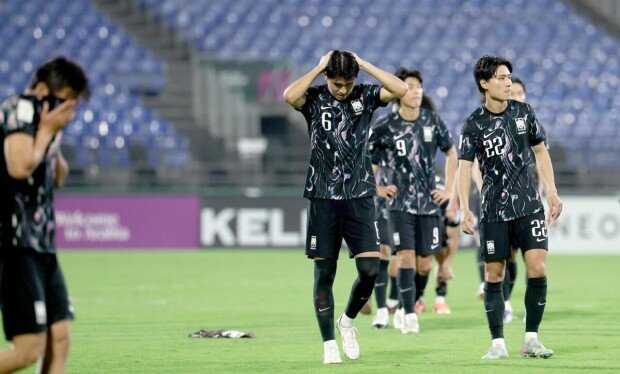
Athletes in South Korea often say before matches that they must not lose even a game of rock-paper-scissors to Japan. Sporting contests between the two countries are shaped by pride and rivalry. Yet South Korean soccer, once celebrated as the “Tigers of Asia,” is increasingly showing signs of falling behind its longtime rival.
Japan’s under-23 national team claimed its third title at the 2026 AFC U-23 Asian Cup on April 25, defeating China 4-0 in the final in Jeddah, Saudi Arabia. Despite fielding a squad largely made up of under-21 players as part of preparations for the 2028 Los Angeles Olympics, Japan secured back-to-back championships for the first time and set a tournament record for most titles.
South Korea, by contrast, struggled throughout the competition. Seeking its first championship since the 2020 Thailand edition, the team lost 1-0 to Japan in the semifinals, even as the Japanese side relied heavily on players two years younger. South Korea then finished fourth after losing to Vietnam in a penalty shootout in the third-place match on April 24. Vietnam was coached by Kim Sang-sik, 50.
The result was particularly striking given South Korea’s historical dominance over Vietnam at the U-23 level, with six wins and three draws in previous meetings. Although the match is officially recorded as a draw, the shootout loss effectively marked South Korea’s first defeat in the rivalry in its 10th encounter.
Under head coach Lee Min-sung, 53, South Korea controlled 76 percent of possession and outshot Vietnam 32-5. The team, however, failed to capitalize on its chances. Even after Vietnam was reduced to 10 men, South Korea could not break through a compact defense. The match ended 2-2 after regulation time before South Korea fell 7-6 in the shootout. Goalkeeper Hwang Jae-yoon, 23, of Suwon FC, who failed to make a save through seven rounds, later issued a public apology on social media.
Since taking charge of the U-23 team in May last year, Lee has struggled to establish a clear tactical identity or consistently motivate his players. South Korea conceded goals in five of its six matches, excluding a 1-0 group-stage win over Iran, and failed to score in three games. Questions about the team’s mentality surfaced after a 2-0 loss to Uzbekistan in the group stage, when KBS commentator Lee Young-pyo, 49, criticized the lack of visible determination to turn the match around after conceding.
Japan, in contrast, delivered a polished performance with a squad averaging about 20 years old, scoring 16 goals and conceding just once in six matches. The success is widely attributed to a systematic development structure. Since the launch of the J-League in 1993, Japan has pursued a long-term “100-year vision” to cultivate its youth pipeline. South Korea only announced its MIK Project in 2024 in an effort to catch up, but tangible results have yet to emerge.
Critics also point out that South Korea’s focus on the Asian Games, which grant military service exemptions to medalists, complicates long-term tactical planning at the youth level. Because the Olympics are held two years after the Asian Games, coaches often prioritize immediate results to secure their contracts. Hwang Sun-hong, 58, the former head coach who stepped down after South Korea failed to qualify for the Paris Olympics two years ago following a quarterfinal exit in this tournament, previously argued that age-group national teams should follow a four-year cycle.
The gap with Japan is also clear at the senior level. South Korea’s men’s national team, coached by Hong Myung-bo, lost 1-0 to Japan in the final match of the 2025 East Asian Football Federation E-1 Championship last July, marking its first three-match losing streak against Japan in A-level internationals. South Korea’s record over the past 10 meetings stands at two wins, three draws and five losses. With the current U-23 generation expected to form the backbone of the senior team in coming years, concerns are growing that the gap between the two nations could widen further.
한종호 hjh@donga.com


![전국 누비던 허영만도 못 피한 낙상…예방의 핵심은 ‘근육’[노화설계]](https://dimg.donga.com/c/138/175/90/1/wps/NEWS/IMAGE/2026/06/18/134135614.3.jpg)


 About Dong-A Ilbo