

Hurotics: Pioneering Gait Rehab with "Exosuits" as Light and Wearable as Clothing
Hurotics: Pioneering Gait Rehab with "Exosuits" as Light and Wearable as Clothing
Posted December. 17, 2025 11:04,
Updated December. 17, 2025 11:06
- Hurotics, led by CEO Gi-uk Lee, has developed "Exosuit" wearable robots for gait rehabilitation that are as light and comfortable as clothing, using flexible materials and AI-driven adaptive assistance.
- Their technology has been clinically validated, showing significant improvements in walking for elderly and patients with conditions like sarcopenia and Parkinson’s disease, and has won multiple CES Innovation Awards.
- Supported by the Seoul Business Agency, Hurotics is expanding globally and aims to revolutionize human movement through advanced robotics for both medical and everyday use.
Hurotics is a specialized robotics firm taking a radical departure from conventional, bulky exoskeleton robots. Instead of rigid frames, the company has introduced wearable robots designed to be worn as easily and lightly as everyday clothing. Led by CEO Gi-uk Lee, a professor of mechanical engineering at Chung-Ang University, Hurotics is driven by a mission to create technology that doesn’t just sit in a lab but actively transforms lives.
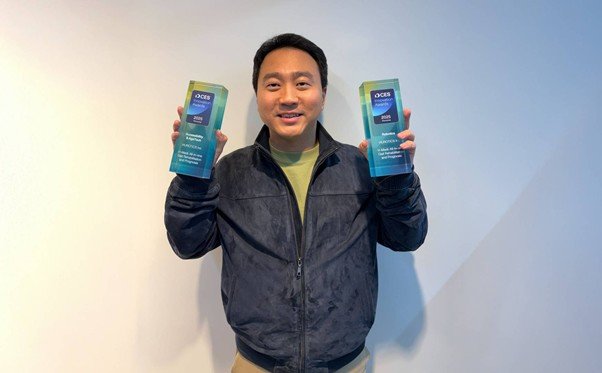
A robot physicist by training, Gi-uk Lee holds a PhD in mechanical engineering from Seoul National University and has conducted extensive research at the KIST (Korea Institute of Science and Technology) Robotics Research Center and the Wyss Institute at Harvard University.
His motivation for founding Hurotics was clear. "I didn't want to do research just for the sake of research; I wanted to build technology that people actually need," Lee explained. "After years of academic achievement, I wanted to be evaluated by how my products changed lives in the field. This goal led to the development of 'H-Medi,' a wearable gait rehabilitation robot."
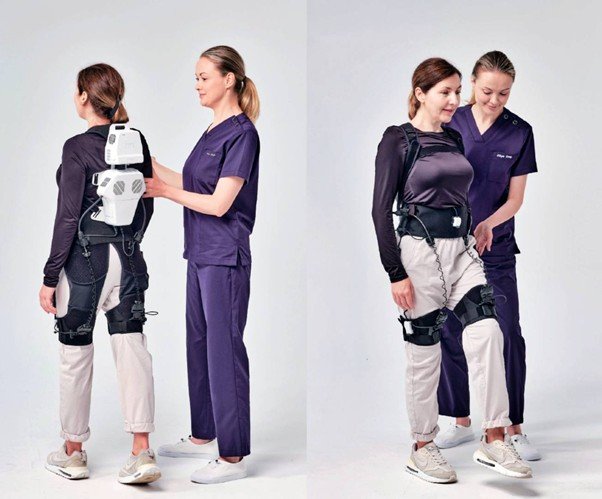
The standout feature of H-Medi is its "Exosuit" structure, which utilizes textiles and flexible materials rather than a rigid external frame. This design allows patients with joint deformities or stiffness to wear the device comfortably for extended periods. Weighing approximately 4.5kg, the suit can be donned in less than two minutes.
"The core of H-Medi lies in our Cable-Tendon drive system," Lee said. "By mimicking the movement of actual human muscles, we’ve developed a lightweight system that still provides up to 220N of assistive force. It intelligently assists only as much as needed based on the user's intent, using IMU (Inertial Measurement Unit) sensors and AI to analyze and adapt to individual walking patterns in real-time."
Clinical Validation and Global Recognition
Hurotics has proven the efficacy of its rehabilitation robots through rigorous clinical trials. In collaboration with the Department of Rehabilitation Medicine at Chung-Ang University Hospital, the company confirmed gait improvements in elderly patients and those with sarcopenia. Clinical trials for Parkinson’s disease are complete, and validation for stroke and cerebral palsy patients is currently underway. Medical professionals have noted significant improvements in patients' walking speed and stride length.
This technological prowess has resonated globally. Hurotics has achieved the rare feat of winning the CES Innovation Award for three consecutive years (2024–2026), including two category wins in 2025. The company is now preparing for global R&D collaborations with the University of Illinois Chicago (UIC), Northwestern University (NU), and the Shirley Ryan AbilityLab in Chicago, with plans to establish a U.S. subsidiary.
Lee credits the Seoul Business Agency (SBA) as a critical partner in the company's leap from lab to market. Through the 2023 Campus Town Tech Matching Program, Hurotics refined its algorithms for predicting and improving gait instability. This technical foundation paved the way for its first CES Innovation Award and the K-R&D Grand Prize at the Korea Industry Awards.
Currently, Hurotics is participating in the "2025 Testbed Seoul" pilot project, collaborating with Korea University Medical Center to validate a hip abduction assistive robot suit for adolescents with cerebral palsy. "SBA provided a seamless pipeline from technology development and investment to clinical validation in actual hospitals," Lee noted. "They acted as a reliable bridge to the medical community, a network that is notoriously difficult for individual startups to penetrate."
The Future: Mapping Human Movement
With its KC certification and medical device approvals finalized, Hurotics is moving into full-scale commercialization. The company recently secured Pre-Series A funding, providing the capital needed for its next phase of growth.
"We aren't aiming for incremental improvements; we are aiming for 'Zero to One' technology based on dozens of core patents," Lee stated. While the immediate focus is on settling into the clinical environment, the long-term vision extends beyond rehabilitation to industrial sites and everyday life. "We want to be a company that redraws the map of human movement, making it natural for anyone to receive technological assistance wherever they are."
By Dong-jin Kim (kdj@itdonga.com)
* This article was written with support from SBA and Seoul City.
- Their technology has been clinically validated, showing significant improvements in walking for elderly and patients with conditions like sarcopenia and Parkinson’s disease, and has won multiple CES Innovation Awards.
- Supported by the Seoul Business Agency, Hurotics is expanding globally and aims to revolutionize human movement through advanced robotics for both medical and everyday use.
Hurotics is a specialized robotics firm taking a radical departure from conventional, bulky exoskeleton robots. Instead of rigid frames, the company has introduced wearable robots designed to be worn as easily and lightly as everyday clothing. Led by CEO Gi-uk Lee, a professor of mechanical engineering at Chung-Ang University, Hurotics is driven by a mission to create technology that doesn’t just sit in a lab but actively transforms lives.
Gi-uk Lee, CEO of Hurotics / source=Hurotics
A robot physicist by training, Gi-uk Lee holds a PhD in mechanical engineering from Seoul National University and has conducted extensive research at the KIST (Korea Institute of Science and Technology) Robotics Research Center and the Wyss Institute at Harvard University.
His motivation for founding Hurotics was clear. "I didn't want to do research just for the sake of research; I wanted to build technology that people actually need," Lee explained. "After years of academic achievement, I wanted to be evaluated by how my products changed lives in the field. This goal led to the development of 'H-Medi,' a wearable gait rehabilitation robot."
The standout feature of H-Medi is its "Exosuit" structure, which utilizes textiles and flexible materials rather than a rigid external frame. This design allows patients with joint deformities or stiffness to wear the device comfortably for extended periods. Weighing approximately 4.5kg, the suit can be donned in less than two minutes.
"The core of H-Medi lies in our Cable-Tendon drive system," Lee said. "By mimicking the movement of actual human muscles, we’ve developed a lightweight system that still provides up to 220N of assistive force. It intelligently assists only as much as needed based on the user's intent, using IMU (Inertial Measurement Unit) sensors and AI to analyze and adapt to individual walking patterns in real-time."
A patient wearing the H-Medi wearable robot / source=Hurotics
Clinical Validation and Global Recognition
Hurotics has proven the efficacy of its rehabilitation robots through rigorous clinical trials. In collaboration with the Department of Rehabilitation Medicine at Chung-Ang University Hospital, the company confirmed gait improvements in elderly patients and those with sarcopenia. Clinical trials for Parkinson’s disease are complete, and validation for stroke and cerebral palsy patients is currently underway. Medical professionals have noted significant improvements in patients' walking speed and stride length.
This technological prowess has resonated globally. Hurotics has achieved the rare feat of winning the CES Innovation Award for three consecutive years (2024–2026), including two category wins in 2025. The company is now preparing for global R&D collaborations with the University of Illinois Chicago (UIC), Northwestern University (NU), and the Shirley Ryan AbilityLab in Chicago, with plans to establish a U.S. subsidiary.
Lee credits the Seoul Business Agency (SBA) as a critical partner in the company's leap from lab to market. Through the 2023 Campus Town Tech Matching Program, Hurotics refined its algorithms for predicting and improving gait instability. This technical foundation paved the way for its first CES Innovation Award and the K-R&D Grand Prize at the Korea Industry Awards.
Currently, Hurotics is participating in the "2025 Testbed Seoul" pilot project, collaborating with Korea University Medical Center to validate a hip abduction assistive robot suit for adolescents with cerebral palsy. "SBA provided a seamless pipeline from technology development and investment to clinical validation in actual hospitals," Lee noted. "They acted as a reliable bridge to the medical community, a network that is notoriously difficult for individual startups to penetrate."
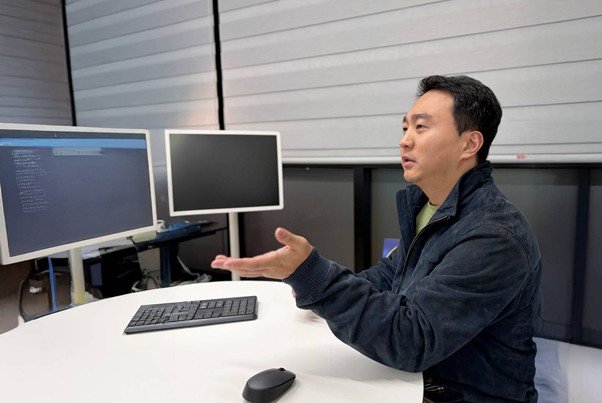
Gi-uk Lee, CEO of Hurotics / source=Hurotics
The Future: Mapping Human Movement
With its KC certification and medical device approvals finalized, Hurotics is moving into full-scale commercialization. The company recently secured Pre-Series A funding, providing the capital needed for its next phase of growth.
"We aren't aiming for incremental improvements; we are aiming for 'Zero to One' technology based on dozens of core patents," Lee stated. While the immediate focus is on settling into the clinical environment, the long-term vision extends beyond rehabilitation to industrial sites and everyday life. "We want to be a company that redraws the map of human movement, making it natural for anyone to receive technological assistance wherever they are."
By Dong-jin Kim (kdj@itdonga.com)
* This article was written with support from SBA and Seoul City.


![[오늘의 운세/6월 14일]](https://dimg.donga.com/c/138/175/90/1/wps/NEWS/IMAGE/2026/06/13/134104335.1.jpg)



 About Dong-A Ilbo