

Korean won falls to lowest level in 13 years
Korean won falls to lowest level in 13 years
Posted November. 18, 2025 08:34,
Updated November. 18, 2025 08:34
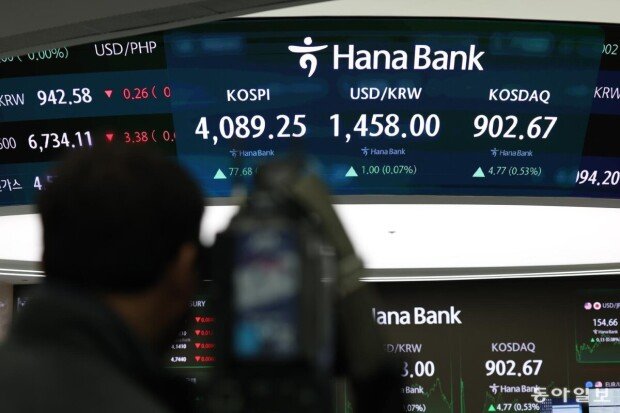
The effective exchange rate reflecting the value of the Korean won fell to its lowest level in about 13 years and five months. It is roughly 10 points lower than a decade ago. Analysts say the persistence of a high exchange rate is driven by a surge in U.S. investment by companies and individuals, along with signs of weakening in South Korea’s economic fundamentals.
The Bank of Korea reported on Nov. 17 that the won’s nominal effective exchange rate index, published by the Bank for International Settlements, stood at 86.36 on Nov. 11. This marked the lowest level since June 15, 2012, when the index reached 86.35. The index has fallen 13.83 points from Nov. 11, 2016, when it stood at 100.19. A decline in the BIS nominal effective exchange rate for the won indicates the currency’s purchasing power has weakened compared with other major currencies.
Analysts say the won’s prolonged weakness also reflects a stronger shift toward U.S. investment after the pandemic. The U.S. Federal Reserve has raised interest rates aggressively since 2022, keeping Korea’s policy rate below that of the United States for a third consecutive year. The tariff conflict initiated by the United States has further accelerated overseas investment by Korean companies.
Some economists argue that the won’s depreciation is linked to a prolonged reversal in the growth gap between Korea and the United States. Korea’s economic growth has lagged behind that of the United States for two consecutive years, and the trend is expected to continue this year. The International Monetary Fund projected last month that the U.S. economy would grow 2.0 percent this year compared with 0.9 percent for Korea.
“The widening gap in fundamentals between Korea and the United States is driving the won’s weakness," said Lee Taek-geun, a research fellow at the Hyundai Research Institute. "Korea needs a shift in strategy focused on raising the economic growth rate to stabilize the exchange rate.”
이호기자 number2@donga.com





 About Dong-A Ilbo