

Court skeptical of Trump’s tariff powers under law
Court skeptical of Trump’s tariff powers under law
Posted November. 07, 2025 07:15,
Updated November. 07, 2025 07:15
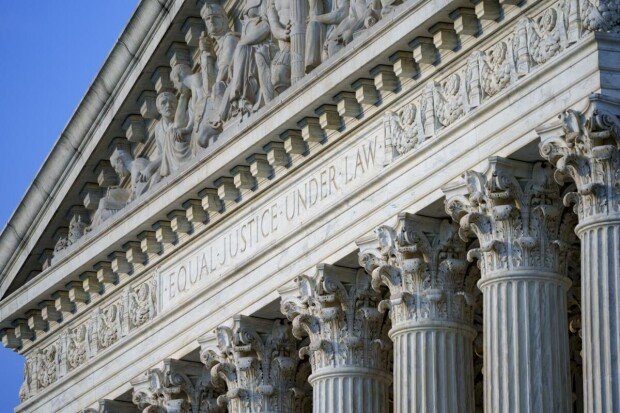
Even conservative justices questioned the legality of U.S. President Donald Trump’s tariff policy during the U.S. Supreme Court’s first hearing on the issue. Although six of the nine justices are considered conservative, their reactions suggested that a clear win for Trump’s second administration is far from certain.
During the hearing held Nov. 5 in Washington, D.C., Chief Justice John Roberts, a conservative, questioned the Trump administration’s reliance on the International Emergency Economic Powers Act, or IEEPA, as the legal basis for imposing tariffs. “It does not seem right to interpret the authority to regulate foreign exchange in emergencies as permission to impose tariffs on any product from any country, in any amount, and for any duration,” Roberts said.
Two other conservative justices appointed by Trump during his first term, Neil Gorsuch and Amy Coney Barrett, also expressed doubts. Gorsuch asked, “What would stop Congress from handing over to the president the power to regulate foreign trade or even to declare war?” His comment highlighted the need to guard against presidential overreach into powers granted to Congress under the Constitution.
Barrett added, “No president has ever claimed tariff authority based on the phrase ‘import restrictions.’ It is difficult to see this as Congress granting such sweeping authority.”
Deputy Attorney General D. John Sauer, representing the government, said invalidating the tariffs would force the Trump administration to renegotiate trade agreements with countries worldwide. “The United States would face relentless trade retaliation from far more aggressive nations,” he said.
Sauer also said the tariffs were necessary to address the growing trade deficit. But liberal Justice Elena Kagan countered, “Every tariff-related law enacted by Congress clearly includes language such as import duties, tariffs, or taxes. The statute you rely on contains none of that.”
The Supreme Court’s final ruling is expected as early as the end of this year. If the court finds the tariffs unlawful, the Trump administration would have to refund the tax revenues collected under the policy. In that case, Trump is expected to invoke another statute to preserve his tariff agenda, though the legitimacy of the policy could suffer and its momentum might weaken.
The ruling is also expected to affect the administration’s reciprocal tariffs on major trading partners, as well as the so-called “fentanyl tariffs” imposed on China, Canada, and Mexico to curb the drug’s inflow. South Korea, which agreed to a 15 percent tariff rate in trade negotiations with the United States, would also be affected.
Jin-Woo Shin niceshin@donga.com








 About Dong-A Ilbo