

Housing curbs target buyers of ‘smart single homes’
Housing curbs target buyers of ‘smart single homes’
Posted November. 05, 2025 08:06,
Updated November. 05, 2025 08:06
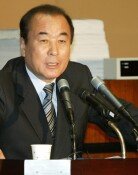
“I plan to continue living there,” Financial Services Commission Chairman Lee Ok-won said Oct. 27 during a parliamentary audit, referring to his apartment in Gaepo-dong, Gangnam District, Seoul, valued at about 4 billion won.
Lee made the comment after lawmakers questioned him over allegations of “gap investing,” or buying the apartment with a tenant’s deposit before its reconstruction. “I have owned only one home in my lifetime and will continue to do so,” he said, emphasizing that he is a genuine end user rather than a speculative investor.
However, the mortgage restrictions included in the Oct. 15 housing market stabilization measures, led by the Financial Services Commission under Lee, have further limited prospective buyers of so-called “smart single homes.”
Building on the June 27 policy that capped all home loans at 600 million won, the new measures lowered the ceiling to 400 million won for homes priced between 1.5 billion and 2.5 billion won and to 200 million won for homes above 2.5 billion won. These price ranges correspond to what are often called “smart single homes.”
The tighter lending rules directly target genuine homebuyers rather than multiple-home owners or speculative investors. The new policy already prevents multiple-home owners and gap investors from making new purchases through a two-year residency requirement under the land transaction permit system. The government has repeatedly cited demand for “smart single homes” as a main driver of recent housing price increases.
Officials argue that because loan limits for homes priced below 1.5 billion won remain unchanged, the new policy does not “kick away the housing ladder.” Yet it clearly makes it harder for those seeking to upgrade to a “smart single home.” Under the new rules, buyers of apartments valued between 1.5 billion and 2.5 billion won must now obtain up to an additional 200 million won through other means, while those purchasing homes over 2.5 billion won must secure up to 400 million won more.
It is natural that demand has concentrated on “smart single homes.” These properties are typically located in areas with strong transportation links, abundant amenities, and highly regarded school districts. Seoul’s Gangnam Four Districts—Gangnam, Seocho, Songpa, and Gangdong—and the Mayongseong neighborhoods—Mapo, Yongsan, and Seongdong—are prime examples.
Senior government officials who helped craft housing policy also own similar “smart single homes,” likely for the same reasons. Deputy Prime Minister and Finance Minister Koo Yoon-cheol lives in the same apartment complex as Lee, while Presidential Policy Chief Kim Yong-bum resides in Seocho Raemian Apartments in Seocho District. Some of them even acquired their “smart single homes” through redevelopment investments.
The government has also cited the lower property tax burden on single homeowners as another factor behind the recent surge in demand. If that is the case, strengthening the property tax system would be a fairer solution, as it would apply equally to all current homeowners, including government officials. However, the administration has been cautious about raising property taxes, apparently out of concern over potential political backlash.
After announcing the Oct. 15 policy package, First Vice Finance Minister Lee Hyung-il said, “Much of the market’s movement has been concentrated in high-priced homes, so we needed to introduce additional loan restrictions in those areas.” Yet it is difficult for the public to accept this reasoning when senior officials themselves live in premium “smart single homes,” while newcomers are asked to bear the burden of stabilizing housing prices. If demand for “smart single homes” is truly a problem, senior officials should sell their own properties first to earn the public’s trust.

![[김순덕의 도발] ‘李부터 연임’ 개헌, 이 대통령은 가능성을 말했다](https://dimg.donga.com/c/138/175/90/1/wps/NEWS/IMAGE/2026/01/16/133172656.1.jpg)




 About Dong-A Ilbo