

Korea balances alliance, self-reliance at APEC summit
Korea balances alliance, self-reliance at APEC summit
Posted November. 03, 2025 08:01,
Updated November. 03, 2025 08:01
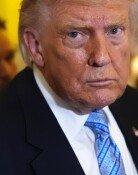
The golden crown President Lee Jae-myung gifted to U.S. President Donald Trump drew more attention than expected. Most notably, it left a strong impression on Trump. Two of the four videos he posted on social media about his visit to South Korea showed the moment he received the crown. After completing his first Asian tour of his second term, Trump told reporters about the Korea-U.S. summit, “Our country is being respected again.”
While Trump’s fondness for gold gifts has long been a source of satire in the United States, it is widely recognized internationally that nothing wins his favor like gold. Japan is considered the originator of this tradition. Shinzo Abe, former Japanese prime minister and one of Trump’s closest allies, set the precedent in 2016 by gifting him golden golf clubs. Former Prime Minister Shigeru Ishiba presented a golden samurai helmet, and current Prime Minister Sanae Takaichi gave him golden golf balls.
Israeli Prime Minister Benjamin Netanyahu, another of Trump’s close allies, presented a gold-plated model of a “Peepi” bomb with a remote-detonation device used against Hezbollah operatives. Argentina’s President Javier Milei, sometimes called the “Trump of South America,” presented a Nobel Peace Prize recommendation letter in a gold frame. By now, gold gifts are viewed less for their material value and more as a test of creativity.
Trump’s gifts to other leaders suggest that reciprocity in diplomacy is largely absent in his approach. He gave President Lee a baseball bat signed by a little-known second-year professional player. He told Prime Minister Takaichi that he would provide “anything needed,” but the return gift for the golden golf balls was never disclosed. To Netanyahu, he signed a photo they took together, and he autographed his book The Art of the Deal for Milei.
The stinginess extended to the summit table. A diplomatic source said, “Talks with President Trump in his second term are less about gaining more and more about minimizing losses.”
Of course, the security and economic benefits South Korea gains as a U.S. ally far outweigh any golden gift. The issue is not the gift’s value but the approach to alliance diplomacy. In an era of strategic competition among major powers and America-first policies, the abandonment of multilateralism, justice, and human rights exposes a raw form of diplomacy, reminiscent of tribute politics in which power is asserted through gestures of submission.
The 2025 Asia-Pacific Economic Cooperation summit, originally created by South Korea, Canada, and Australia at the end of the Cold War to expand a multilateral trade system, highlighted the hierarchical order imposed by major powers more clearly than ever.
The retreat of multilateralism is unlikely to be reversed simply by the rise or fall of a few political leaders. In a global order increasingly resembling a jungle, South Korea needs the skill and negotiating ability to target an opponent’s weaknesses. Some analysts say South Korea’s relative success in U.S. tariff negotiations stemmed in part from its strength in shipbuilding and semiconductors. Following his second Korea-U.S. summit, President Lee reportedly said, according to the presidential office, “We must further strengthen our national power.” In an era in which the coercive order of great powers is becoming explicit, self-reliance is essential for survival.



 About Dong-A Ilbo