

Beerport breu: “We Dream of Becoming Ulsan's Iconic Brand, Like Sungsimdang of Daejeon”
Beerport breu: “We Dream of Becoming Ulsan's Iconic Brand, Like Sungsimdang of Daejeon”
Posted October. 29, 2025 10:31,
Updated October. 29, 2025 10:32
- Beerport Breu, founded in Ulsan in 2003, has grown from a small brewery into
a local leader by focusing on quality, creativity, and unique beer styles.
- The company recently rebranded with support from the Ulsan Design-Driven
Manufacturing Innovation Center to appeal to younger consumers and expand
its reach.
- Beerport Breu aims to become Ulsan’s iconic brand, much like Sungsimdang in
Daejeon, while supporting local agriculture and tourism.
There was a time when the Korean beer market was dominated by lagers produced by major conglomerates. However, government deregulation and revisions to the Liquor Tax Act in the early 2000s became the catalyst that overturned the market’s landscape. In 2019, regulations on production facilities for small-scale beer businesses and restrictions on entering the distribution market were further relaxed. Following this wave of change, consumers finally got to taste a diverse range of beers.
The era of uniform-tasting beer is over. Consumers are now seeking out beers with diverse flavors and aromas that suit their individual tastes. As Korea's drinking culture shifts from drinking to savoring, and from getting drunk to finding value, the craft beer market has grown rapidly, armed with uniqueness and quality.
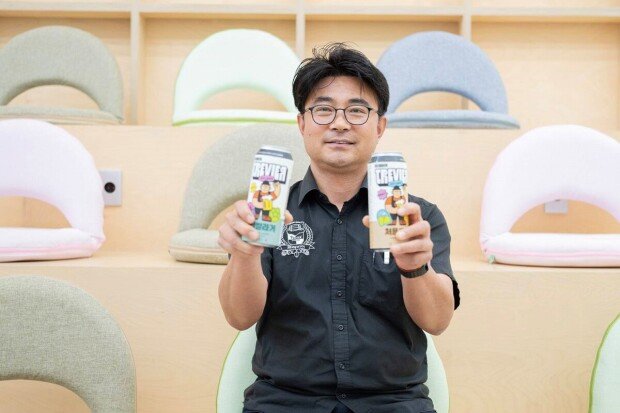
Amid this trend, a company that has been quietly brewing beer in Ulsan for 23 years is drawing attention. This is ‘Beerport breu’, established in 2003. Starting as a small-scale brewery, Beerport breu has now expanded to the point of offering 18 different beers to the market. It also operates the Trevier brewery project for beer distribution. In 2025, it undertook a design innovation with support from the Ulsan Design-Driven Manufacturing Innovation Center, preparing for a new leap forward. We met with Se-Young Oh, CEO of Beerport breu, to hear about the company's history and future growth plans.
A Brewing Business Started from Curiosity Becomes a '23-Year History'
"I didn't start with a grand plan from the beginning," Oh said. "In the early 2000s, I traveled abroad and felt envious seeing so many breweries with unique local characteristics. I wondered, 'Why can't we have this in Korea?' Just then, the Liquor Tax Act was revised, making it possible to establish small-scale breweries. Although I was afraid, I decided to challenge the beer brewing business with the idea of creating a beer that captured the joy and excitement (‘heung’) of our people."
The brewpub 'Trevi Breu,' which opened in Samshan-dong, Nam-gu, Ulsan in 2003, was the first chapter of this 23-year history. But the pioneering path was rough. From securing funds to operating equipment, developing recipes, and sales, everything was like starting from complete scratch. "Solving everything one by one was the homework," CEO Oh confessed, sharing the difficulties of the early days.
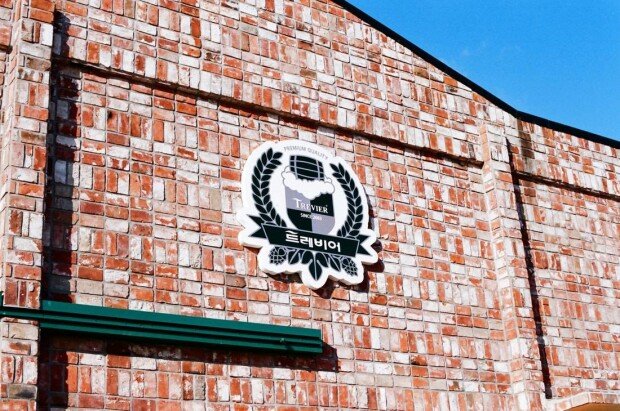
Beerport breu, which had zero technical know-how, chose the textbook approach. They invited a Brewmaster from Germany, known as the homeland of beer, to build a recipe and brewing system. German beer values the 'Beer Purity Law' (Reinheitsgebot), which uses only four ingredients: water, malt, yeast, and hops. CEO Oh didn't just imitate German beer; he boldly adopted the German brewing system with the mindset that there would be no compromise on quality.
This decision, however, became an asset that allowed Beerport breu to take deep root as Ulsan's representative beer brand. "At times, the German-style brewing system felt like it was oppressing us," Oh recalled. "But looking back, I realized that these fundamentals became a solid foundation for us to go further."
On this solid foundation, Beerport breu began to boldly exercise its creativity. The beer lineup, which started with three German styles, has now expanded to 18, encompassing American, British, and Belgian styles.
Leading a Consumption Culture Revolution: 'Alcohol is Found in Joy'
Beerport breu prioritized quality as its foremost value. While mass sales are advantageous for revenue, the philosophy that creating a culture where consumers can enjoy their drink comes first was reflected. "People need to relieve stress, and beer is a means to assist that stress relief," Oh said. "If the space is simply enjoyable, the alcohol will naturally follow."
CEO Oh's philosophy is reflected in production and operation. The focus is on making a valuable glass, not just alcohol for consumption. This is why they put as much effort into food development as they do into beer development.
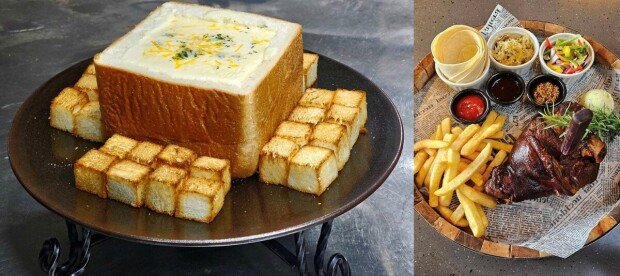
A representative dish CEO Oh recommends is the Bread Fondue. Inspired by beer's origin as 'liquid bread,' this menu item adapts the Swiss dish of dipping bread into cheese sauce for the domestic environment. It provides both the fun of dipping and a visual appeal.
The German pork dish, Schweinshaxe, is also popular. Made from the pork leg, it undergoes a separate smoking process to add a Korean touch. They even developed a smoked beer to pair with the Schweinshaxe. A chicken dish featuring nurungji (scorched rice) is popular with customers who prefer Korean food. CEO Oh emphasized that heavy drinks pair well with light food, and light drinks with heavy food. The reason is that one can enjoy the food while still experiencing the beer's original taste.
Beerport breu also differentiated its beer ordering method. Typical pubs take orders by the glass, bottle, or pitcher (large volume). However, Beerport breu introduced a system where customers pay for the amount they pour, just like at a gas station. This "pay-as-you-pour" system has received a positive response from young customers who pursue rational consumption.
This system began when they adopted a machine accidentally encountered at a liquor exposition. CEO Oh explained that they boldly introduced it, believing they needed to align with a rational consumption culture, despite the high initial installation costs, which increased the startup costs for franchisees.
'Shedding Old Clothes, Becoming a Hip Artisan': An Attempt at Image Innovation Through Design
The 23 years were a source of pride, but also a weight. After internal discussions, Beerport breu decided to rebuild its brand image. It was a decision to reach the younger generation. "As we operated for 23 years, the company also aged," Oh said. "Beer should always have a new, fresh, and popping image, but we wondered if we were staying stagnant. So, we decided to attempt an image transformation."
The transformation wasn't easy. They lacked experience in design and marketing. The breakthrough came from the 'Ulsan Design-Driven Manufacturing Innovation Center's' design support project. Through the support project, Beerport breu sought an image change while receiving systematic education on design and marketing. "I thought we were just changing the design, but it was a process of learning the concept of design itself," Oh said. "It wasn't easy to balance with my personal work, but it was an opportunity to open my eyes to design and marketing."
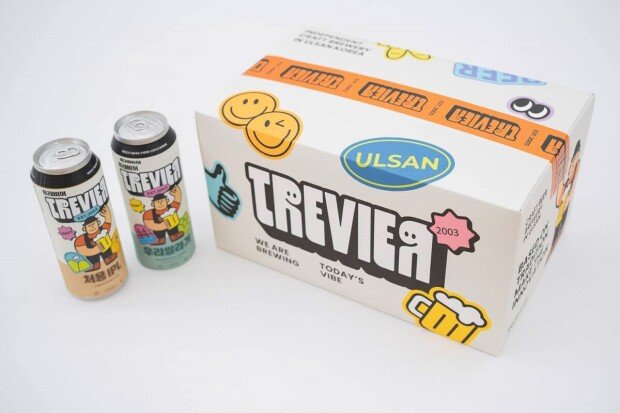
Beerport breu selected the design company 'GrafiDesign' as its rebranding partner. Their experience collaborating with the beer industry was the reason. Although the market approaches for craft beer and conglomerate beer are different, there was high expectation that they possessed the basic sensibilities and knowledge to properly reflect Beerport breu's philosophy.
The collaboration proceeded smoothly through several discussions with GrafiDesign, and they ultimately chose a character personifying an artisan. It was meant to capture the spirit of manufacturing craftsmanship, as Ulsan is an industrial city, but express it in a friendly way. However, perhaps due to the "pioneering" design, the new look raised concerns among Beerport breu's internal staff.
"GrafiDesign explained that they had many discussions at the eye-level of the young employees. Above all, they emphasized that to change, we had to be bold. I saw confidence in that story. So, we trusted the experts and accepted the bold change," Oh said. "To be honest, because it changed so radically, there were many concerns like, 'Can we really do this?' and 'Won't it just damage our image?' There are still people who find it hard to accept the new design, but we are working hard to persuade them."
Aspiring to be Ulsan's Icon, Like Sungsimdang
Beerport breu's long-held philosophy and brewing capabilities are leading to results. First, its Imperial Stout won the Grand Prize in the Craft Ale Beer category at the 2025 Korea Liquor Awards, recognizing its skill. This is its sixth award, including five consecutive Grand Prize wins since 2019. The Imperial Stout features a heavy and rich taste, unlike other stouts. It's a style meant to be savored slowly, like whiskey, and CEO Oh's side explains it has a flavor so deep it can be compared to espresso.
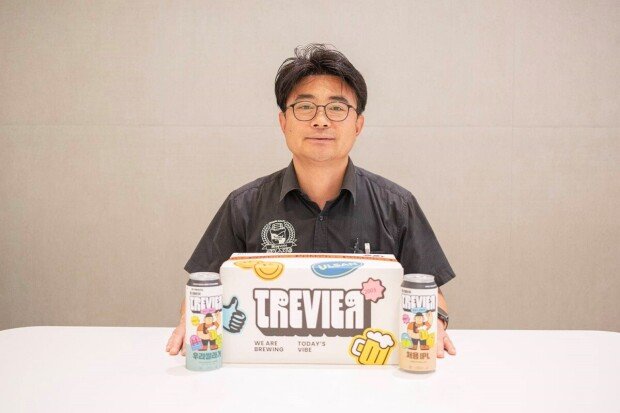
The Trevier franchise operation is also proceeding smoothly. As of 2025, it is expanding nationwide, including to Gyeongju, Daegu, and Chuncheon, centered around eight locations in the Ulsan region. The beer distribution business is also planning to expand nationally, beyond the Ulsan area.
Beerport breu's goal is to establish itself as a local brand representing Ulsan. CEO Oh's dream is to grow into a company that represents the region, even if it takes time, much like Daejeon's Sungsimdang. Overseas expansion is planned only after fully solidifying their domestic foothold. "If we reach the level of representing the region, we will naturally gain recognition within Korea," Oh said. "I believe it won't be too late to enter overseas markets then."
Efforts to grow with the Ulsan region are ongoing. They developed 'Woori Rice Lager' using rice produced in Eonyang, where the brewery is located, and are actively seeking ways to coexist with the region, such as releasing seasonal limited-edition beers using local specialty pears. Although they currently use ingredients optimized for beer brewing, they plan to continue developing beers using local agricultural products.
They are also active in developing tourism products. Utilizing the proximity of the Bangudae Petroglyphs to the brewery, they have developed a tourism product linked with a brewery tour. Beerport breu's long-term goal is to create a "beer village." It is expected to contribute to creating a new city narrative for Ulsan—one that goes beyond the image of cars and shipbuilding to embrace craft, culture, and tourism.
By Hyung-seok Kang (redbk@itdonga.com)
a local leader by focusing on quality, creativity, and unique beer styles.
- The company recently rebranded with support from the Ulsan Design-Driven
Manufacturing Innovation Center to appeal to younger consumers and expand
its reach.
- Beerport Breu aims to become Ulsan’s iconic brand, much like Sungsimdang in
Daejeon, while supporting local agriculture and tourism.
There was a time when the Korean beer market was dominated by lagers produced by major conglomerates. However, government deregulation and revisions to the Liquor Tax Act in the early 2000s became the catalyst that overturned the market’s landscape. In 2019, regulations on production facilities for small-scale beer businesses and restrictions on entering the distribution market were further relaxed. Following this wave of change, consumers finally got to taste a diverse range of beers.
The era of uniform-tasting beer is over. Consumers are now seeking out beers with diverse flavors and aromas that suit their individual tastes. As Korea's drinking culture shifts from drinking to savoring, and from getting drunk to finding value, the craft beer market has grown rapidly, armed with uniqueness and quality.
Se-Young Oh, CEO of Beerport breu / source=IT dongA
Amid this trend, a company that has been quietly brewing beer in Ulsan for 23 years is drawing attention. This is ‘Beerport breu’, established in 2003. Starting as a small-scale brewery, Beerport breu has now expanded to the point of offering 18 different beers to the market. It also operates the Trevier brewery project for beer distribution. In 2025, it undertook a design innovation with support from the Ulsan Design-Driven Manufacturing Innovation Center, preparing for a new leap forward. We met with Se-Young Oh, CEO of Beerport breu, to hear about the company's history and future growth plans.
A Brewing Business Started from Curiosity Becomes a '23-Year History'
"I didn't start with a grand plan from the beginning," Oh said. "In the early 2000s, I traveled abroad and felt envious seeing so many breweries with unique local characteristics. I wondered, 'Why can't we have this in Korea?' Just then, the Liquor Tax Act was revised, making it possible to establish small-scale breweries. Although I was afraid, I decided to challenge the beer brewing business with the idea of creating a beer that captured the joy and excitement (‘heung’) of our people."
The brewpub 'Trevi Breu,' which opened in Samshan-dong, Nam-gu, Ulsan in 2003, was the first chapter of this 23-year history. But the pioneering path was rough. From securing funds to operating equipment, developing recipes, and sales, everything was like starting from complete scratch. "Solving everything one by one was the homework," CEO Oh confessed, sharing the difficulties of the early days.
Beerport breu runs brewpub, ‘Trevier’ / source=Beerport breu
Beerport breu, which had zero technical know-how, chose the textbook approach. They invited a Brewmaster from Germany, known as the homeland of beer, to build a recipe and brewing system. German beer values the 'Beer Purity Law' (Reinheitsgebot), which uses only four ingredients: water, malt, yeast, and hops. CEO Oh didn't just imitate German beer; he boldly adopted the German brewing system with the mindset that there would be no compromise on quality.
This decision, however, became an asset that allowed Beerport breu to take deep root as Ulsan's representative beer brand. "At times, the German-style brewing system felt like it was oppressing us," Oh recalled. "But looking back, I realized that these fundamentals became a solid foundation for us to go further."
On this solid foundation, Beerport breu began to boldly exercise its creativity. The beer lineup, which started with three German styles, has now expanded to 18, encompassing American, British, and Belgian styles.
Leading a Consumption Culture Revolution: 'Alcohol is Found in Joy'
Beerport breu prioritized quality as its foremost value. While mass sales are advantageous for revenue, the philosophy that creating a culture where consumers can enjoy their drink comes first was reflected. "People need to relieve stress, and beer is a means to assist that stress relief," Oh said. "If the space is simply enjoyable, the alcohol will naturally follow."
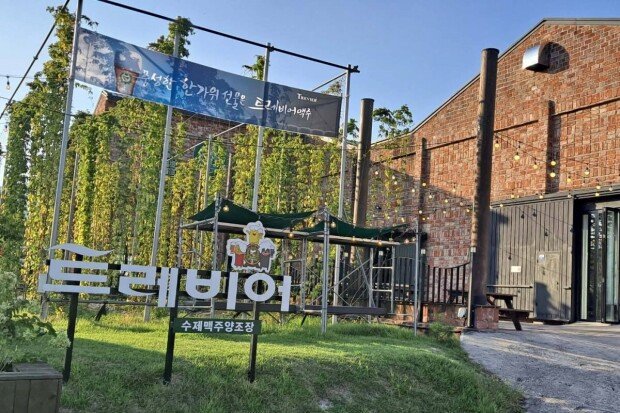
CEO Oh's philosophy is reflected in production and operation. The focus is on making a valuable glass, not just alcohol for consumption. This is why they put as much effort into food development as they do into beer development.
Trevier's Eonyang main branch operates both a brewery and a brewpub / source=Beerport breu
A representative dish CEO Oh recommends is the Bread Fondue. Inspired by beer's origin as 'liquid bread,' this menu item adapts the Swiss dish of dipping bread into cheese sauce for the domestic environment. It provides both the fun of dipping and a visual appeal.
The German pork dish, Schweinshaxe, is also popular. Made from the pork leg, it undergoes a separate smoking process to add a Korean touch. They even developed a smoked beer to pair with the Schweinshaxe. A chicken dish featuring nurungji (scorched rice) is popular with customers who prefer Korean food. CEO Oh emphasized that heavy drinks pair well with light food, and light drinks with heavy food. The reason is that one can enjoy the food while still experiencing the beer's original taste.
Beerport breu’s signature dishes: Bread Fondue (left) and Schweinshaxe (right) / source=Beerport breu
Beerport breu also differentiated its beer ordering method. Typical pubs take orders by the glass, bottle, or pitcher (large volume). However, Beerport breu introduced a system where customers pay for the amount they pour, just like at a gas station. This "pay-as-you-pour" system has received a positive response from young customers who pursue rational consumption.
This system began when they adopted a machine accidentally encountered at a liquor exposition. CEO Oh explained that they boldly introduced it, believing they needed to align with a rational consumption culture, despite the high initial installation costs, which increased the startup costs for franchisees.
'Shedding Old Clothes, Becoming a Hip Artisan': An Attempt at Image Innovation Through Design
The 23 years were a source of pride, but also a weight. After internal discussions, Beerport breu decided to rebuild its brand image. It was a decision to reach the younger generation. "As we operated for 23 years, the company also aged," Oh said. "Beer should always have a new, fresh, and popping image, but we wondered if we were staying stagnant. So, we decided to attempt an image transformation."
The transformation wasn't easy. They lacked experience in design and marketing. The breakthrough came from the 'Ulsan Design-Driven Manufacturing Innovation Center's' design support project. Through the support project, Beerport breu sought an image change while receiving systematic education on design and marketing. "I thought we were just changing the design, but it was a process of learning the concept of design itself," Oh said. "It wasn't easy to balance with my personal work, but it was an opportunity to open my eyes to design and marketing."
The collaborative result of Beerport breu, which participated in the Ulsan Design-Led Manufacturing Innovation Center's Design Support Program. Beerport breu innovated the Trevier logo and can design in collaboration with GrafiDesign / source= Beerport breu
Beerport breu selected the design company 'GrafiDesign' as its rebranding partner. Their experience collaborating with the beer industry was the reason. Although the market approaches for craft beer and conglomerate beer are different, there was high expectation that they possessed the basic sensibilities and knowledge to properly reflect Beerport breu's philosophy.
The collaboration proceeded smoothly through several discussions with GrafiDesign, and they ultimately chose a character personifying an artisan. It was meant to capture the spirit of manufacturing craftsmanship, as Ulsan is an industrial city, but express it in a friendly way. However, perhaps due to the "pioneering" design, the new look raised concerns among Beerport breu's internal staff.
"GrafiDesign explained that they had many discussions at the eye-level of the young employees. Above all, they emphasized that to change, we had to be bold. I saw confidence in that story. So, we trusted the experts and accepted the bold change," Oh said. "To be honest, because it changed so radically, there were many concerns like, 'Can we really do this?' and 'Won't it just damage our image?' There are still people who find it hard to accept the new design, but we are working hard to persuade them."
Aspiring to be Ulsan's Icon, Like Sungsimdang
Beerport breu's long-held philosophy and brewing capabilities are leading to results. First, its Imperial Stout won the Grand Prize in the Craft Ale Beer category at the 2025 Korea Liquor Awards, recognizing its skill. This is its sixth award, including five consecutive Grand Prize wins since 2019. The Imperial Stout features a heavy and rich taste, unlike other stouts. It's a style meant to be savored slowly, like whiskey, and CEO Oh's side explains it has a flavor so deep it can be compared to espresso.
Se-Young Oh, CEO of Beerport breu / source=IT dongA
The Trevier franchise operation is also proceeding smoothly. As of 2025, it is expanding nationwide, including to Gyeongju, Daegu, and Chuncheon, centered around eight locations in the Ulsan region. The beer distribution business is also planning to expand nationally, beyond the Ulsan area.
Beerport breu's goal is to establish itself as a local brand representing Ulsan. CEO Oh's dream is to grow into a company that represents the region, even if it takes time, much like Daejeon's Sungsimdang. Overseas expansion is planned only after fully solidifying their domestic foothold. "If we reach the level of representing the region, we will naturally gain recognition within Korea," Oh said. "I believe it won't be too late to enter overseas markets then."
Efforts to grow with the Ulsan region are ongoing. They developed 'Woori Rice Lager' using rice produced in Eonyang, where the brewery is located, and are actively seeking ways to coexist with the region, such as releasing seasonal limited-edition beers using local specialty pears. Although they currently use ingredients optimized for beer brewing, they plan to continue developing beers using local agricultural products.
They are also active in developing tourism products. Utilizing the proximity of the Bangudae Petroglyphs to the brewery, they have developed a tourism product linked with a brewery tour. Beerport breu's long-term goal is to create a "beer village." It is expected to contribute to creating a new city narrative for Ulsan—one that goes beyond the image of cars and shipbuilding to embrace craft, culture, and tourism.
By Hyung-seok Kang (redbk@itdonga.com)


![“아빠 나 이렇게 잘 컸어요”…무료 사진 복원이 만든 기적 [따만사]](https://dimg.donga.com/c/138/175/90/1/wps/NEWS/IMAGE/2026/05/08/133884397.3.jpg)



 About Dong-A Ilbo