

Korea faces tariff disadvantage as U.S. reduces EU rates
Korea faces tariff disadvantage as U.S. reduces EU rates
Posted September. 26, 2025 07:16,
Updated September. 26, 2025 07:16
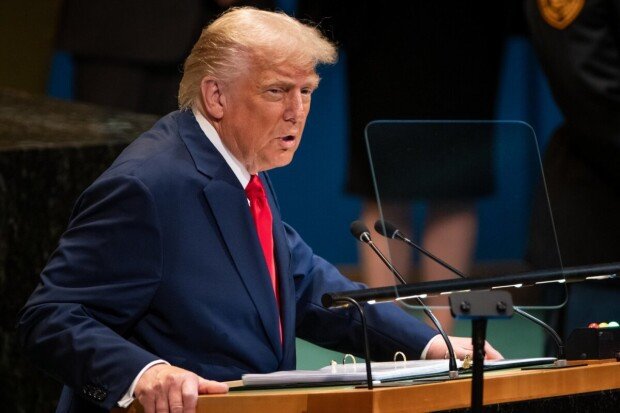
The United States will lower reciprocal tariffs on automobiles and auto parts imported from the European Union to 15 percent, following a similar move for Japan. The tariff on European cars exported to the U.S. will drop from 27.5 percent to 15 percent. While Japanese and European automakers are seeing their tariff burdens eased, Korean cars remain subject to a 25 percent rate, raising concerns about the competitiveness of Korea’s auto industry.
The U.S. Department of Commerce and the Office of the U.S. Trade Representative (USTR) said on Sept. 24 that the new tariff rate on automobiles and parts will take effect to implement a “framework agreement” reached with the EU on Aug. 21. According to Reuters and other outlets, the U.S. government decided the tariff reduction would be applied retroactively from Aug. 1, meaning all European vehicles exported to the U.S. since August will be subject to the 15 percent rate.
By contrast, Korean automobiles remain subject to the 25 percent tariff. Although the two countries agreed on July 30 to lower the rate to 15 percent, follow-up negotiations have dragged on, and the U.S. government has yet to announce a specific implementation date. As the period of high tariffs continues, Korean automakers such as Hyundai Motor Group, which export finished vehicles to the U.S., must now contend with competition not only from Japanese but also from German brands.
In the U.S. market, the minimum manufacturer’s suggested retail price (MSRP) for the 2025 model of Hyundai’s compact SUV Tucson is $28,705, while Volkswagen’s similarly sized Tiguan is listed at $30,245. Assuming the Tiguan’s price includes a 27.5 percent tariff, a reduction to 15 percent would give Volkswagen the flexibility to lower the price to $27,280, potentially making the Tiguan less expensive than the Tucson.
Hyundai Motor is currently holding back from fully passing tariff costs on to consumers, but the burden is eroding its performance. In the second quarter, tariffs were estimated to have cut Hyundai’s operating profit by 828.2 billion won and Kia’s by 786 billion won. At Hyundai’s CEO Investor Day in New York, President and Global COO José Muñoz said, “We are planning under the assumption that the tariff will remain at 25 percent,” while adding, “If the rate is reduced to 15 percent, it will be much easier to achieve our guidance.”
With U.S. tariff policy moving against Korea, prospects for auto and auto parts exports are weakening. According to a report released Sept. 25 by the Korea International Trade Association’s Institute for International Trade, the export business survey index (EBSI) for autos and parts in the fourth quarter is projected at 69.3, indicating weakness. An EBSI above 100 signals recovery, while a reading below 100 points to deterioration.
Won-Joo Lee takeoff@donga.com

![달걀 하루 몇 개까지 괜찮을까?…핵심은 ‘이것’[건강팩트체크]](https://dimg.donga.com/c/138/175/90/1/wps/NEWS/IMAGE/2026/04/27/133818891.3.jpg)




 About Dong-A Ilbo