

Welcoming the Year of the Horse with fresh eyes
Welcoming the Year of the Horse with fresh eyes
Posted January. 01, 2026 09:36,
Updated January. 01, 2026 09:36
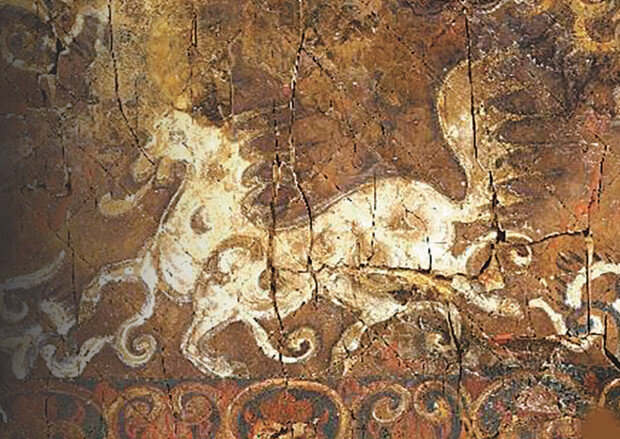
The Year of the Horse, 2026, known in the traditional sexagenary cycle as the Year of Byeong-o, has begun.
According to legend, Hyeokgeose, the founder of Silla, a kingdom often described as having lasted a millennium, was born from an egg carried by a horse. Jumong, who established Goguryeo and ruled over a vast territory, was likewise remembered as a skilled horseman. For Korea’s ancestors, horses were far more than a practical means of transportation. They were revered as auspicious and sacred beings that signaled the birth of a new state and embodied people’s deepest hopes and aspirations.
● Well suited to progressive modern life
Among the 12 zodiac animals, the horse, along with the dragon and the tiger, is regarded as one of the most favored signs in Korean culture. This perception is reflected in cultural artifacts such as the Cheonmado, or Heavenly Horse Painting, discovered in the Cheonmachong tomb in Gyeongju. Images of white horses racing across the sky, thousand-li horses and dragon horses have long symbolized vitality, freedom and the power to travel great distances. In Siwangdo, Buddhist paintings depicting the afterlife, horses are sometimes portrayed as sacred guides that lead the souls of the dead.
Yet for women in particular, being born in the Year of the Horse has often carried an unfavorable connotation. The perception stems from a long-standing prejudice that women born in the Year of Horse are believed to possess an overly strong or difficult fate. However, no evidence supporting this belief exists in Korean tradition or in ancient Chinese texts. Cheon Jin-gi, chairman of the Intangible Cultural Heritage Committee at the Korea Heritage Service and a specialist in zodiac culture, said the aversion to women born in the Year of the Horse appears to have originated in Japan and was introduced to Korea during the Japanese colonial period.
According to Cheon, five queens of the Joseon Dynasty, including Queen Jeonghyeon, who lived from 1462 to 1530, were born in the Year of the Horse, suggesting there was no traditional resistance to the sign. He added that the custom of favoring certain zodiac signs for women has little relevance in modern society, where initiative, independence and progressiveness are increasingly valued.
Calling this year the “Year of the Red Horse” is also inconsistent with Korean tradition. While Byeong-o is associated with the element of fire, interpreting it directly through color symbolism is problematic. Ha Do-gyeom, a curator and researcher at the National Folk Museum of Korea, said the practice of labeling the year the “Red Horse Year,” based on the five traditional directional colors, is believed to have been introduced during the Japanese colonial period. He added that such an interpretation lacks a solid grounding in traditional belief systems and carries strong commercial overtones, comparable to expressions such as the “Year of the Golden Pig.”
● Even children’s games trace back to horses
The Korean people have lived alongside horses since at least the Stone Age. According to the “Horse” volume of the Encyclopedia of Korean Folk Symbols, published by the National Folk Museum of Korea, horse teeth discovered at sites including the Amsa-dong prehistoric settlement in Seoul’s Gangdong district and shell mounds in Gimhae, South Gyeongsang Province, serve as archaeological evidence of this long relationship. Kim Byeong-seon, a professor in the Department of Life Resources at Jeju Halla University, said horses are believed to have been raised in earnest beginning in the Bronze Age. He added that small horses known as Gwahama existed in ancient states such as Dongye and Goguryeo.
Even after the founding of the Republic of Korea, horses remained an important means of transportation. Records show that horse-drawn carriages and military horses moved actively through Seoul in the years following the Korean War. As industrialization advanced, however, horses came to be regarded as obstacles to urban development and gradually disappeared from city life, except in tourism-related settings. Today, traces of their presence survive largely in place names, such as Majang-dong in Seoul’s Seongdong district, which housed state-run stables during the Joseon era, and Jayang-dong in Gwangjin district, where mares were once raised.
Jeong Yeon-hak, president of the Comparative Literature Association, said that in the late 1950s, horse cart drivers commonly waited near markets or train stations to transport goods. As automobiles came to dominate the roads and authorities established zones banning horse-drawn vehicles, horses gradually disappeared from urban life.
Even so, horses remain deeply embedded in the Korean language and in everyday expressions. A common phrase used to urge or encourage someone likens the act to whipping a horse that is already running. In the traditional children’s game known as malttukbakgi, the term malttuk, often misunderstood as referring to a wooden or metal stake, actually describes a tightly lined formation of players, resembling horses standing shoulder to shoulder like a dike.
In Western cultures as well, horses have long been regarded as noble creatures. In English-speaking societies, a horseshoe is widely regarded as a symbol of good fortune. Reflecting this shared symbolism, a special exhibition titled “So Many Horses” is being held at the National Folk Museum of Korea through March 2, offering a broad look at horse culture across regions and eras. "Across both East and West, horses have embodied a spirit of exploration, having played a decisive role in expanding humanity’s spatial horizons," said Jang Sang-hoon, director of the museum.
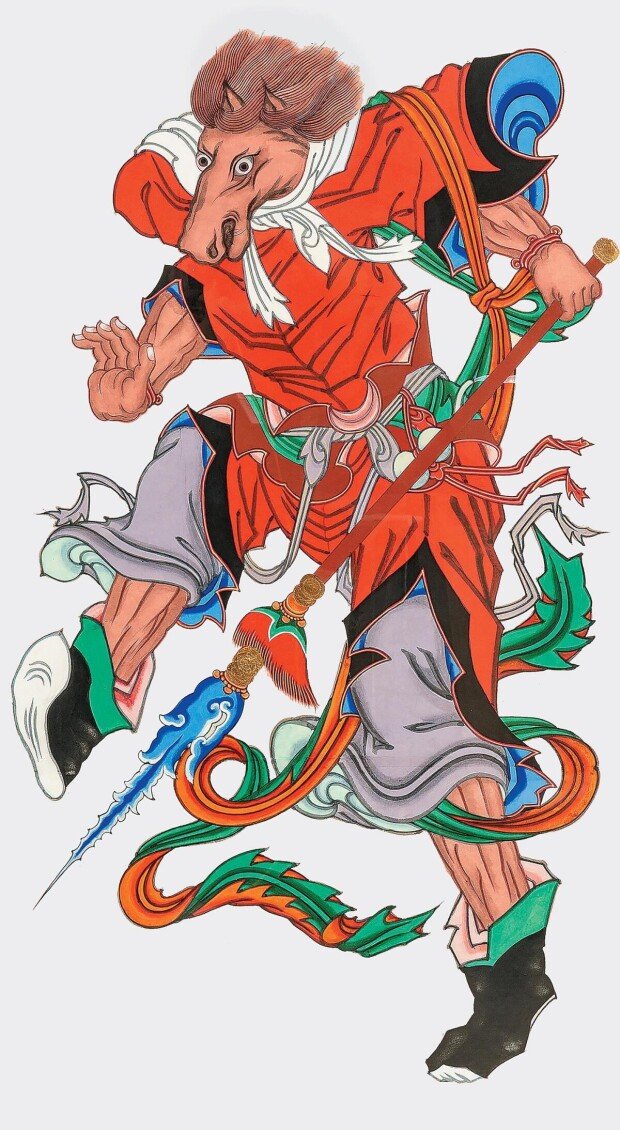
이지윤 기자 leemail@donga.com




![가장 흔한 ‘무릎 수술’, 하지마라?… 10년 추적 결과 “오히려 더 악화” [노화설계]](https://dimg.donga.com/c/138/175/90/1/wps/NEWS/IMAGE/2026/04/30/133840141.3.jpg)



 About Dong-A Ilbo