

“Excel Has Its Limits… IT Asset Management with Installed Agent”: SELLEASE
“Excel Has Its Limits… IT Asset Management with Installed Agent”: SELLEASE
Posted September. 23, 2025 13:54,
Updated September. 23, 2025 14:05
- SELLEASE Inc. has developed an AI-driven IT asset management solution that
optimizes company-wide asset operations, offering features such as software
usage analysis, asset audits, access log tracking, and issue management.
- The solution aims to replace traditional Excel-based asset management, which
often leads to inefficiencies and unnecessary spending.
- Since its launch in September 2024, SELLEASE has secured about 30
corporate clients in Korea and is now focusing on global expansion.
Corporate assets are not just numbers listed on a balance sheet. IT devices, office supplies, and software are all factors directly linked to a company’s efficiency. Yet in Korea, unlike many overseas markets, numerous companies still rely on Excel to manage these assets. This reliance often leads to unnecessary spending through duplicate purchases, idle resources, inaccurate accounting records, and inefficiencies caused by manual processes.
Effective asset management not only reduces overall corporate expenses but also prevents workflow disruptions caused by frequent personnel changes. For companies today, asset management is no longer a choice but a survival strategy. Since COVID-19, with the spread of remote work, the need for transparent IT asset management has only grown stronger. Against this backdrop, SELLEASE Inc. developed an AI-driven IT asset management solution that optimizes company-wide asset operations. The service goes beyond basic record-keeping, offering software usage analysis, company-wide asset audits, access log tracking, and issue management through a service desk—all integrated to connect management support, IT operations, and frontline work.
Innovation Born from Real Corporate Challenges
B2B software expert Minjae Yu, CEO of SELLEASE Inc., founded the company after more than 14 years in product and business development. “Even if you build a good product, it won’t sell itself, and even with strong sales, the product has to deliver. Identifying the real issues that companies face was the starting point for creating software customers would genuinely want to use,” Yu explained.
Through meetings with about 70 corporate managers, Yu learned that many organizations still managed tens of thousands of assets with Excel. He also found that while barcode-based asset management systems existed, they were designed for administrators rather than field staff, making them cumbersome to use with complicated interfaces, sluggish responsiveness, and little room for customization.
“Problems that arise from using Excel accumulate over time, eventually undermining asset transparency and productivity,” Yu said. To solve this, he built a SaaS solution for asset management and set his sights on global markets.
A Question-Centered AI Asset Management Solution
SELLEASE was designed on the philosophy of “rebuilding asset management from scratch,” embedding three values: ▲Zero UI (intuitive and simple management), ▲Zero Work (removal of repetitive manual tasks), and ▲Zero Waste (eliminating inefficiency in asset use). “We focused heavily on designing an easy-to-use interface,” Yu noted, “reflecting the growing preference for intuitive work tools like Slack. Our clients consistently point to usability and convenience as our strongest advantages.”
What sets SELLEASE apart is its question-centered approach, unlike existing input-heavy designs. Instead of filtering through complex menus, users can ask the AI chatbot questions in natural language and instantly get answers. For example, simply asking, “How many spare laptops are available?” produces immediate results. Yu explained, “By applying Function Calling technology—a feature that lets LLMs directly call specific tools—we minimized hallucination risks and ensured answers tied directly to corporate system data.”
The process of registering assets is also streamlined. Whereas other systems only offered QR code downloads, SELLEASE supports the entire labeling process—from procurement to printing label sheets online—making onboarding simpler. Users can also register an asset simply by snapping a photo, with the system automatically recognizing model names, manufacturers, and specifications.
At the heart of the platform is its agent technology. This software, installed on PCs or mobile devices, continuously monitors device usage and software activity while automatically gathering IT asset data. “In many cases, about 20% of distributed PCs show no use for more than a week, and sometimes only half are actually being used,” Yu said. “By installing SELLEASE’s agent, companies can quantify usage patterns, performance, and unused licenses into cost-efficiency reports.” In short, the agent makes hidden inefficiencies visible and reduces wasteful spending.
A Vision for Global Exports Worth KRW 1 Trillion: Progress Underway
Since its official launch in September 2024, SELLEASE has secured about 30 corporate clients in Korea, including Toss Place, Lush Korea, and Norang Food. The company is now focused on further system upgrades, including obtaining ISMS (Information Security Management System) certification by mid-next year and introducing additional features such as AI agents and cost-analysis reports to prepare for overseas markets.
\SELLEASE was also selected as a partner company for Oracle Cloud Infrastructure (OCI), receiving broad support for product development and marketing. “We were given the opportunity to participate in international investor fairs, such as the Seoul Investment Forum. Programs like these are crucial for startups looking to scale globally,” Yu explained.
Backed by this support, SELLEASE is now pushing forward with overseas expansion. “Building on the service quality proven in Korea, we aim to pioneer markets like Japan and the United States, where demand for IT asset management is high,” Yu said. “Our vision is to create a scalable export-oriented SaaS model by adding multilingual support, global payment integration, and international partnerships to build a stable revenue base.” Recently, SELLEASE also completed a technology validation project with Singapore-based education solutions provider ACP Computer, paving the way for entry into the Singapore market.
Yu emphasized that many Korean companies still underestimate the need for asset management, with ERP adoption rates hovering around 60%. “Our goal is to expand SELLEASE into a platform that manages the entire IT lifecycle—from IT assets to services and operations—through an intuitive solution,” he said. “Ultimately, we aim to become a leading Korean software company, reach KRW 1 trillion in exports, and position the software industry as a central pillar of the national economy.”
By Ye-ji Kim (yj@itdonga.com)
* This article was written with support from Seoul National University of Science and Technology.
optimizes company-wide asset operations, offering features such as software
usage analysis, asset audits, access log tracking, and issue management.
- The solution aims to replace traditional Excel-based asset management, which
often leads to inefficiencies and unnecessary spending.
- Since its launch in September 2024, SELLEASE has secured about 30
corporate clients in Korea and is now focusing on global expansion.
Corporate assets are not just numbers listed on a balance sheet. IT devices, office supplies, and software are all factors directly linked to a company’s efficiency. Yet in Korea, unlike many overseas markets, numerous companies still rely on Excel to manage these assets. This reliance often leads to unnecessary spending through duplicate purchases, idle resources, inaccurate accounting records, and inefficiencies caused by manual processes.
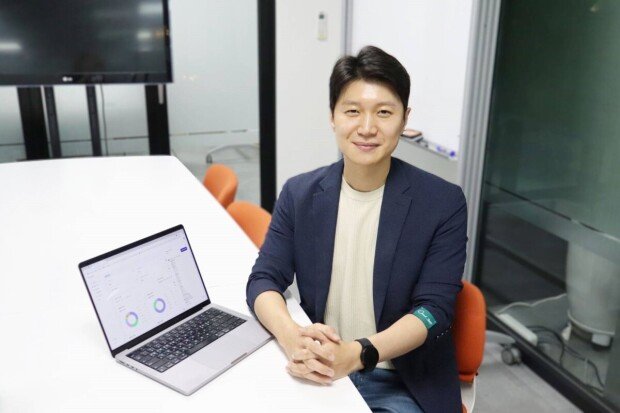
Minjae Yu, CEO of SELLEASE Inc. / Source=IT Donga
Effective asset management not only reduces overall corporate expenses but also prevents workflow disruptions caused by frequent personnel changes. For companies today, asset management is no longer a choice but a survival strategy. Since COVID-19, with the spread of remote work, the need for transparent IT asset management has only grown stronger. Against this backdrop, SELLEASE Inc. developed an AI-driven IT asset management solution that optimizes company-wide asset operations. The service goes beyond basic record-keeping, offering software usage analysis, company-wide asset audits, access log tracking, and issue management through a service desk—all integrated to connect management support, IT operations, and frontline work.
Innovation Born from Real Corporate Challenges
B2B software expert Minjae Yu, CEO of SELLEASE Inc., founded the company after more than 14 years in product and business development. “Even if you build a good product, it won’t sell itself, and even with strong sales, the product has to deliver. Identifying the real issues that companies face was the starting point for creating software customers would genuinely want to use,” Yu explained.
Through meetings with about 70 corporate managers, Yu learned that many organizations still managed tens of thousands of assets with Excel. He also found that while barcode-based asset management systems existed, they were designed for administrators rather than field staff, making them cumbersome to use with complicated interfaces, sluggish responsiveness, and little room for customization.
“Problems that arise from using Excel accumulate over time, eventually undermining asset transparency and productivity,” Yu said. To solve this, he built a SaaS solution for asset management and set his sights on global markets.
A Question-Centered AI Asset Management Solution
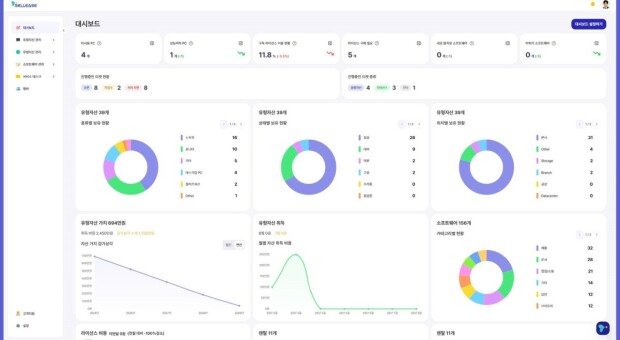
SELLEASE dashboard image / Source=SELLEASE Inc.
SELLEASE was designed on the philosophy of “rebuilding asset management from scratch,” embedding three values: ▲Zero UI (intuitive and simple management), ▲Zero Work (removal of repetitive manual tasks), and ▲Zero Waste (eliminating inefficiency in asset use). “We focused heavily on designing an easy-to-use interface,” Yu noted, “reflecting the growing preference for intuitive work tools like Slack. Our clients consistently point to usability and convenience as our strongest advantages.”
What sets SELLEASE apart is its question-centered approach, unlike existing input-heavy designs. Instead of filtering through complex menus, users can ask the AI chatbot questions in natural language and instantly get answers. For example, simply asking, “How many spare laptops are available?” produces immediate results. Yu explained, “By applying Function Calling technology—a feature that lets LLMs directly call specific tools—we minimized hallucination risks and ensured answers tied directly to corporate system data.”
The process of registering assets is also streamlined. Whereas other systems only offered QR code downloads, SELLEASE supports the entire labeling process—from procurement to printing label sheets online—making onboarding simpler. Users can also register an asset simply by snapping a photo, with the system automatically recognizing model names, manufacturers, and specifications.
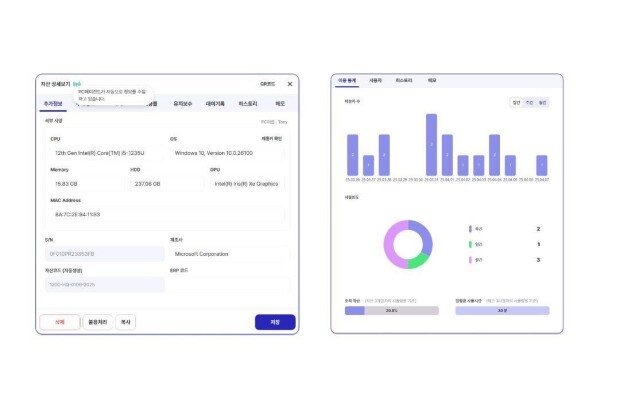
SELLEASE agent automatically collects IT asset information / Source=SELLEASE Inc.
At the heart of the platform is its agent technology. This software, installed on PCs or mobile devices, continuously monitors device usage and software activity while automatically gathering IT asset data. “In many cases, about 20% of distributed PCs show no use for more than a week, and sometimes only half are actually being used,” Yu said. “By installing SELLEASE’s agent, companies can quantify usage patterns, performance, and unused licenses into cost-efficiency reports.” In short, the agent makes hidden inefficiencies visible and reduces wasteful spending.
A Vision for Global Exports Worth KRW 1 Trillion: Progress Underway
Since its official launch in September 2024, SELLEASE has secured about 30 corporate clients in Korea, including Toss Place, Lush Korea, and Norang Food. The company is now focused on further system upgrades, including obtaining ISMS (Information Security Management System) certification by mid-next year and introducing additional features such as AI agents and cost-analysis reports to prepare for overseas markets.
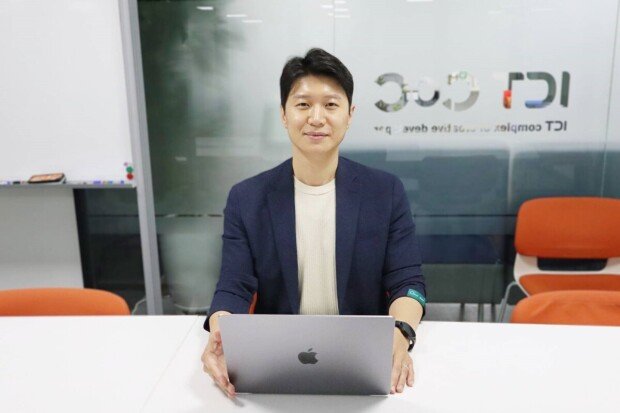
Minjae Yu, CEO of SELLEASE Inc. / Source=IT Donga
\SELLEASE was also selected as a partner company for Oracle Cloud Infrastructure (OCI), receiving broad support for product development and marketing. “We were given the opportunity to participate in international investor fairs, such as the Seoul Investment Forum. Programs like these are crucial for startups looking to scale globally,” Yu explained.
Backed by this support, SELLEASE is now pushing forward with overseas expansion. “Building on the service quality proven in Korea, we aim to pioneer markets like Japan and the United States, where demand for IT asset management is high,” Yu said. “Our vision is to create a scalable export-oriented SaaS model by adding multilingual support, global payment integration, and international partnerships to build a stable revenue base.” Recently, SELLEASE also completed a technology validation project with Singapore-based education solutions provider ACP Computer, paving the way for entry into the Singapore market.
Yu emphasized that many Korean companies still underestimate the need for asset management, with ERP adoption rates hovering around 60%. “Our goal is to expand SELLEASE into a platform that manages the entire IT lifecycle—from IT assets to services and operations—through an intuitive solution,” he said. “Ultimately, we aim to become a leading Korean software company, reach KRW 1 trillion in exports, and position the software industry as a central pillar of the national economy.”
By Ye-ji Kim (yj@itdonga.com)
* This article was written with support from Seoul National University of Science and Technology.








 About Dong-A Ilbo