

Trump launches shift in global trade rules
Trump launches shift in global trade rules
Posted August. 09, 2025 07:20,
Updated August. 09, 2025 07:20
"We are now witnessing the 'Trump Round.' New trade agreements mark the start of a new global trade order."
Jamieson Greer, chief trade adviser at the Office of the U.S. Trade Representative, made the statement in an Aug. 7 op-ed titled “Why We Reshaped the Global Order,” published in The New York Times. He argued that a global trade system led by the World Trade Organization is no longer workable. Referring to “round” as a term traditionally used in trade talks, Greer said the so-called Trump Round, centered on high tariffs, is now replacing the multilateral trade framework that the WTO has long dominated.
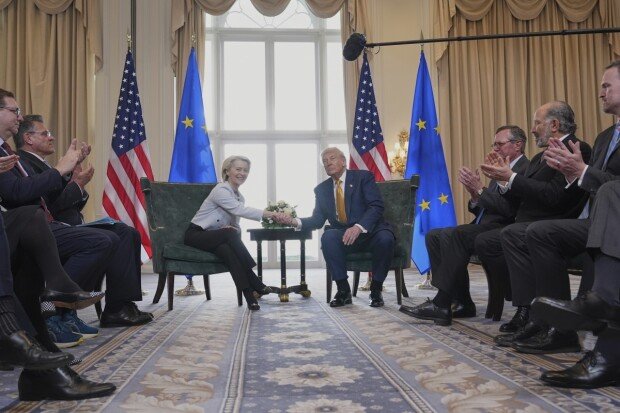
Greer described the July 27 trade agreement reached in Turnberry, Scotland, between U.S. President Donald Trump and European Commission President Ursula von der Leyen as the basis of the “Turnberry Framework.” He called it “a historic agreement that is fair, balanced, and grounded in specific national interests.” While fewer than 130 days have passed since the start of the Trump Round and the Turnberry Framework remains under development, he said its implementation is moving forward steadily.
In the op-ed, Greer blamed the World Trade Organization for eroding the U.S. manufacturing sector by eliminating tariff protections, which he said favored countries like China with low labor standards. “Under the neoliberal trade system led by the WTO, the United States lost its industry and jobs,” he wrote. “China was the biggest beneficiary.”
As a remedy, he called for protecting domestic manufacturing with high tariffs. “President Trump laid the foundation for a new global trade order by pairing tariffs with investment agreements,” he said. He added that the new U.S. approach focuses on closely monitoring compliance and quickly reimposing higher tariffs in response to violations, instead of relying on what he described as the “tedious” dispute resolution process preferred by traditional trade officials.
Greer rejected expert concerns that higher tariffs would drive up consumer prices and burden the U.S. economy. “Despite broader tariff impositions, inflation remains under control,” he wrote. The U.S. Consumer Price Index for June rose 2.7% from a year earlier, staying within the Federal Reserve’s target range of around 2%.
Meanwhile, U.S. Commerce Secretary Howard Lutnick told Fox Business on Aug. 7 that the 100% tariff on semiconductors will be waived for companies that pledged to build manufacturing facilities in the United States during President Trump’s term and followed through. As a result, Samsung Electronics and SK Hynix, which are making major investments in the U.S., are expected to be eligible for tariff exemptions.
Woo-Sun Lim imsun@donga.com



![[오늘의 운세/7월 2일]](https://dimg.donga.com/c/138/175/90/1/wps/NEWS/IMAGE/2026/07/02/134221102.1.jpg)


 About Dong-A Ilbo