

United States and Japan reach major trade agreement
United States and Japan reach major trade agreement
Posted July. 24, 2025 08:11,
Updated July. 24, 2025 08:11
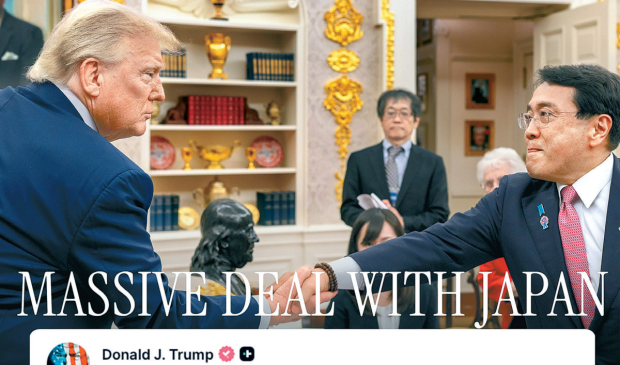
The United States and Japan finalized a major trade deal on July 22, with the Trump administration reducing reciprocal tariffs from 25 percent to 15 percent. Tariffs on vehicles, a primary point of contention, were cut by 12.5 percentage points, lowering the total to 15 percent after adding the existing 2.5 percent tariff on Japanese-made cars. President Trump praised the agreement on Truth Social, highlighting Japan’s commitment to open its markets to trade, including cars, trucks, rice, and other agricultural products. He also claimed Japan would invest $550 billion in the U.S., with the American side set to receive 90 percent of the profits, though details on how the investments would be implemented were not provided.
At a reception with Republican lawmakers, Trump revealed Japan would join a $44 billion liquefied natural gas project in Alaska. This project includes a 1,300-kilometer pipeline transporting gas to an LNG plant for export. The U.S. is reportedly encouraging South Korea to join this venture as well.
Japanese Prime Minister Shigeru Ishiba welcomed the 15 percent tariff rate, saying, “Among the countries that have a trade surplus with the United States, we have achieved the greatest results.” His statement suggested that Japan secured the lowest tariff rate among such countries, marking a success in ongoing tariff negotiations. Ishiba also stressed that Japan’s agricultural sector remained protected, with an agreement to increase tariff-free U.S. rice imports under the existing “minimum access” system.
The Trump administration’s tough trade stance has put pressure on both South Korea and Japan, exemplified by the president’s public sharing of letters to both countries’ leaders on Truth Social. Following the U.S.-Japan agreement, South Korea faces increased pressure ahead of its own trade talks with the U.S. on July 25, where top trade and finance officials will meet. Seoul reportedly plans to exclude immediate discussions on opening beef and rice markets or joining the Alaska LNG project. Instead, it aims to propose more flexible items, including cooperation in manufacturing, and use sensitive issues as bargaining tools to protect Korean interests. The shipbuilding industry is considered a critical leverage point.
Some South Korean officials believe the U.S.-Japan deal may not harm Korea, potentially serving as a useful benchmark. A diplomatic source in Washington suggested Japan’s success in securing lower car tariffs and defending agriculture could offer a positive precedent for Seoul.
The South Korean presidential office commented on the deal, saying, “The details of the U.S.-Japan negotiations are being reviewed and will inform the Korean government’s own talks.”
Jin-Woo Shin niceshin@donga.com





 About Dong-A Ilbo