

Korea’s OECD leading index reaches 3-year high
Korea’s OECD leading index reaches 3-year high
Posted July. 14, 2025 07:54,
Updated July. 14, 2025 07:54
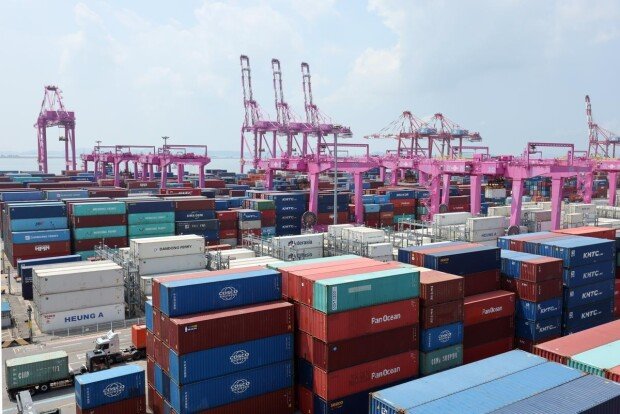
South Korea’s Composite Leading Indicator (CLI), published by the Organization for Economic Cooperation and Development (OECD), rose for the seventh consecutive month to its highest level in three years and seven months. The increase reflects growing optimism for economic recovery as political uncertainty fades and the new administration pursues expansionary fiscal policies.
According to the OECD, on July 13, Korea’s CLI for the previous month stood at 101.08, the highest since November 2021, when it reached 101.09. The CLI is used to gauge economic trends six to nine months ahead. A reading above 100 indicates likely economic expansion, while a reading below 100 suggests contraction.
Korea’s CLI has been climbing steadily since December of last year, when it stood at 100.49. Last month’s figure ranked second among the 12 OECD member countries disclosed, trailing only the United Kingdom’s 101.16. This suggests that Korea’s short- to mid-term economic outlook is relatively more positive than that of other major advanced economies.
Recent data also point to signs of recovery. According to the Bank of Korea, the country’s composite consumer sentiment index improved sharply for three consecutive months: 93.8 in April, 101.8 in May, and 108.7 in June. Along with the loosening of the high interest rate stance, a government-issued 31.8 trillion won supplementary budget, which includes consumer coupons aimed at boosting household spending, is expected to roll out soon, raising expectations for increased consumption.
However, the sluggish manufacturing sector remains a key weakness in Korea’s economy. Concerns over export losses due to the tariff war initiated by the United States also persist. “If the United States begins imposing reciprocal tariffs on Aug. 1, downward pressure on Korea’s growth rate from weakened exports will likely intensify," said Woo Seok-jin, an economics professor at Myongji University. "Still, the 31.8 trillion won supplementary budget may serve as a buffer.”
세종=정순구 기자 soon9@donga.com


![“코 스프레이 2번 뿌렸더니 기억력 쑥”…치매 치료 가능성 [노화설계]](https://dimg.donga.com/c/138/175/90/1/wps/NEWS/IMAGE/2026/05/29/134018314.3.jpg)



 About Dong-A Ilbo