

Trump calls Iran strike ‘obliteration,’ Tehran denies damage
Trump calls Iran strike ‘obliteration,’ Tehran denies damage
Posted June. 24, 2025 07:29,
Updated June. 24, 2025 07:29
The United States carried out surprise airstrikes on Iran’s nuclear facilities in Fordow, Natanz, and Isfahan on June 21 (local time), and opinions remain divided over the operation's success. U.S. President Donald Trump on June 22 described the airstrikes as a complete success, stating that the word “obliteration” was accurate to describe the first-ever U.S. attack on Iranian territory. In contrast, Iran responded that it had already moved nuclear materials and other assets to safe locations in preparation for the attack.
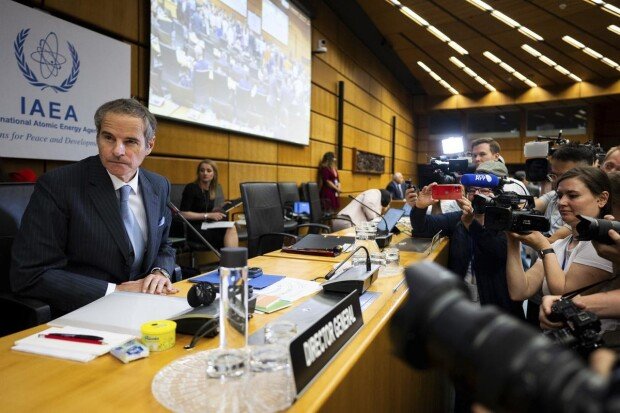
On the same day, Rafael Grossi, Director General of the International Atomic Energy Agency (IAEA), said there was no increase in radiation levels detected outside the three targeted facilities, deferring judgment on the extent of the damage. The level of destruction from the U.S. airstrikes could become a key variable affecting both Iran’s nuclear capabilities and the potential resumption of U.S.-Iran nuclear negotiations.
That night, President Trump wrote on Truth Social, “As satellite photos show, there was tremendous damage to all of Iran’s nuclear facilities,” and added, “The biggest damage occurred deep underground. Bullseye!” He stated that the airstrike operation, named “Midnight Hammer,” used massive bunker-buster bombs to eliminate underground nuclear facilities.
However, Iranian state-run Press TV, citing sources shortly after the attack, reported that “the three nuclear facilities had been evacuated long ago, and the enriched uranium had also been moved to secure locations.”
Jin-Woo Shin niceshin@donga.com








 About Dong-A Ilbo