

Israel, Iran escalate conflict with energy strikes
Israel, Iran escalate conflict with energy strikes
Posted June. 16, 2025 07:38,
Updated June. 16, 2025 07:38
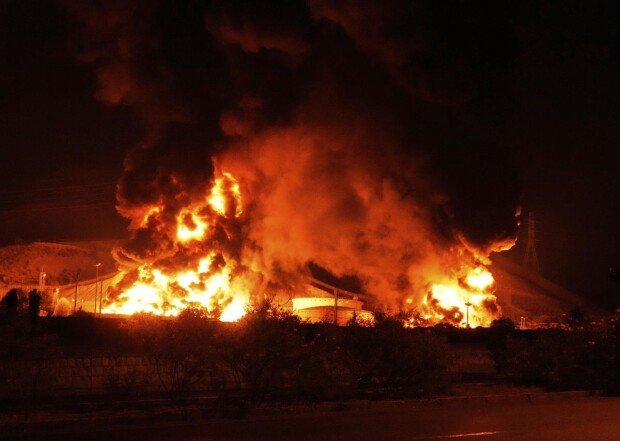
On the day following its surprise attack on Iran’s nuclear facilities, Israel launched additional airstrikes on Saturday (local time), this time targeting military installations and key energy infrastructure, including the world’s largest Iranian gas field. Analysts say Israel has broadened its offensive by striking Iran’s energy sector, a cornerstone of its economy. In response, Iran launched a wave of ballistic missiles from Friday to Sunday, targeting Israeli military bases, major cities and energy-related sites. As tensions between the two nations intensified, nuclear negotiations between the United States and Iran that were scheduled for Sunday were canceled.
On Sunday, the Israeli military announced it had completed a large-scale series of airstrikes, including attacks on the headquarters of Iran’s Ministry of Defense and a facility believed to house the Organization of Defensive Innovation and Research (SPND), which is suspected of playing a role in Iran’s nuclear development.
Israel also confirmed that it carried out a major operation in Tehran on Saturday, claiming to have struck more than 150 targets over a 40-hour period. For the first time, Israel expanded its attacks to include Iran’s energy infrastructure. CNN reported that the South Pars gas field, the world’s largest natural gas reserve, and the Shahran oil storage site were among the targets. According to The Times of Israel, a fire broke out at part of the South Pars field, temporarily halting gas production of 1,200 cubic meters.
Iran also escalated its counteroffensive. State television reported that on Friday night, the Islamic Revolutionary Guard Corps struck three Israeli air bases. Targets included the Nevatim and Ovda facilities, which house Israel’s command centers and electronic warfare systems. On Sunday morning, following the Israeli strikes on energy sites, Iran announced that it had launched drones and missiles at Israeli fighter jet fuel production sites and energy supply facilities, describing the attacks as retaliation for what it called the crimes and aggression of the “Zionist regime.”
As both nations expand their confrontation to include critical energy infrastructure, the stakes have grown considerably. The war has entered a far more dangerous phase, German energy analyst Abdollah Babakhani told The New York Times, calling it “extremely dangerous and destructive.”
Eun-A Cho achim@donga.com








 About Dong-A Ilbo