

K-fashion popularity surges in Japan’s youth market
K-fashion popularity surges in Japan’s youth market
Posted June. 10, 2025 07:40,
Updated June. 10, 2025 07:40
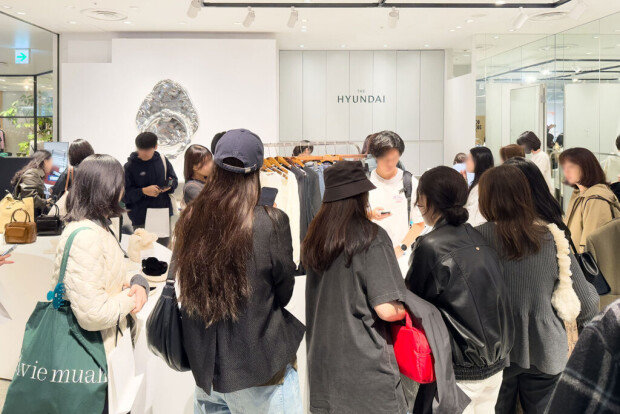
As K-fashion gains popularity in Japan, South Korean fashion distributors and platforms are actively expanding in the local market. Fueled by the spread of K-content during the “fourth Korean Wave,” interest in Korean fashion has surged, particularly among Japan’s millennials and Generation Z.
South Korean companies are adopting a “win-win model” to diversify risk and grow alongside emerging brands. This strategy supports Korean designers who lack local infrastructure or name recognition by providing resources such as pop-up stores in department stores and access to distribution channels, helping them expand overseas. Although these designers have limited recognition, they are gaining attention in Japan thanks to the Korean Wave.
Fashion platform Musinsa launched its overseas subsidiary, Musinsa Japan, in 2021. Since then, it has helped Korean women’s clothing brand Mardi Mercredi enter the Japanese market through pop-up stores in department stores and influencer collaborations. Last year, Musinsa signed a distribution deal with designer brand Matin Kim and opened a store in Tokyo’s Shibuya district. The store generated more than 600 million won in sales within two weeks. Recently, Musinsa formed an official partnership with Zozotown, Japan’s largest online fashion platform.
Department stores and duty-free shops are also entering the Japanese market with similar strategies. Hyundai Department Store launched its overseas expansion platform, The Hyundai Global, in March last year. From May, it operated a two-month pop-up store featuring Korean designer brands at Tokyo Parco Shibuya, generating 3 billion won in sales. Since April, it has sold products from 21 Korean fashion brands at three locations, including one in Osaka.
Shinsegae Department Store is focusing on introducing Korean designers through its overseas expansion support platform, Hyper Ground. Last year, it opened a pop-up store at Hankyu Department Store in Osaka. This year, it launched another at Isetan Shinjuku in Tokyo to assess local demand. Lotte Duty Free reopened its Ginza store in Tokyo after renovations in October and is increasing engagement with Japanese consumers by featuring Korean brands such as Glowny and Grove.
“K-fashion is gaining popularity among young Japanese people who are naturally exposed to K-content,” said Suh Yong-gu, a business administration professor at Sookmyung Women’s University. "Strategies such as pop-up stores and test marketing to increase consumer touchpoints are proving effective."
K-fashion was once mainly associated in Japan with “Dongdaemun brands.” However, its rising status today is closely linked to the growing popularity of K-content, which has boosted interest in Korean fashion. “Korean clothing used to be known for quality relative to price, but recently, interest in Korean designer brands has grown, and they are now seen as cool and sophisticated,” a fashion industry official said.
김다연 기자 damong@donga.com


![[단독]노태악, 선관위서 수당 4년간 1.8억 받아…3배 ‘셀프 증액’도](https://dimg.donga.com/c/138/175/90/1/wps/NEWS/IMAGE/2026/06/19/134144622.1.jpg)



 About Dong-A Ilbo